

The global fascination with Korean cuisine, television, and pop culture—collectively known as the Hallyu wave—did not happen overnight, but its trajectory was firmly anchored more than two decades ago by a single television milestone. In 2003, the historical drama Dae Jang Geum (internationally known as Jewel in the Palace) premiered on MBC, captivating domestic audiences and subsequently spreading across Asia, the Middle East, and parts of Europe. Starring Lee Young-ae as Seo Jang-geum, the series chronicled the arduous journey of an orphaned kitchen maid who rises to become the royal physician to the king. Crucially, the narrative was interwoven with meticulous depictions of traditional Korean royal court cuisine.
Industry analysts credit Dae Jang Geum as the catalyst that transitioned Korean food culture from a localized ethnic niche into an internationally recognized gastronomic phenomenon. Viewers worldwide were introduced to the intricate preparation techniques, balancing of flavors, and philosophical foundations of Korean cooking. This foundational success proved that visual storytelling centered on food possessed a universal appeal capable of transcending cultural and linguistic barriers.
Two decades later, this intersection of culinary arts and narrative television has evolved from a novel narrative device into a dominant genre. In 2025, streaming platforms, network television, and global consumer markets are experiencing an unprecedented surge in food-centric K-dramas. Data from major content distributors indicate that programs featuring prominent culinary elements consistently outperform standard genre counterparts in international viewership completion rates and concurrent digital engagement metrics.
The mechanism behind this ongoing trend relies on sensory-driven storytelling. Modern psychological and neuroscientific research indicates that visual and auditory stimuli associated with food consumption—such as the sizzling sound of pork belly on a grill or the steaming broth of ginseng chicken soup—activate the brain’s reward pathways. When viewers watch characters consume popular dishes like tteokbokki or samgye-tang, the experience triggers a physiological response of hunger and emotional comfort. Consequently, content creators have increasingly leveraged this psychological trigger to deepen audience immersion, turning everyday meals into pivotal plot devices that drive character development and narrative tension.
A Chronological Evolution of Culinary Storytelling in Korean Television
To understand the current saturation of food-themed K-dramas in 2025, one must examine the chronological progression of the genre over the past ten years. Following the pioneering era of historical gastronomic dramas, the 2010s ushered in a wave of contemporary, slice-of-life, and romance series that utilized food to address modern social anxieties, urbanization, and isolation.
The year 2013 marked a significant shift with the premiere of Let’s Eat on tvN. Directed by Park Joon-hwa, the slice-of-life drama focused on the lives of single individuals living in urban apartment complexes who bonded over their shared passion for dining. Rather than focusing on professional chefs or royal cuisines, Let’s Eat elevated everyday meals—ranging from convenience store configurations to meticulously prepared local restaurant dishes—into a medium for community building. The series addressed the rising demographic trend of single-person households in South Korea, demonstrating how shared meals could alleviate urban loneliness.
As streaming services expanded their global reach in the latter half of the decade, production scales increased, leading to high-concept hybrids that fused culinary arts with fantasy, corporate intrigue, and historical settings. The 2020 release of Mr. Queen demonstrated the viability of body-swapping and time-slip narratives anchored by professional kitchen expertise. By placing a modern Blue House head chef’s consciousness inside the body of a Joseon-era queen, the series used culinary innovation as a diplomatic and survival tool, bridging centuries of gastronomic evolution.
Concurrently, the 2020 adaptation of the popular webtoon Itaewon Class embedded culinary entrepreneurship within a narrative of systemic injustice and personal redemption. Set in Seoul’s multicultural Itaewon district, the series chronicled the struggles of an ex-convict establishing a competitive pub business against corporate conglomerates. By highlighting dishes like sundubu-jjigae (soft tofu stew) and jeyuk-bokkeum (spicy stir-fried pork), Itaewon Class underscored the role of food service establishments as spaces of social resistance, cultural diversity, and economic tenacity.
The 2025 Landscape: Top Food-Centric K-Dramas Driving Global Viewership

The current television landscape reflects the culmination of this two-decade evolution, with several high-profile series placing food at the literal and figurative center of their respective plots.
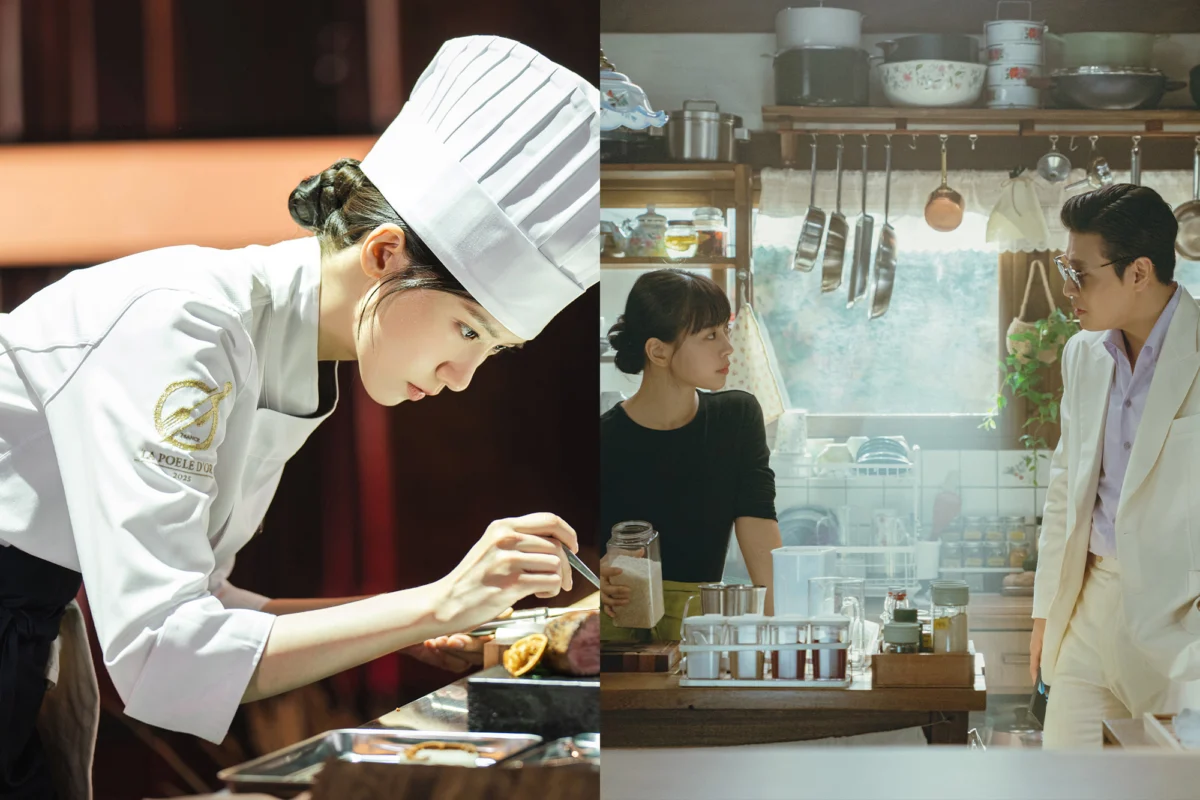
Leading the 2025 lineup is Bon Appétit, Your Majesty, a romance-fantasy series streaming on Netflix. Starring Yoona Lim, Lee Chae-min, and Kang Hanna, the drama utilizes the established time-travel trope by thrusting a contemporary chef into a historically rigorous and demanding royal court environment. The narrative tension derives from the cultural and technical clashes between modern culinary science and historical gastronomy, creating a high-stakes dramatic environment that has consistently dominated global streaming charts.
Parallel to this historical fantasy is Tastefully Yours, a romantic comedy that addresses contemporary corporate and culinary dynamics. The series pairs Go Min-si as a tenacious, independent chef with Kang Ha-neul as the spoiled heir to a major food conglomerate whose obsession with fine dining is matched only by his lack of gustatory discernment. By juxtaposing corporate elitism with grassroots culinary passion, Tastefully Yours offers a satirical yet romantic examination of modern food culture, class structures, and sensory appreciation.
Economic and Cultural Implications of the Food-Drama Synergy
The proliferation of food-themed K-dramas carries substantial economic ramifications for South Korea’s agricultural, export, and tourism sectors. According to data released by trade and tourism authorities, media exports directly correlate with an increase in overseas demand for Korean food products, kitchen appliances, and culinary tourism.
When major series highlight specific dishes or dining environments, international sales of related processed foods—such as instant noodles, red pepper paste (gochujang), and seaweed snacks—routinely experience double-digit percentage surges in export markets across North America, Southeast Asia, and Europe. Furthermore, international travelers frequently cite K-dramas as their primary motivation for visiting gastronomic districts in Seoul, such as Itaewon, Hongdae, and traditional markets specializing in street food.
Industry analysts and cultural economists suggest that this synergy between scripted entertainment and culinary marketing functions as a form of soft power. Unlike traditional commercial advertisements, narrative television integrates products and cultural practices into emotionally resonant storylines, rendering foreign consumers more receptive to adopting these dietary habits and lifestyle choices.
Future Outlook for the Culinary K-Drama Genre
As streaming platforms continue to invest heavily in Korean content production, industry stakeholders anticipate further diversification within the food-drama genre. Producers are increasingly experimenting with multi-genre hybrids that combine culinary arts with psychological thrillers, science fiction, and environmental documentaries, reflecting changing consumer tastes and global sustainability concerns regarding food production.
Despite these thematic shifts, the core appeal of the genre remains unchanged. Whether examining royal court banquets of the past, urban solitude in apartment complexes, or high-stakes restaurant ownership in metropolitan districts, food-themed K-dramas continue to utilize the universal language of nourishment to connect diverse audiences worldwide. As long as television creators continue to translate complex human emotions into shared culinary experiences, the global appetite for Korean food-centric narratives shows no signs of diminishing.
