

The evolution of Samsung’s wearable ecosystem has been marked by significant advancements in health tracking, processing power, and display technology. However, a recent shift in the hardware architecture of the latest Galaxy Watch models—specifically the Galaxy Watch 7, the original Galaxy Watch Ultra, the Galaxy Watch Ultra 2, and the Galaxy Watch 9—has introduced a notable friction point for power users: the loss of compatibility with the Wireless PowerShare feature found on flagship Galaxy smartphones. This development has reignited discussions regarding the balance between hardware design innovation and day-to-day user convenience.
The Chronology of Wireless Charging Integration
For several years, Samsung championed the concept of a unified mobile ecosystem where devices could share power seamlessly. The Wireless PowerShare feature, introduced alongside the Galaxy S10 series in 2019, allowed users to place a compatible Galaxy Watch or set of Galaxy Buds on the back of a flagship phone to initiate a charge. This feature became a staple for travelers and commuters who favored the ability to leave dedicated proprietary charging pucks at home.
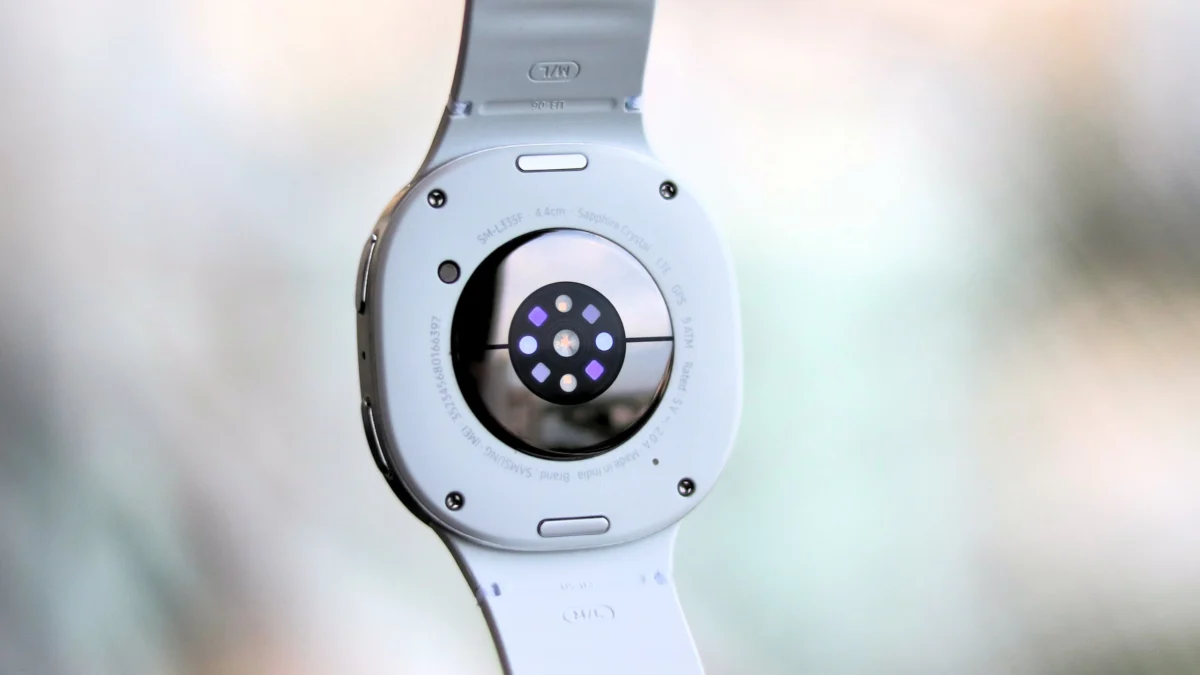
The transition began in 2024 with the launch of the Galaxy Watch 7 and the first-generation Galaxy Watch Ultra. Upon the release of these devices, users discovered that they were no longer recognized by the reverse wireless charging coils in existing Galaxy smartphones. The incompatibility was not merely a software limitation; it was a fundamental change in the physical design of the watch’s underside.
As of the latest iteration, the Galaxy Watch Ultra 2 and the Galaxy Watch 9 have continued this trend, further extending the incompatibility to include a wider range of third-party wireless charging pads. This has created a scenario where users are increasingly restricted to the specific, proprietary charger included in the product box, rendering legacy or multi-device wireless charging stations ineffective.
Technical Rationale Behind the Hardware Shift
The primary reason cited for this change involves the internal engineering of the watch’s back glass and sensor array. Samsung’s official documentation indicates that the health-monitoring sensors, such as the BioActive Sensor, have undergone significant redesigns to improve accuracy and speed. To accommodate these advanced sensors and the necessary structural reinforcement for increased water and dust resistance, the charging coil has been repositioned.

Moving the charging coil deeper into the chassis or further away from the outer glass layer creates a larger gap between the watch’s internal coil and the charging source. In the context of inductive charging, distance is a critical factor. Even a shift of a few millimeters can drastically reduce efficiency or prevent the electromagnetic coupling required to initiate a charge entirely. Samsung’s engineers prioritized the integration of more sophisticated diagnostic hardware, which necessitated a sacrifice in the flexibility of the charging interface.
Impact on the Galaxy Ecosystem
The removal of Wireless PowerShare support has broader implications for Samsung’s ecosystem strategy. The brand has long marketed the "Galaxy experience" as a cohesive unit where devices work in harmony. When a user carries a Galaxy S24 or S25 Ultra, they expect the hardware to interact with their wearable accessories. The current reality—where a phone can charge a third-party Qi-compatible device but not its own manufacturer’s latest watch—creates a disconnect in the user journey.
For the frequent traveler, the requirement to carry an additional, proprietary charging cable is a regression in convenience. Unlike the USB-C standard, which has seen widespread adoption across tablets, laptops, and smartphones, proprietary watch chargers remain a bottleneck. The inability to use a phone as a "power bank" for a watch removes a fail-safe that many users relied upon when battery levels dropped unexpectedly during long days away from home.
Comparative Analysis: Industry Trends
While Samsung has moved toward more specialized, depth-sensitive charging, other players in the wearable market have taken different approaches. Apple, for instance, maintains a proprietary magnetic charging system that remains consistent across its Watch iterations, though it too has faced criticism for the lack of universal Qi compatibility. Garmin and other fitness-focused brands typically stick to dedicated contact-based charging pins, which are efficient but physically bulky.
The challenge for Samsung is that it had already solved the "cable clutter" problem through Wireless PowerShare, only to step back due to hardware design constraints. Industry analysts suggest that this creates a difficult trade-off: users are gaining superior health data and potentially better battery longevity through more efficient internal components, but they are losing the "lifestyle" benefit of the unified charging ecosystem.
Fact-Based Implications for Consumers
As the Galaxy Watch line moves forward, the consumer impact can be categorized into three main areas:

- Increased Peripheral Costs: Users who own multiple charging stations (e.g., one at the office, one at home, one in the car) may find that their existing hardware is now obsolete for the latest Watch models, necessitating the purchase of new, proprietary charging pucks.
- Logistical Inconvenience: The loss of Wireless PowerShare necessitates more rigorous travel planning. The "top-off" capability provided by a smartphone is no longer available, making the dedicated charger an essential, non-negotiable item in a traveler’s kit.
- Hardware Lifecycle: Because the newest watches are incompatible with a wider variety of third-party pads, the reliance on a single point of failure (the proprietary charger) increases. If the specific charger included in the box is lost or damaged, the user is restricted to buying a specific, often expensive, OEM replacement.
The Path Forward: Can Convenience Return?
Looking ahead, the question remains whether Samsung can reconcile these design goals. It is technically possible to incorporate larger, more powerful charging coils that can bridge the distance created by advanced health sensors, though such a move would likely increase the thickness of the watch—a variable that is already sensitive in wearable design.
Alternatively, the industry may see a shift toward universal wireless charging standards that are more forgiving of distance, such as the latest iterations of the Qi2 standard, which utilizes magnetic alignment to maximize efficiency. If Samsung were to integrate these standards into future Galaxy Watch models, it could potentially restore the convenience of charging via smartphones or generic pads without compromising the integrity of the health sensors.
For now, the situation stands as a reminder of the engineering constraints inherent in modern mobile technology. While the Galaxy Watch 9 and Watch Ultra 2 represent the pinnacle of Samsung’s health-tracking capabilities, they do so at the cost of the seamless, cross-device power sharing that once defined the Galaxy brand’s user experience. Whether the benefits of the new sensor suite outweigh the loss of charging versatility is a calculation that will ultimately be decided by the market and the feedback of the power-user demographic that relies on these features daily.
In conclusion, while the technical justification regarding sensor placement is sound from an engineering perspective, the loss of Wireless PowerShare is a significant shift in the functional identity of Samsung’s wearable portfolio. As the company continues to innovate in the realm of health diagnostics and material durability, the challenge for future product development cycles will be to find a way to re-integrate charging flexibility, ensuring that the flagship experience remains as convenient as it is capable.
