

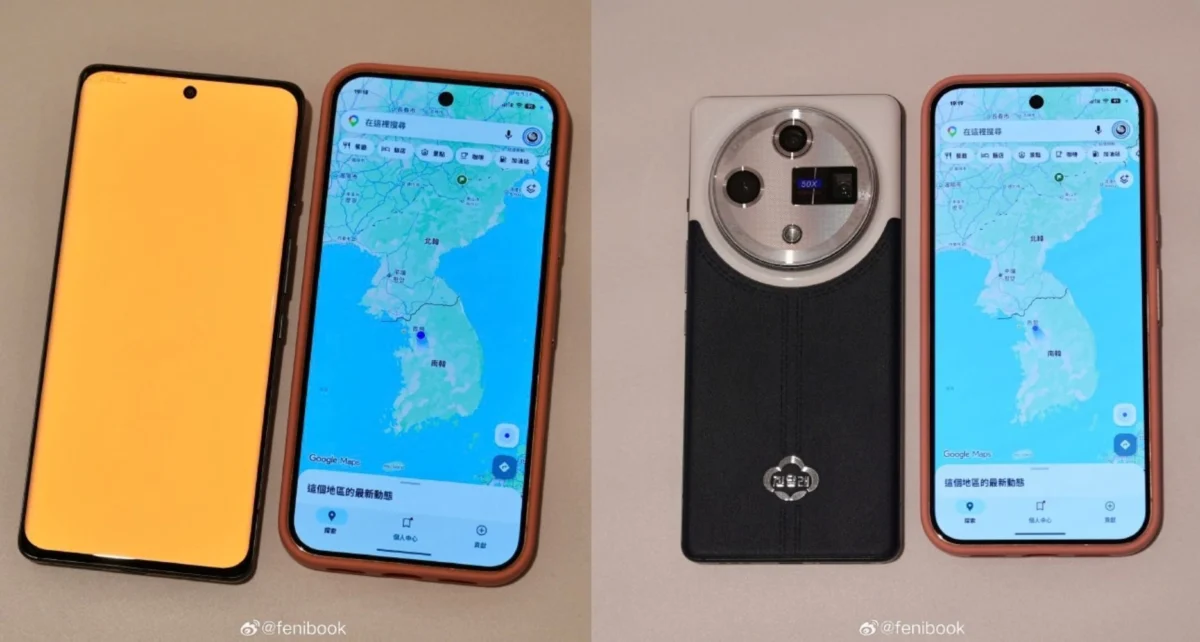
The intricate web of digital surveillance, hardware security, and geopolitical isolation governing the Democratic People’s Republic of Korea (DPRK) suffered an unexpected public exposure this week when a domestically manufactured North Korean smartphone completely malfunctioned upon crossing into South Korea. The device, known as the Jindallae 12 and marketed within the hermit kingdom as a premier flagship telecommunication product, became completely inoperable, flashing a distinctive orange pixel pattern across its display before entering an endless, inescapable reboot loop.
The malfunction was documented and broadcast by a prominent Chinese social media influencer operating under the handle "fenibook" on the popular microblogging platform Weibo. With a digital footprint boasting over 503,000 followers, the blogger’s hands-on review of the North Korean device quickly catapulted to trending status, capturing widespread attention under the dedicated hashtag translated as "The North Korean people’s real flagship phone." While the initial portions of the video focused on unpacking the exterior design, software interface, and presumed technical specifications of the Jindallae 12, the narrative pivoted dramatically once the hardware was transported across the heavily fortified Demilitarized Zone into the territory of the Republic of Korea.
This unexpected hardware and software breakdown has since ignited a firestorm of speculation and technical analysis among cybersecurity experts, North Korea watchers, and technology analysts worldwide. Beyond the curiosity of a foreign gadget failing in a neighboring state, the incident shines a glaring spotlight on the sophisticated, highly restrictive, and potentially aggressive control mechanisms embedded within North Korean consumer electronics. It raises fundamental questions regarding how Pyongyang engineers its technology to prevent information leakage, deter unauthorized exportation, and enforce absolute digital sovereignty over its populace.
The Evolution and Context of North Korean Mobile Telecommunications
To fully comprehend the implications of the Jindallae 12’s sudden failure, it is essential to examine the historical trajectory and contemporary landscape of the mobile communications industry inside North Korea. For decades, telecommunications within the DPRK were virtually nonexistent for the general public, restricted entirely to high-ranking party officials, military brass, and select state apparatuses. However, the paradigm began to shift significantly in December 2008, when the Egyptian telecommunications conglomerate Orascom Telecom Holding entered into a landmark joint venture with the North Korean state-owned Korea Post and Telecommunications Corporation (KPTC).
This partnership birthed Koryolink, the nation’s first 3G cellular network. Initially heralded as a massive step toward modernization, Koryolink quickly grew to encompass millions of subscribers residing primarily in Pyongyang and major provincial capitals. Nevertheless, this network was—and remains—fundamentally isolated from the global World Wide Web. Subscribers are entirely restricted to a closed, state-managed intranet network known as Kwangmyong, while foreign residents and tourists are granted access to a strictly separated international roaming network.
As mobile adoption rates climbed among the nascent urban middle class—often referred to as the donju, or "masters of money"—demand for consumer hardware surged. Initially, North Koreans relied heavily on imported, rebranded handsets manufactured in China by original design manufacturers (ODMs). Brands like Huawei, ZTE, and various white-label producers supplied the baseline hardware, which was then imported into North Korea, stripped of extraneous components like Wi-Fi and Bluetooth modules, and loaded with heavily customized, state-sanctioned operating systems.
Over the past decade, however, the North Korean regime has made a concerted push toward domestic industrial self-reliance, encapsulated by the state ideology of Juche. Pyongyang now aggressively claims to design and manufacture its own smartphone lineups locally. Brands such as the Pyongyang, Arirang, and Jindallae (meaning "Azalea") series have emerged as the standard-bearers of North Korean consumer technology. The Jindallae brand, in particular, has been heavily promoted by state media outlets as a symbol of indigenous technological prowess, sleek aesthetic design, and user-friendly software capabilities. Yet, intelligence analysts, academic researchers, and hardware teardown specialists universally maintain that despite domestic branding and localized software curation, these devices rely fundamentally on imported semiconductor chipsets, displays, and core microprocessors—predominantly sourced from Chinese supply chains before being customized and assembled under strict state oversight.
Chronology of the Jindallae 12 Field Test and System Failure
The sequence of events leading to the public exposure of the Jindallae 12’s self-destruct mechanism began weeks prior to the viral Weibo broadcast, as foreign procurement channels acquired the device for technological evaluation. The Jindallae 12 represents one of the latest iterations in North Korea’s flagship smartphone ecosystem, boasting an exterior design heavily inspired by mainstream global aesthetics, complete with a multi-lens rear camera array, a contemporary bezel layout, and a localized version of the Android operating system heavily modified to enforce state ideology and digital containment.
According to the documentation provided by the Chinese blogger fenibook, the device operated within expected parameters while located inside the People’s Republic of China. During these initial phases of the review, the blogger was able to boot up the device, navigate the user interface, inspect pre-installed state-approved applications, and evaluate the physical build quality of the hardware. The interface featured standard utilities, localized productivity software, and mandatory ideological applications designed to monitor and regulate user engagement.
The critical turning point occurred when the blogger physically transported the Jindallae 12 across international borders into South Korea. Almost immediately upon establishing connection proximity with South Korean cellular infrastructure—or conversely, upon registering the distinct geographic coordinate shift via internal positioning metrics—the device experienced a catastrophic software and hardware exception.
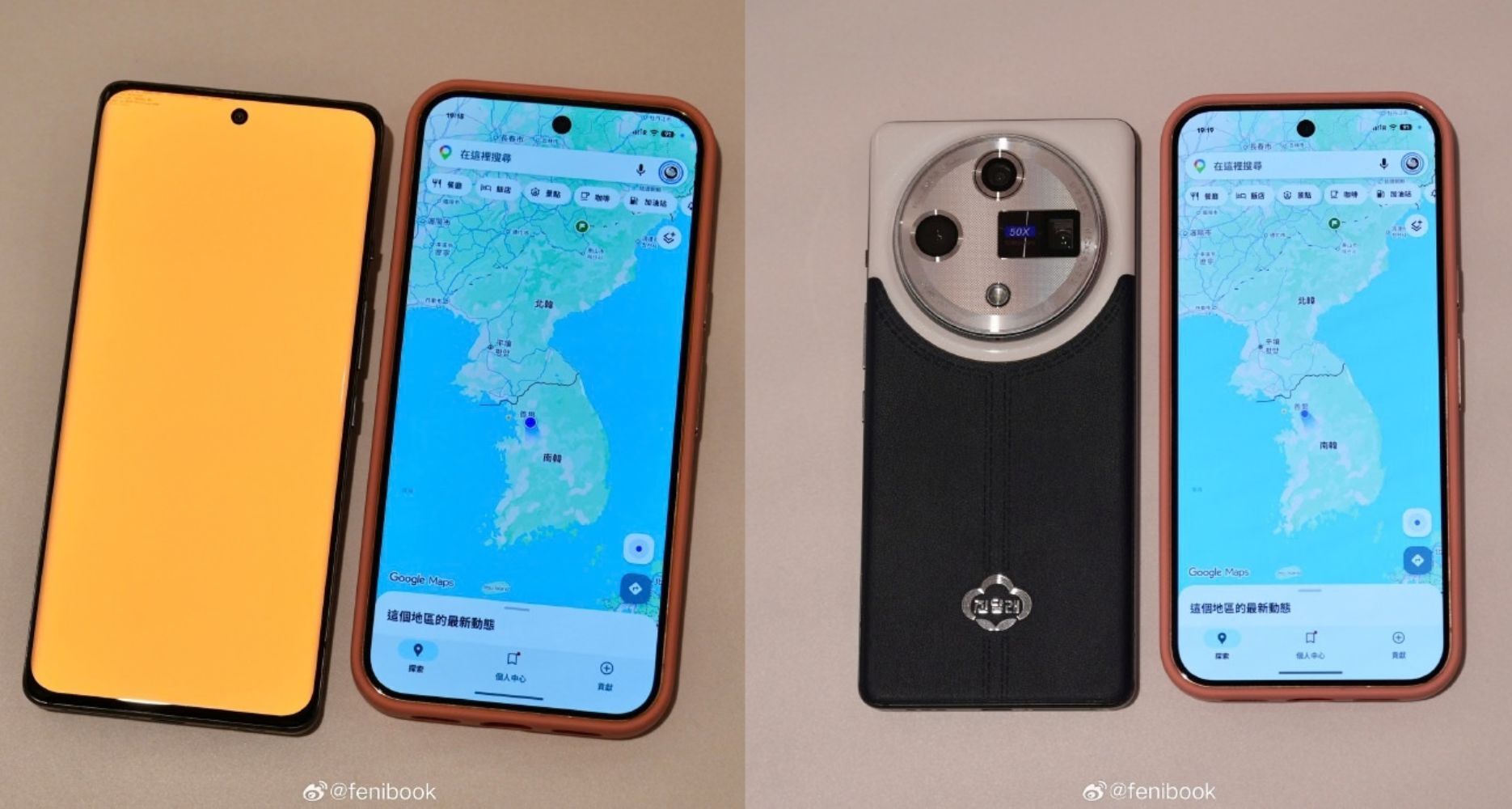
As depicted in the viral video footage, the vivid display of the Jindallae 12 abruptly shifted into an abnormal chromatic state, characterized by an overwhelming bleed of orange pixels across the entire panel. Following this visual anomaly, the operating system ceased normal execution, throwing the device into an unyielding, infinite reboot loop. The phone repeatedly attempted to initialize the kernel, failed to pass security or environmental validation checks, crashed, and restarted continuously without user intervention. All attempts by the reviewer to execute hard resets, access recovery menus, or bypass the initialization sequence proved entirely futile, rendering the high-end North Korean flagship an expensive, non-functional paperweight.
Technical Implications: Geofencing, Kill Switches, and Anti-Tamper Protocols
The catastrophic failure of the Jindallae 12 on foreign soil has provided independent security researchers with a rare, albeit accidental, empirical case study regarding the security architecture embedded within North Korean mobile devices. Technologists analyzing the viral footage have posited several compelling hypotheses to explain the hardware’s sudden and aggressive self-neutralization.
The most prominent theory centers on advanced geofencing and location-based security protocols engineered directly into the firmware. North Korea maintains an acute paranoia regarding the leakage of state-sanctioned software, proprietary applications, cryptographic certificates, and surveillance tools to foreign adversaries, particularly South Korea and the United States. To mitigate the risk of a state-issued device falling intact into the hands of foreign intelligence agencies or defectors, manufacturers operating under state directives appear to have integrated automated "kill switches" or self-destruct routines.
Under this mechanism, if the device detects that it has traversed beyond authorized territorial boundaries—determined either through cellular tower identification codes (PLMN IDs), Global Positioning System (GPS) coordinates, or the absence of trusted North Korean base station handshakes for a sustained period—a deep system-level flag is tripped. Rather than allowing foreign analysts to inspect the unencrypted file systems, parse proprietary APKs (Android Package Kits), or reverse-engineer the surveillance architecture, the device’s security kernel executes a protective lockdown. This process can corrupt partition tables, scramble bootloader signatures, or intentionally trigger infinite panic kernels, effectively bricking the phone to protect state secrets.
Another technical consideration involves the stringent cryptographic keys and certificate pinning utilized within the North Korean intranet ecosystem. North Korean smartphones do not connect to the global Domain Name System (DNS). Instead, they route all localized data traffic through state-controlled gateways utilizing proprietary root certificates. If the device detects an unauthorized foreign network environment attempting to negotiate connections without the presence of authorized state infrastructure, the security architecture may interpret this as a severe intrusion attempt, locking the operating system down as a defensive countermeasure.
Furthermore, the distinct orange pixel anomaly observed prior to the reboot loop strongly suggests a hardware-level voltage or display controller fault triggered by a software panic. When the kernel encounters an unrecoverable security exception, low-level drivers often fail to manage display buffer memory correctly, resulting in color corruption artifacts before the central processing unit forces a hard system reset.
Reactions and the Broader Geopolitical Context
While official spokespersons from Pyongyang’s Ministry of Information Industry have remained predictably silent regarding the incident—given that North Korean state media rarely acknowledges foreign social media trends or consumer product failures—the digital ripple effects have been substantial.
In Beijing, where North Korean trade and technological exchanges frequently intersect with Chinese commercial platforms, the viral nature of the video has sparked intense debate among tech-savvy netizens. The hashtag "The North Korean people’s real flagship phone" generated millions of impressions, prompting discussions ranging from amusement at the rigid totalitarian nature of the software to genuine fascination with the lengths to which the North Korean regime goes to maintain information control.
In Seoul, cybersecurity analysts and defense researchers are treating the incident with professional gravity. South Korean intelligence agencies have long maintained that North Korean consumer electronics are thoroughly saturated with spyware, keystroke loggers, and mandatory surveillance applications designed to suppress dissent and enforce ideological conformity among the citizenry. The revelation that these devices may also contain active anti-tamper self-destruction mechanisms highlights the regime’s extreme defensive posture in the ongoing asymmetric information war on the Korean Peninsula.
For international observers, the Jindallae 12 episode serves as a stark reminder of the digital iron curtain that continues to divide the Korean Peninsula. Even as North Korea attempts to project an image of a modern, technologically advancing sovereign state capable of producing competitive consumer electronics, its technological sector remains tethered to absolute political control, state paranoia, and deep structural isolation.
As long as the Kim Jong Un regime prioritizes total ideological purity and absolute state security over open global integration, devices bearing the insignia of the azalea flower will remain trapped within their intended borders—functioning, ironically, as both a symbol of domestic technological ambition and a fragile digital prison that cannot survive contact with the outside world.
