

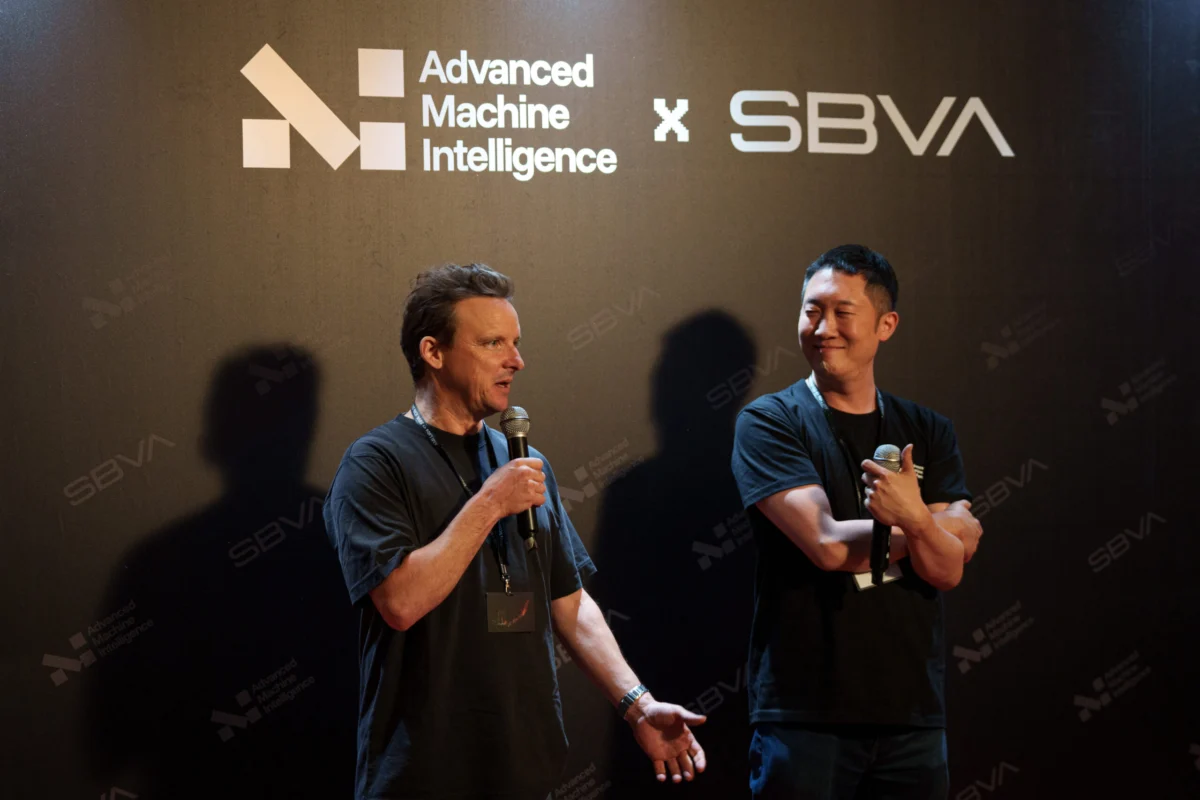
The artificial intelligence industry is currently locked in a high-stakes rhetorical race, with major technology companies and ambitious startups continuously jockeying to brand their latest developments as "Artificial General Intelligence" (AGI) or "superintelligence." However, amidst this widespread linguistic arms race, Alexandre LeBrun—chief executive officer of AMI Labs, the high-profile world model startup co-founded by Turing Award winner Yann LeCun—has chosen a deliberately counter-cultural path: he avoids these buzzwords altogether.
In an industry defined by sweeping futuristic claims, LeBrun’s rejection of terms like AGI and superintelligence highlights a growing skepticism among certain segments of the scientific community regarding vague hyperbole. While visiting Seoul for the International Conference on Machine Learning, LeBrun explained that these heavily marketed catchphrases lack rigorous definitions and offer little practical value to researchers building actual foundational systems. As AMI Labs positions itself at the cutting edge of physical AI—having secured a massive $1.03 billion funding round in March at a $3.5 billion pre-money valuation—its leadership is focusing less on theoretical milestones and much more on the tangible mechanics of how machines understand, navigate, and safely interact with the physical world.
The Evolution of AI Semantics and the Rejection of Hyperbole
For years, the technology sector has used the concept of AGI as a North Star, implying an autonomous system capable of matching or exceeding human intelligence across a broad spectrum of economically valuable tasks. More recently, as large language models (LLMs) continue to demonstrate rapid scaling capabilities, the vernacular has shifted upward toward "superintelligence"—a term suggesting machine cognition that vastly surpasses the collective intellect of all humans.
LeBrun, however, views this linguistic evolution with analytical detachment. "We never used the word AGI. And I just noticed that nobody is using it anymore; they switched to superintelligence," LeBrun noted during his recent interview. "Next time we’ll switch to something else."
His critique is rooted in scientific precision. In LeBrun’s estimation, these labels are functionally hollow. "There’s no good definition. What is superintelligence? I don’t know. It’s not a very useful word," he remarked. This pragmatic stance sets a distinct tone for AMI Labs, separating the venture from companies that rely on speculative future promises to drive market sentiment and capital allocation. Instead, AMI Labs is anchoring its mission in the concrete engineering challenges of physical AI, drawing a hard line between software-bound text generators and systems that must obey the laws of physics.
Defining World Models Versus Large Language Models
To understand the core mission of AMI Labs, one must differentiate between the mechanics of large language models and the architecture of world models. LLMs operate primarily in the symbolic domain of human language, predicting the subsequent token, word, or character based on vast statistical correlations derived from text data. While immensely powerful for semantic processing, summarization, and coding, LLMs fundamentally lack an innate comprehension of physical reality.
In contrast, a world model is engineered to predict the next state of a dynamic environment. If an individual gently nudges a glass of water off the edge of a table, human intuition instantly calculates that the glass will fall, hit the floor, and spill its contents. A world model seeks to capture this exact kind of physical intuition, incorporating fundamental principles of physics to anticipate how objects will move, react, and interact over time.
Crucially, LeBrun does not frame world models as a replacement for LLMs. Rather, he views the two technologies as fundamentally complementary components of a complete cognitive architecture. Drawing a direct parallel to the human brain, LeBrun explained that just as human beings possess distinct neural pathways for processing language and managing spatial reasoning, future AI systems will rely on LLMs for linguistic and symbolic processing, while world models will supply crucial context and real-world spatial understanding.
The Bottleneck of Physical AI and Robotics
Despite extraordinary advancements in hardware engineering over recent years—ranging from high-torque actuators and lightweight materials to specialized neuromorphic chips—the robotics industry faces a critical bottleneck: advanced hardware is currently being paired with remarkably primitive software brains.
Current industrial and commercial robots remain overwhelmingly static, executing rigid, pre-programmed routines within highly controlled environments. When these machines are deployed outside of structured factory floors—such as in households, public streets, or dynamic workspaces—they frequently stumble because they lack contextual awareness. LeBrun pointed to viral instances of public-facing robots, such as units performing choreographed routines that inadvertently approach and strike bystanders, as stark proof that contemporary machines operate without a foundational understanding of their surroundings.
"The hardware is very advanced; progress in hardware in the last few months is incredible, but there’s no brain," LeBrun emphasized. Furthermore, he noted a sobering reality regarding current robotic safety standards: "Robots are not safe right now. There’s no solution for that today."
Expanding this critique beyond engineering, LeBrun drew from his prior experience as the founder of Nabla, an artificial intelligence healthcare startup. He likened today’s prevailing AI systems to a medical professional who has memorized every textbook in existence but has never completed a clinical residency. While LLMs can assist physicians with preliminary administrative tasks or literature reviews, LeBrun estimates they address only a fraction of true medical utility, as the vast majority of healthcare relies heavily on nuanced, real-world experience and tactile understanding.
The Strategic Pivot to Asia and South Korea’s Industrial Ecosystem
Because world models require deep exposure to physical reality to function accurately, they cannot be constructed entirely within the isolated confines of a computer laboratory. Training an AI to master physics requires access to vast, diverse physical environments, sensor streams, and industrial applications. This necessity is precisely what drew LeBrun to Asia during his recent international tour, with a particular focus on South Korea.
While AMI Labs has not yet finalized a comprehensive regional strategy for Asia—with LeBrun noting that it is "too early" to outline all operational details—the pull toward South Korea is anchored in two foundational pillars: an advanced, hardware-heavy industrial base and exceptional technological adoption velocity.
South Korea boasts world-leading infrastructure in semiconductors, precision manufacturing, and advanced robotics—sectors that the initial software-centric wave of the generative AI boom largely bypassed. Furthermore, the country has historically demonstrated a remarkable propensity for rapid technological assimilation. LeBrun pointed out that South Korea was among the fastest nations to adopt widespread internet infrastructure twenty-five years ago. This unique convergence of deep industrial manufacturing and an aggressive willingness to embrace emerging technology makes the country an ideal testing ground for physical AI.
This perspective is strongly echoed by regional venture capitalists. JP Lee, CEO of SBVA and a prominent backer of AMI Labs in Asia, has been actively urging LeBrun and his executive team to establish a firm operational footprint in Seoul. Lee noted that while the South Korean government has successfully funded sovereign large language models that perform adequately for general-purpose text tasks, policymakers and industry leaders increasingly recognize the imperative to invest simultaneously in physical AI.
This sentiment aligns with broader national strategies in Seoul. In June, South Korean technology stakeholders and government planners committed to mobilizing an estimated $880 billion to supercharge local semiconductor production, expand advanced AI data centers, and accelerate physical AI initiatives. For foreign startups like AMI Labs, South Korea offers not just capital and hardware partnerships, but an agile ecosystem of developers and enterprises uniquely eager to test and scale novel computational paradigms.
A Pre-Product Startup Backed by Billion-Dollar Confidence
Despite commanding immense industry attention and securing a staggering $1.03 billion financing round in March at a $3.5 billion pre-money valuation, AMI Labs remains staunchly pre-product. Co-founded by Yann LeCun following his departure from Meta Platforms, the startup currently has no commercial software or hardware to sell, nor has its leadership committed to a firm public launch timeline.
When questioned about when the market might finally see a commercial iteration of AMI Labs’ technology, LeBrun maintained an air of deliberate mystery. "We’ll make a surprise when we’re ready," he stated.
As the broader technology sector continues to chase elusive definitions of artificial general intelligence and superintelligence, AMI Labs is charting a distinctly pragmatic course. By focusing on the foundational physics of world models and seeking out deep industrial partnerships in hardware-heavy markets like South Korea, the startup is betting that the true milestone of advanced AI will not be declared through marketing hyperbole, but proven through safe, context-aware interaction with the physical world.
