

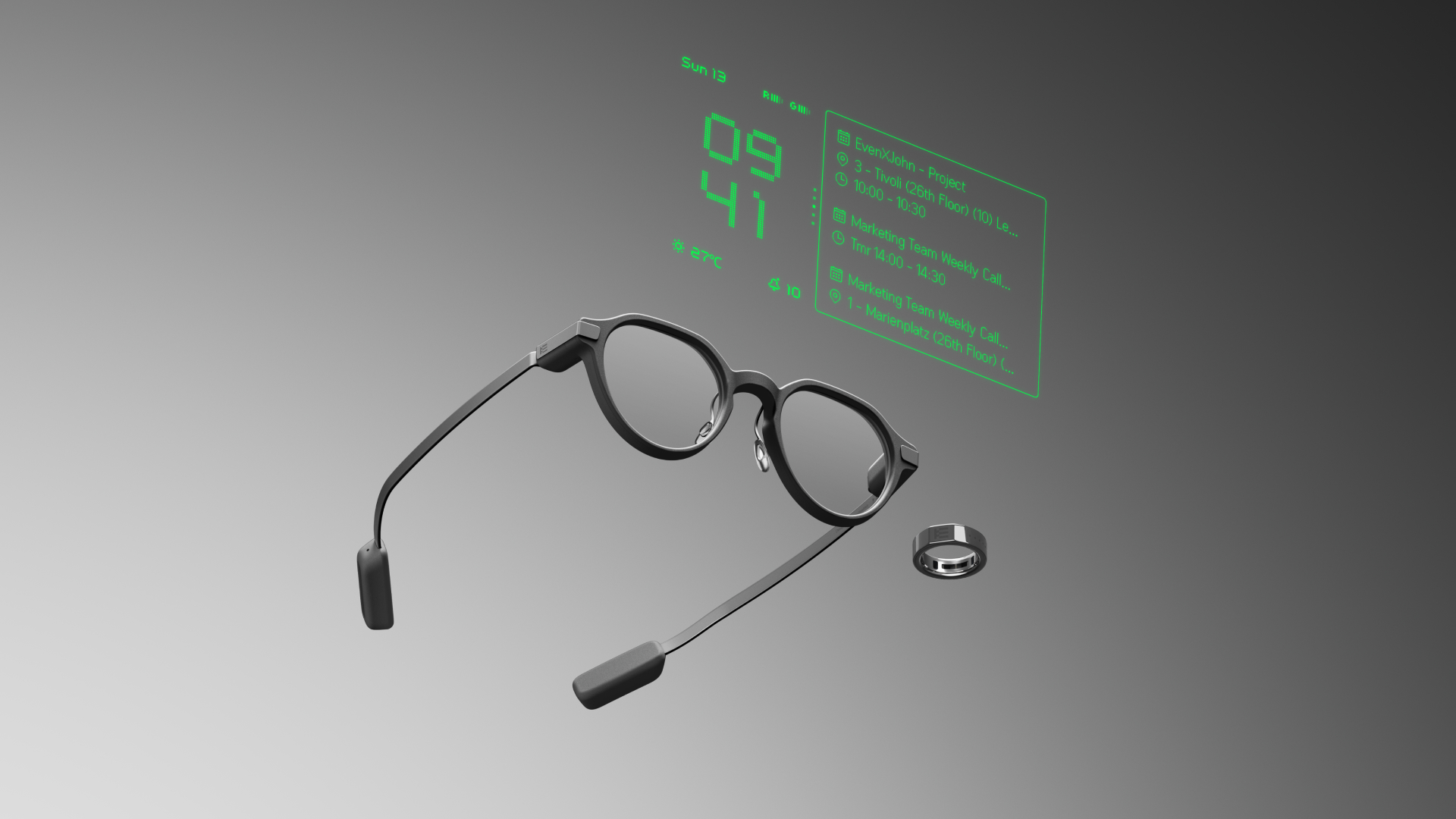
The global race to embed artificial intelligence and heads-up displays onto the human face has intensified significantly, moving far beyond the drawing boards of Silicon Valley mega-corporations. While industry heavyweights like Meta Platforms and Snap have recently grabbed headlines with their latest iterations of consumer-facing smart eyewear, a nimble, Shenzhen-headquartered startup named Even Realities is capturing the attention of top-tier venture capitalists and discerning technology consumers alike. Defying the industry-wide obsession with camera-centric media capture, Even Realities has successfully closed a massive $150 million pre-Series B funding round.
Led by internet giant Meituan, alongside continued backing from previous investor Tencent, the financing catapults the three-year-old hardware developer into the coveted unicorn club with a valuation of $1.0 billion. The transaction underscores a growing appetite among investors for hardware alternatives that prioritize discretion, optical fidelity, and wearer privacy over constant video recording. As major technology conglomerates push deeper into augmented reality ecosystems burdened by privacy concerns and bulky frames, Even Realities is carving out a lucrative, premium niche by betting on what its leadership calls "display-first" computing.
The Genesis of a Wearable Disruptor
Founded in 2023 by a cohort of industry veterans who previously cut their teeth at Apple and renowned luxury eyewear houses such as Lindberg, Even Realities was built from the ground up to solve the ergonomic and aesthetic shortfalls of early-generation wearable technology. Chief Executive Officer Will Wang, whose professional background includes engineering work on foundational Apple products like the iPhone and the Apple Watch, envisioned a device that people would actually want to wear in professional and social settings without feeling self-conscious.
From its inception, the company moved at an aggressive pace. Eschewing the multi-year product development cycles typical of legacy consumer electronics giants, the startup designed, manufactured, and commercialized its inaugural product—the Even G1—within roughly a year of operations. Launched in 2024, the Even G1 entered the market heralded as one of the lightest waveguide-enabled smart glasses available.
The strategy yielded immediate commercial validation. According to company metrics shared by CEO Wang, the Even G1 drastically outperformed internal forecasts, surpassing the 10,000-unit sales threshold to become a pioneer in its specific product category. This initial commercial traction fueled rapid corporate scaling, expanding the startup’s internal workforce from a modest 30 to 40 employees in 2024 to a robust organization numbering between 300 and 400 personnel today.
A Chronology of Innovation and Product Evolution
The trajectory of Even Realities reflects a broader maturation phase within the smart eyewear sector, transitioning from novelty gadgets to indispensable enterprise and productivity tools.
- 2023: Even Realities is founded by a multidisciplinary team of former Apple engineers and luxury eyewear designers. The company establishes its headquarters in Shenzhen, integrating manufacturing prowess with high-end fashion sensibilities.
- 2024: The startup launches its maiden product, the Even G1, positioning it as the lightest waveguide smart glasses on the market. It shatters internal sales projections by moving over 10,000 pairs, transforming from a small-scale venture into a scaling enterprise.
- Late 2025 (November): The company debuts its second-generation flagship device, the Even G2, completely omitting the camera module to double down on a discrete, information-only heads-up display.
- Mid-2026: Even Realities secures a $150 million pre-Series B funding round led by Meituan and Tencent, officially achieving unicorn status at a $1 billion valuation while charting international expansion beyond its core Western markets.
Optics First: The Technological Foundation of Even HAO
While many consumer technology companies treat the visual display component of smart glasses as an ancillary feature borrowed from smartphone or smartwatch supply chains, Even Realities views optics as the defining bottleneck of the medium. CEO Wang emphasizes that smart eyewear represents an entirely distinct consumer electronics category that cannot rely on conventional liquid-crystal or organic light-emitting diode panels designed for pocket-sized screens.
Instead, building functional, comfortable smart glasses requires an integrated, holistic engineering approach where microchips, optical engines, and waveguide substrates are conceptualized concurrently rather than cobbled together from disparate off-the-shelf components. To achieve this, the company developed a proprietary optical architecture known as Even HAO, or Holistic Adaptive Optics.
This end-to-end design methodology allows Even Realities to seamlessly embed prescription lens support directly into the optical path from the manufacturing stage. By doing so, the company circumvents the optical distortion and added weight that typically plague retrofitted prescription smart glasses, ensuring that the heads-up display beams crisp, monochromatic or targeted textual information directly into the wearer’s natural line of sight without obscuring their peripheral vision.
The Privacy-First Philosophy and the Death of the Camera
Perhaps the most defining differentiator between Even Realities and competitors like Meta and Snap is the deliberate absence of a forward-facing camera on its flagship devices, including the Even G2, which hit shelves last November.
In an era where ubiquitous ambient recording has sparked intense regulatory scrutiny, public unease, and "no-smart-glasses" bans in restaurants, gyms, and office buildings, Even Realities has staked its brand identity on a philosophy of radical discretion. Wang characterizes smart glasses as inherently intimate computing tools—devices resting permanently on the human face throughout the waking hours of the day. Because of this high degree of personal proximity, the hardware must be engineered to respect not only the wearer’s privacy, but also the psychological comfort of bystanders.
This commitment extends deep into the software architecture. Voice-enabled capabilities, such as real-time language translation, function by transcribing acoustic data into transient text strings rather than storing raw audio recordings on remote cloud servers. User data is subjected to end-to-end encryption, and the underlying cloud infrastructure is architected to comply stringently with Europe’s rigorous General Data Protection Regulation (GDPR) and other international privacy frameworks.
Power Users and the Conversate Copilot
Despite lacking cameras or immersive augmented reality video pass-through capabilities, Even Realities’ hardware has cultivated a fiercely loyal following among high-intensity information workers. The primary driver of this engagement is Conversate, an onboard artificial intelligence copilot designed specifically for the company’s hardware ecosystem.
Conversate functions as a real-time linguistic assistant, passively processing spoken dialogue to explain obscure industry jargon, suggest strategic follow-up questions during meetings, and subsequently synchronize concise summaries directly to the user’s smartphone. Navigation and interaction with these features are managed via the Even R1, a companion smart ring that allows wearers to navigate menus and scroll through textual notifications using subtle physical taps and swipes, keeping their hands free and their eyes forward.
Market Demographics and Global Footprint
Even Realities occupies a distinct socioeconomic tier within the wearable technology landscape. Eschewing the race to the bottom for mass-market affordability, the company prices its hardware near the upper echelon of the category. The base frames retail for $599 before taxes, with custom prescription lenses and the companion smart ring adding an additional $200 to $300, pushing the average customer checkout total to approximately $1,000.
This premium pricing strategy has not hindered sales volume; rather, it has helped cement the startup’s financial sustainability. Wang reports that the company is currently profitable, sustained primarily by a dedicated demographic of affluent male professionals between the ages of 30 and 50. Internal user surveys reveal that approximately one-third of the active customer base consists of corporate executives, entrepreneurs, and consultants who rely on the heads-up display for discrete, hands-free information consumption during high-stakes environments.
Geographically, the startup’s market distribution is somewhat paradoxical. Although its manufacturing operations are deeply anchored across several factories in China, the company does not yet commercially distribute its products domestically. Instead, more than half of its total sales volume originates in the United States, which stands as its fastest-growing market. Alongside the U.S., Even Realities maintains strong commercial footholds in Japan, South Korea, the Middle East, and Europe.
"The demand there is significant, so we want to make sure we’re prepared first," Wang noted regarding the company’s measured approach to the Chinese domestic retail market, preferring to solidify its supply chain and developer community support structures before expanding into its home territory.
Broader Implications for the Wearable Industry
The massive capital injection led by Meituan and Tencent signals a broader recalibration within the venture capital and technology sectors. For years, the prevailing dogma of the extended reality (XR) industry dictated that successful smart glasses must eventually evolve into full-fledged spatial computing headsets, complete with outward-facing cameras, gesture tracking, and vibrant full-color holographic displays.
However, consumer resistance, technological hurdles surrounding battery life, thermal dissipation, and mounting social friction over surveillance have forced a pragmatic retreat. Even Realities’ $1 billion valuation demonstrates that a lucrative path forward exists for hardware developers who focus on doing one thing exceptionally well: augmenting human cognition through lightweight, elegant, and non-intrusive textual displays.
As competition heats up between well-capitalized social media conglomerates pushing media-capture devices and specialized hardware startups prioritizing utility and discretion, the market is effectively bifurcating. Whether consumers will ultimately prefer camera-equipped social spectacles or private, productivity-oriented heads-up displays remains the defining question for the next decade of wearable computing. For now, with $150 million in fresh capital and a profitable business model, Even Realities has proven that the future of smart glasses does not necessarily need a lens to see a clear path forward.
