

The iconic orange-red tents known as pojangmacha are quintessential fixtures of the South Korean nightlife landscape, serving as more than mere street-side eateries. These establishments represent a profound social institution where the rigid hierarchies of professional and personal life intersect with the casual atmosphere of after-hours relaxation. For both residents and international visitors, navigating the complexities of Korean drinking culture requires an understanding of both the unspoken rules of etiquette and the traditional culinary pairings that define the experience. As South Korea continues to attract millions of tourists annually, the integration of foreign guests into these local traditions has necessitated a clearer understanding of the social contract governing the drinking table.

Historical Evolution of the Pojangmacha
The term pojangmacha, literally translating to "covered wagon," traces its roots back to the 1950s in the post-Korean War era. During the reconstruction of the nation, these mobile stalls became a primary source of affordable food and drink for the working class. Initially serving as modest carts, they evolved into the semi-permanent structures often seen in modern urban centers like Seoul, Busan, and Daegu. By the 1970s and 1980s, these tents became the preferred venues for the "i-cha" or "second round," a cultural phenomenon where groups move from a primary dinner location to a secondary, more informal setting to continue social bonding.

In recent years, urban development and stricter licensing regulations have led to a decline in the number of traditional street-side tents. However, their cultural footprint remains immense. Today, many pojangmacha have migrated into brick-and-mortar storefronts that retain the aesthetic of the original tents, ensuring the tradition persists even as the urban landscape modernizes.

The Social Hierarchy of the Drinking Table
At the core of the Korean drinking experience is the Confucian emphasis on respect for seniority. This philosophy dictates the flow of social interactions, from the pouring of the first glass to the physical positioning during a toast. In a professional setting, where colleagues may be of varying ranks, these customs serve to maintain organizational cohesion and show mutual respect.

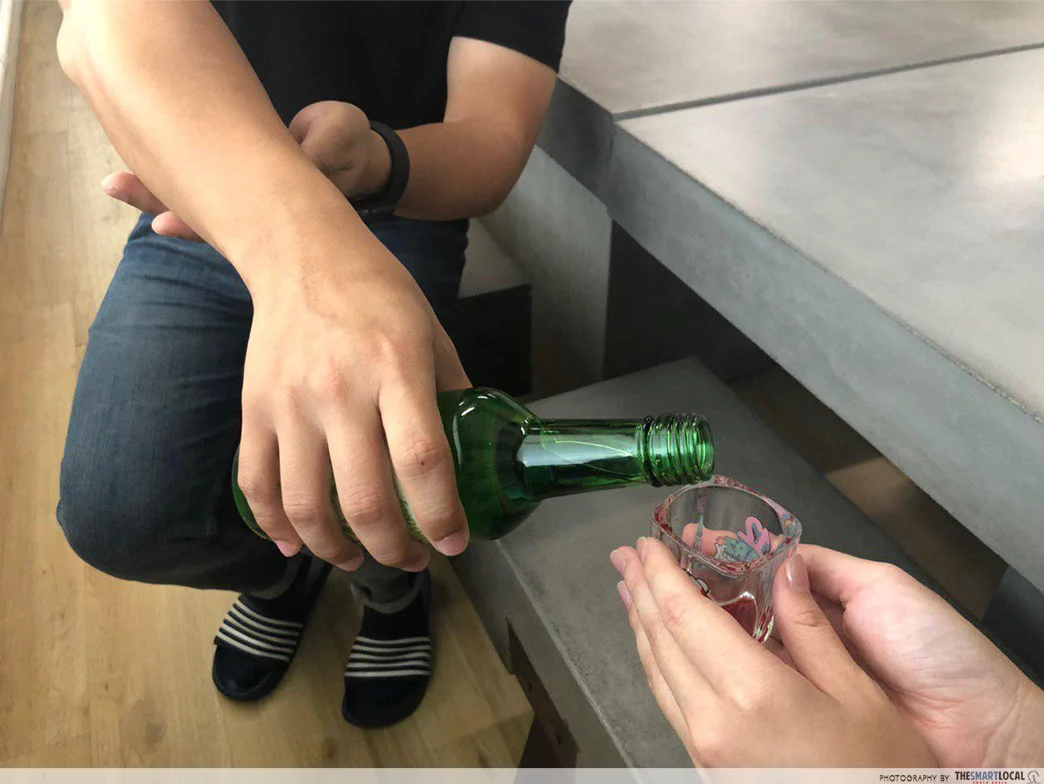
The most critical protocol involves the pouring of drinks. Traditionally, the most senior person in the group initiates the service. Once the first round is poured, the youngest member of the party assumes the responsibility of refilling glasses. When pouring, one must use two hands—or place one hand on the opposite elbow or chest—to signify respect. Conversely, when receiving a drink, the recipient should hold their glass with both hands.

These rules are not merely aesthetic; they are indicators of social awareness. While close friends may choose to forgo these formalities as a night progresses, an outsider’s adherence to these customs is often viewed as a gesture of cultural appreciation. Clinking glasses is also subject to hierarchy: the rim of a younger person’s glass should always be positioned lower than that of their elder when they make contact.

Strategic Consumption and Moderation
The practice of "drinking to bond" involves a degree of pacing that is often misunderstood by foreign visitors. The first glass is typically consumed in its entirety, serving as a communal initiation of the session. Following this, the pace is intended to be conversational. A critical rule of etiquette is that one should never refill their own glass. If a bottle is empty, a peer should provide the refill, or, in the case of a junior member, they should observe the state of their seniors’ glasses and offer to replenish them.

When a participant wishes to slow their intake, they should refrain from emptying their glass entirely. A partially filled glass signals that the individual is pacing themselves and does not require a refill. This nuance is vital for maintaining a comfortable atmosphere and avoiding the common pitfall of excessive consumption, which can lead to social friction, particularly in professional environments.

Economic and Cultural Impact of Anju
The food served at a pojangmacha, known collectively as anju, is essential to the longevity of a drinking session. Unlike Western bar snacks, which are often secondary, anju is viewed as a necessary accompaniment to alcohol to prevent rapid intoxication and provide a balanced culinary experience.

Market data indicates that the most popular anju orders remain consistent across the country:

- Dalgttongjip (Chicken Gizzard): Favored for its texture and protein content.
- Odolppyeol (Cartilage): Often stir-fried with spicy chili paste to offset the bitterness of soju.
- Sundae (Blood Sausage): A traditional staple reflecting the resourcefulness of post-war cuisine.
- Sannakji (Live Octopus): Often cited as a point of curiosity for tourists, this dish remains a high-demand delicacy for locals.
The economic implications of this food culture are significant. The sale of alcohol, particularly soju and beer, is heavily supported by the consistent demand for anju. Recent shifts in consumer habits have seen an increase in the variety of fermented rice wines, such as makgeolli, which is marketed as a healthier, probiotic-rich alternative.

Implications for Modern Society
The persistence of these drinking rituals in the 21st century highlights a unique tension in South Korea between rapid modernization and the preservation of traditional values. Sociological analysts suggest that while the younger generation is increasingly individualistic, the "drinking culture" remains a primary mechanism for humanizing workplace relationships.

However, there is a growing movement toward "responsible drinking." Public health initiatives have begun to encourage a decrease in the pressure to "down" shots, with more companies and social groups normalizing the choice to abstain from alcohol during company outings. This reflects a broader societal shift toward valuing employee well-being over strict adherence to traditional social hierarchies.

Practical Tips for the Modern Visitor
For those intending to visit a pojangmacha, it is important to note that many of these establishments are cash-only operations. Despite the integration of digital payment systems across most of South Korea, the traditional pojangmacha environment often operates on a smaller, decentralized financial model.

Furthermore, while the "love shot"—a gesture of locking arms while drinking—is often seen as a romantic or playful act, it is also a common social ritual used to resolve conflicts or solidify new friendships. Understanding that these gestures are deeply embedded in the social fabric allows for a more meaningful and respectful interaction with the local community.

In conclusion, the pojangmacha is more than just a venue for consumption; it is a living classroom for understanding the social expectations of South Korea. By respecting the hierarchy of the table, pacing one’s consumption, and engaging with the tradition of anju, visitors can bridge the gap between observer and participant, gaining a deeper appreciation for the communal spirit that defines the South Korean evening. Whether ordering a classic bottle of soju or experimenting with a "somaek" (soju and beer) bomb, the key to a successful experience remains consistent: treat the table as a space of mutual respect, and the rest will follow.
