

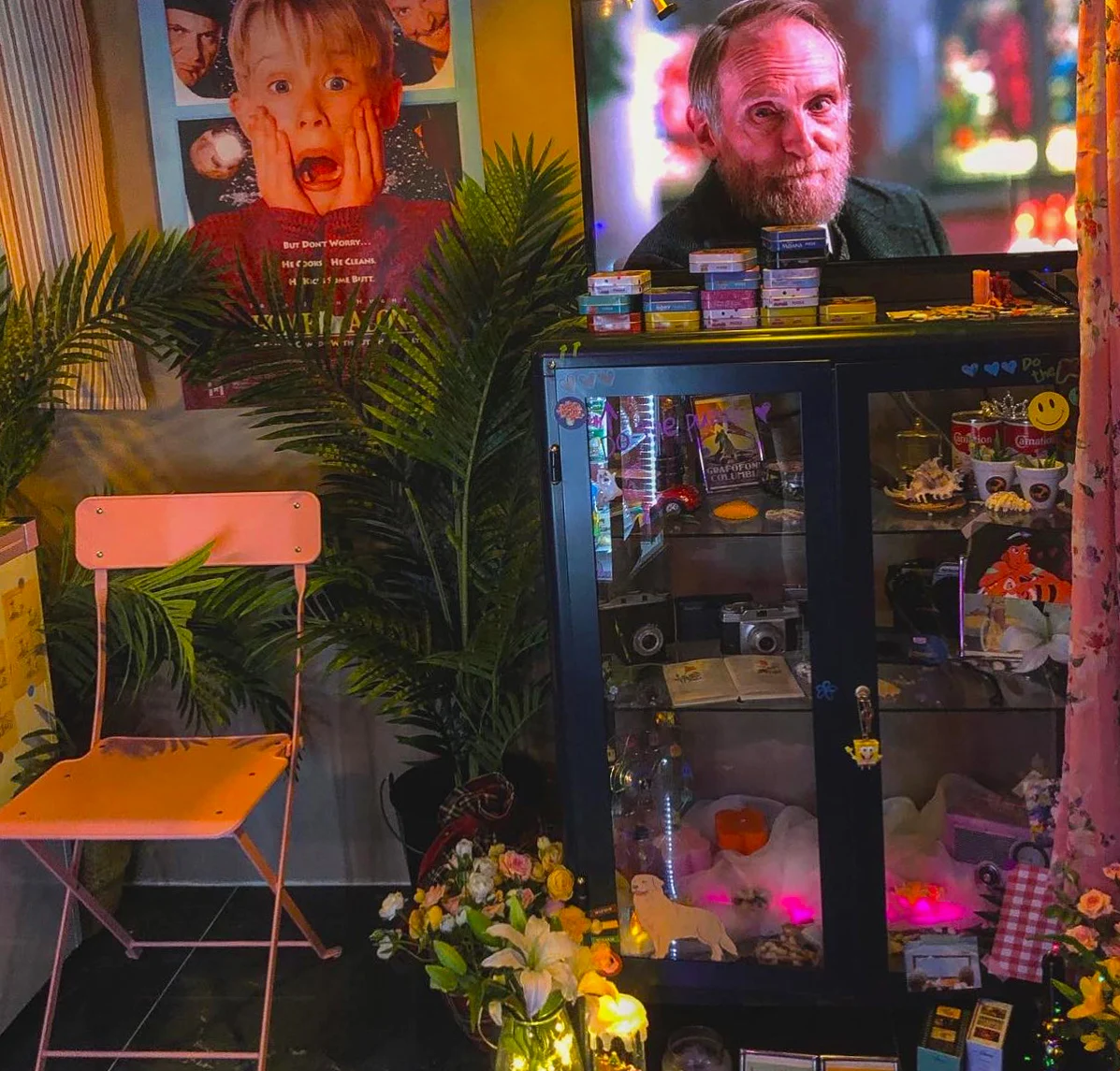
The architectural and interior design landscape of South Korea has undergone a profound transformation over the past decade, driven heavily by the global rise of experiential retail and the dominance of social media culture. Within cities outside the immediate capital region of Seoul, such as Cheongju in North Chungcheong Province, independent small business owners are increasingly relying on hyper-specific design concepts to attract regional and national tourism. Among the most prominent manifestations of this trend is "cuttlecore"—an eclectic, maximalist design philosophy that blends nostalgic pop culture memorabilia, vibrant pastel color palettes, and curated vintage furnishings. Situated in the Heungdeok district of Cheongju, the independent cafe known as Blue Leaf has emerged as a premier physical embodiment of this aesthetic movement, operating at the intersection of millennial nostalgia, Gen Z pop-culture curation, and the booming South Korean specialty cafe economy.
The Socio-Economic Context of South Korea’s Themed Cafe Industry

To understand the operational and cultural significance of venues like Blue Leaf, one must examine the broader evolution of South Korea’s food and beverage sector. Over the past twenty years, cafes in the country have evolved far beyond simple purveyors of coffee and light refreshments. Propelled by one of the highest per capita coffee consumption rates in the world, the South Korean cafe market has become intensely competitive, forcing independent operators to adopt unique value propositions.
Initially, the market was dominated by minimalist, industrial aesthetics featuring exposed concrete, neutral tones, and sparse decoration—a style heavily influenced by Scandinavian design principles. However, a cultural counter-movement has steadily gained momentum, heavily anchored in retro-futurism and the revival of late 20th-century aesthetics, commonly referred to locally and globally as the Y2K wave. This aesthetic looks back to the turn of the millennium, drawing inspiration from early internet culture, classic American diner architecture, Saturday morning cartoons, and the hyper-stylized bedroom designs popularized by Hollywood coming-of-age films from the late 1990s and early 2000s.
Cheongju, a major administrative and educational hub in central South Korea, has increasingly become a testing ground for these avant-garde retail concepts. While historically known for its high-tech industrial complexes and cultural heritage sites, the city’s commercial districts have adapted to younger demographics who demand highly photogenic, immersive spaces. Blue Leaf capitalizes directly on this demographic shift, transforming a traditional commercial footprint into a temporal portal that merges old-school American roadside architecture with distinctly Asian collectible culture.

Exterior Architecture and Interior Spatial Curation
From the exterior, Blue Leaf presents a deliberate pastiche of mid-20th-century Americana. The storefront features a classic red-and-white striped fabric awning, immediately evoking the visual language of a traditional roadside diner in the United States. This exterior framing acts as a visual threshold, contrasting sharply with the urban streetscape of Naesu-dong-ro.
Upon crossing the threshold, visitors encounter a meticulously orchestrated explosion of color, texture, and pattern. The interior design avoids negative space entirely, adhering strictly to the maximalist tenets of cuttlecore. Every horizontal surface, wall panel, and seating arrangement is utilized to display an array of props, soft toys, vintage textiles, and nostalgic memorabilia. Pastel-toned plush toys, heavily inspired by Japanese character goods and classic Sanrio aesthetics, occupy window sills and corner shelves. The soft furnishings—including custom tablecloths and patterned window curtains—feature discordant yet harmonious prints reminiscent of a teenager’s bedroom from a 2000s high school comedy film.

Beyond its atmospheric appeal, Blue Leaf functions concurrently as a quasi-retail gallery. Operating within a niche collector’s market, the establishment curates and displays limited-edition collectible toys that are sourced from vintage markets both domestically and internationally. While many items serve purely as decorative props to enhance the immersive environment, a select inventory of rare toys and memorabilia is made available for purchase by patrons, bridging the gap between hospitality and specialty retail.
The Material Culture of Dining: Tableware as Narrative
A defining characteristic of Blue Leaf’s operational philosophy is the extension of its aesthetic narrative down to the micro-level of cutlery and dishware. In standard commercial food service operations, tableware is selected primarily for durability, uniformity, and ease of maintenance. In contrast, conceptual spaces like Blue Leaf treat tableware as an active medium for storytelling.

The cafe’s inventory of plates, mugs, glasses, and utensils appears as though curated directly from an upscale vintage thrift store. Beverages are served in glassware and ceramic mugs emblazoned with iconography from classic American animation franchises, including vintage depictions of Disney and Pixar characters. The plateware rotates through a spectrum of pastel hues, accented by pieces bearing iconic pop culture motifs, most notably Barbie-themed designs.
Among the most photographed elements of the venue’s culinary presentation is its custom teddy bear-shaped plateware. Sized specifically to accommodate the cafe’s signature bear-shaped cream cakes and specialty desserts, these pieces exemplify the meticulous attention to detail required to succeed in South Korea’s saturated dessert cafe market. By ensuring that every element of the presentation—from the fork to the teacup—reinforces the core nostalgic theme, the venue maximizes its appeal to content creators and photography enthusiasts who drive digital word-of-mouth marketing across platforms like Instagram and Naver Blog.
Logistics, Accessibility, and Urban Impact

Located at 1F, 15 Naesu-dong-ro 55beon-gil, Heungdeok-gu, Cheongju-si, Chungcheongbuk-do, Blue Leaf occupies a strategic position within the city’s urban grid, accessible to both local residents and travelers exploring regions outside the capital.
For visitors commuting from Seoul or other major metropolitan areas, the journey typically begins via the high-speed KTX rail network to Osong Station. Upon arrival at Osong, travelers navigate to Exit 7 to access regional transit lines. Boarding bus number 511, passengers travel approximately 25 stops before alighting at the Chungbuk National University bus stop. From this transit node, a brief three-minute walk leads directly to the cafe’s storefront.
The venue operates on a tightly managed schedule, welcoming patrons Monday through Saturday from 11:30 AM to 7:00 PM, while remaining closed on Sundays to accommodate operational curation and inventory sourcing.

Industry analysts point out that independent themed cafes like Blue Leaf play a vital role in regional economic revitalization. By drawing foot traffic into secondary commercial districts outside of Seoul’s primary hotspots—such as Hongdae or Seongsu-dong—these establishments stimulate local micro-economies, encouraging the growth of complementary businesses, including boutique retail shops, independent bakeries, and localized hospitality services.
Broader Implications for South Korea’s Hospitality Sector
The sustained popularity of Blue Leaf and similar concept spaces highlights a broader psychological trend within modern South Korean society: the search for comfort and escapism through collective nostalgia. As younger generations navigate the economic pressures of high housing costs, fierce academic competition, and a demanding corporate labor market, spaces that evoke the perceived simplicity and innocence of the late 20th century offer a powerful therapeutic refuge.

Furthermore, the success of Blue Leaf underscores the changing dynamics of architectural and interior design within small-scale commercial real estate. Traditional metrics of operational efficiency—such as maximizing seating capacity and minimizing clutter—are increasingly subverted in favor of experiential density. When every square meter of a venue is optimized for visual engagement, the physical space itself transforms into the primary product, shifting the consumer’s motivation from basic sustenance to immersive cultural consumption.
As the 2020s progress past their midpoint, the evolution of establishments like Blue Leaf suggests that themed spaces will continue to push the boundaries of retail and hospitality design. By masterfully fusing niche collector culture, meticulous interior styling, and a deep understanding of digital-age consumer behavior, Blue Leaf has secured its position not merely as a local eatery, but as a notable case study in the commercialization of modern memory.
