

The South Korean political and economic landscape experienced a flurry of activity on Monday, October 26, 2026, as the administration navigated the intersection of international trade policy, technological advancement, and regional security. From the halls of Cheong Wa Dae to the volatile front-line border regions and the bustling halls of the Korea Stock Exchange, key stakeholders are balancing long-term strategic growth against immediate domestic pressures.
President Lee Addresses Agricultural Concerns Regarding CPTPP
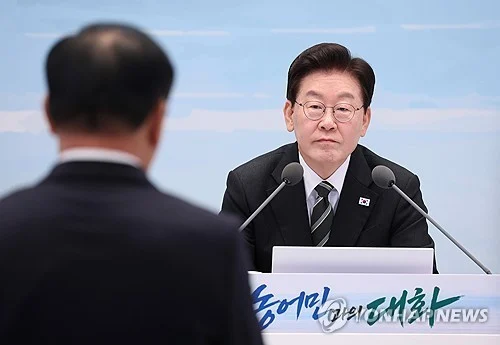
President Lee Jae Myung hosted a high-level summit at Cheong Wa Dae on Monday, bringing together leaders from South Korea’s agricultural, fisheries, forestry, and livestock sectors. The primary objective of the meeting was to address growing anxiety within the rural community regarding the potential accession of South Korea to the Comprehensive and Progressive Agreement for Trans-Pacific Partnership (CPTPP).
For many farmers and fishermen, the prospect of CPTPP membership represents an existential threat. The trade agreement, which encompasses 12 Pacific Rim nations, necessitates the significant reduction or elimination of tariffs on agricultural and seafood imports. Industry representatives expressed fears that an influx of cheaper foreign goods could devastate local livelihoods, which are already struggling with aging demographics and rising production costs.
President Lee sought to mollify these concerns, emphasizing that the government’s approach to trade liberalization would not come at the expense of national food security or the survival of local farmers. "We are acutely aware of the anxieties permeating our rural and coastal communities," President Lee stated. "My administration is committed to a ‘protection-first’ framework that will implement robust safety nets, diversification subsidies, and long-term modernization support to ensure that no sector suffers unfair damage from our integration into global trade blocs."
The government has indicated it will conduct a series of comprehensive impact assessments before finalizing its formal application for the CPTPP. Analysts suggest that the administration is attempting to balance the geopolitical necessity of strengthening ties with Pacific partners against the domestic political requirement of maintaining support in rural voting blocks.
Seoul Equity Markets Navigate Global Uncertainty
The South Korean financial markets mirrored the cautious sentiment currently prevalent in major global exchanges. The KOSPI index closed lower on Monday, shedding over 1 percent of its value as investors adopted a "wait-and-see" approach ahead of a pivotal week for international finance.
The primary drivers of this volatility are the impending third-quarter earnings reports from global semiconductor giants and the highly anticipated interest rate decision from the U.S. Federal Reserve. As chipmakers are the backbone of the South Korean economy, any indication of slowing demand or tightening supply chains for artificial intelligence-related hardware creates immediate ripples in Seoul.
Despite the equity market’s decline, the Korean won demonstrated resilience, gaining ground against the U.S. dollar. This currency movement suggests that while stock market participants are risk-averse, the broader macroeconomic outlook for the Korean economy remains underpinned by stable trade balances and strong demand for high-tech exports. Analysts at the Korea Exchange noted that the volatility is largely technical, driven by institutional rebalancing rather than fundamental shifts in corporate performance.
Security Breach at the Inter-Korean Border
In a development that highlights the persistent security challenges on the Korean Peninsula, military authorities confirmed on Monday that a woman in her 30s is being held in custody following an unauthorized entry into a restricted front-line area. The incident occurred on Sunday in the Cheorwon region, approximately 80 kilometers northeast of Seoul, an area that falls under the Civilian Control Line (CCL) south of the Military Demarcation Line (MDL).
The Joint Chiefs of Staff (JCS) reported that the individual crossed into the high-security zone without authorization. While the JCS has withheld the identity and motive of the woman, the incident has prompted a review of border surveillance protocols. The CCL is a designated area where civilian access is restricted to prevent interference with military operations and to maintain the integrity of the border defense.
Military experts note that such breaches, while often non-hostile in nature, place immense pressure on front-line units to distinguish between civilian trespassers and potential intelligence or sabotage threats. The incident remains under investigation, and authorities have signaled that they will likely seek charges related to the violation of the Military Base and Facility Protection Act.
Samsung Electronics Leverages AI for Material R&D
In the technology sector, Samsung Electronics made a significant announcement regarding its R&D strategy during the Korea Industry Association Forum. The company revealed its intention to deploy advanced artificial intelligence (AI) systems to slash the development time of new semiconductor materials by three years.
The development of high-performance materials—such as those required for next-generation transistors and memory chips—typically follows a laborious, trial-and-error cycle that can take up to a decade. By utilizing generative AI and machine learning models to simulate molecular properties and predict experimental outcomes, Samsung aims to accelerate the discovery phase of semiconductor manufacturing.
"The race for semiconductor supremacy is no longer just about lithography equipment; it is about the speed of material innovation," said a Samsung spokesperson at the forum. "By integrating AI, we are effectively compressing years of physical lab work into months of digital modeling."
This initiative is part of a broader national strategy to ensure South Korea remains at the forefront of the global chip supply chain. With geopolitical competition for semiconductor dominance intensifying, the ability to rapidly iterate on materials is seen as a crucial competitive advantage that could insulate the nation’s tech giants from global supply chain disruptions.
Foreign Minister Cho’s Upcoming G20 Mission
Looking toward international diplomacy, the Ministry of Foreign Affairs confirmed that Minister Cho Hyun will travel to Atlanta, United States, this Thursday for a five-day summit of G20 foreign ministers. The meeting is expected to serve as a high-level forum to address a range of pressing global challenges.
The agenda for the G20 ministers includes:
- Geopolitical Stability: Coordinating responses to ongoing international conflicts and regional instabilities.
- Energy Security: Discussing the transition to renewable energy sources while maintaining supply chain reliability.
- Global Supply Chains: Seeking multilateral agreements to prevent the weaponization of trade and to ensure the flow of critical minerals and technology.
Minister Cho is expected to leverage the summit to advocate for South Korea’s role as a "global pivotal state." This includes seeking closer cooperation with G20 partners to mitigate the impacts of economic fragmentation. Diplomatic observers suggest that Cho will focus on the nexus between economic security and national security, a theme that has become central to the current administration’s foreign policy posture.
Analytical Perspective: The "Triple Constraint" of 2026
The convergence of these events illustrates what some economists call the "Triple Constraint" facing the Korean state in late 2026. First, the administration must manage the Social Contract, as evidenced by President Lee’s outreach to farmers regarding the CPTPP. The government cannot afford to alienate traditional sectors while pursuing the aggressive trade liberalization required to maintain its status as an export-oriented economy.
Second, the Technological Mandate is forcing companies like Samsung to prioritize efficiency over traditional R&D pathways. The global demand for AI-ready semiconductors means that the nation’s corporate leaders are effectively on a perpetual, high-stakes development treadmill.
Third, the Security Environment remains a constant, as shown by the border incident in Cheorwon. Despite the push for economic integration and technological advancement, the physical realities of a divided peninsula necessitate significant resource allocation toward defense and surveillance.
As Minister Cho prepares to represent these interests on the global stage in Atlanta, the message from Seoul is clear: South Korea remains committed to global economic participation and technological innovation, but its domestic policy is increasingly focused on hardening its internal resilience against the unpredictable nature of the global market and the regional geopolitical status quo. The remainder of the week is likely to see the KOSPI respond to the Fed’s signals, while the administration’s handling of the CPTPP negotiations will continue to be a litmus test for its domestic approval ratings.
