

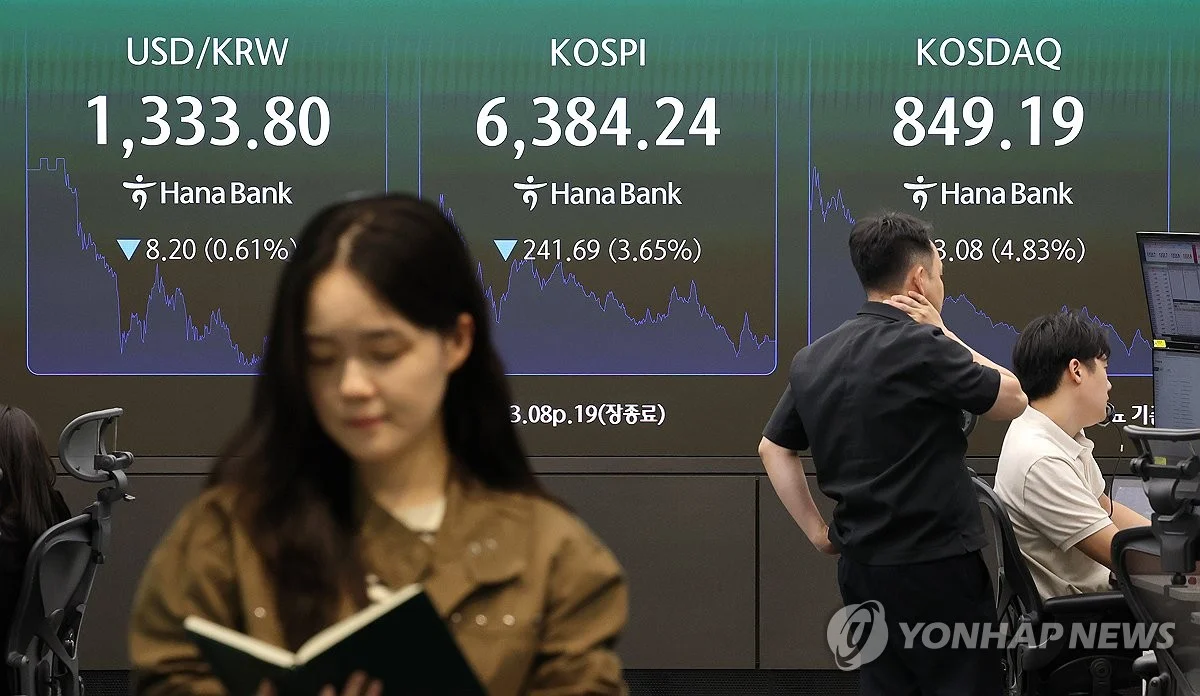
The sharp drop in Seoul’s primary index mirrors the anxieties currently permeating international financial hubs. While the Dow Jones Industrial Average managed a modest gain of 0.38 percent in the previous session, the tech-heavy Nasdaq Composite’s 0.44 percent decline served as the primary catalyst for the sell-off in South Korean equities. Given the significant weight of technology firms within the KOSPI, local investors remain hypersensitive to the performance of U.S. counterparts, particularly as fears regarding valuation bubbles and interest rate pressures resurface.
A Chronology of Growing Market Unease
The current downward trajectory did not occur in a vacuum; it is the culmination of weeks of heightened anticipation regarding the Federal Reserve’s monetary policy path.
- Early September 2026: Market speculation began to mount regarding the "higher-for-longer" interest rate narrative as U.S. employment data signaled a more resilient labor market than previously anticipated.
- Late September 2026: Leading semiconductor and hardware manufacturers began signaling potential supply chain constraints, dampening outlooks for the upcoming quarterly earnings season.
- October 5–9, 2026: The KOSPI experienced moderate fluctuations, trading within a narrow range as investors adopted a wait-and-see approach ahead of the U.S. consumer price index (CPI) release.
- October 12, 2026: A wave of profit-taking hit U.S. markets late in the session, leading to the mixed closing figures that set the stage for Tuesday’s sharp decline in Seoul.
- October 13, 2026: The KOSPI opened with a 3.1 percent gap down, reflecting an immediate reaction to the overnight tech-sector weakness.
The Macroeconomic Catalyst: The CPI Report
At the heart of the current market volatility is the impending release of the U.S. Consumer Price Index (CPI), scheduled for Wednesday. Investors view this report as the definitive "litmus test" for the Federal Reserve’s upcoming policy meeting in late October.
If the CPI data indicates that inflation remains stickier than expected, the probability of a hawkish pivot—or at least a delay in anticipated rate cuts—increases significantly. For South Korean markets, which are inherently sensitive to the interest rate differential between Seoul and Washington, a high inflation print would likely put upward pressure on the won-dollar exchange rate, further complicating the foreign exchange environment for local exporters.
Financial analysts note that the current environment is one of "data-dependent paralysis." Market participants are hesitant to commit fresh capital until they have clarity on the terminal rate, leading to thin trading volumes and exaggerated price swings when news breaks.
Impact on Key Market Sectors
The 3.1 percent slide was broad-based, affecting almost all major sectors on the Korea Exchange. Technology stocks, led by heavyweights such as Samsung Electronics and SK Hynix, were the most notable decliners. These companies, which are deeply integrated into the global AI and memory chip supply chains, have faced intense scrutiny recently due to fluctuating demand in the server and mobile sectors.
Financial stocks also faced headwinds as investors weighed the prospect of prolonged high-interest rates. While higher rates can sometimes benefit net interest margins for commercial banks, the accompanying risk of economic cooling and potential loan defaults in the private sector has dampened enthusiasm for the banking index.
Furthermore, export-oriented manufacturers expressed caution during early morning briefings, noting that the volatility in the U.S. market adds a layer of uncertainty to their fourth-quarter guidance. Any sustained downturn in U.S. consumer spending, which would be signaled by an uptick in inflation, could lead to a downward revision of earnings expectations for South Korean firms that rely heavily on the American consumer market.
Expert Analysis and Official Responses
While no official statement has been issued by the Bank of Korea (BOK) at this stage of the trading day, government financial authorities have signaled that they are monitoring the situation closely. A spokesperson for the Financial Services Commission (FSC) emphasized that the government is prepared to deploy market stabilization measures if volatility exceeds "reasonable levels."
Institutional investors, however, remain largely focused on the decoupling of market sentiment from fundamental economic health. "The current sell-off is less about the underlying profitability of Korean corporations and more about the reflexivity of the global financial system," noted one senior market strategist at a Seoul-based brokerage. "When U.S. tech stocks blink, the KOSPI tends to react with a heightened degree of sensitivity because of our high level of integration into the global tech ecosystem. The fundamental story—the long-term demand for semiconductors—remains intact, but the short-term noise is deafening."
Implications for Investors and Policy
The immediate implication of this sell-off is a tightening of financial conditions. As equity prices fall, the cost of capital for domestic corporations may rise, potentially impacting their ability to finance expansion plans through equity markets. For individual investors, the sharp drop serves as a reminder of the risks associated with the high-beta nature of the KOSPI.
Looking forward, the remainder of the week will be defined by three key variables:
- The U.S. CPI Release: A lower-than-expected figure would likely trigger a strong rebound, as it would validate the argument for a more dovish Federal Reserve stance.
- Corporate Earnings Disclosures: As major tech firms report their quarterly figures, the market will be looking for confirmation that the AI-driven demand cycle is still in a growth phase.
- Foreign Investor Flows: The net buying or selling activity of foreign institutional investors will be critical. Historically, foreign capital flight has been the primary driver of major downward corrections in Seoul, and their reaction to this week’s data will determine whether the current dip is a temporary correction or the start of a more sustained bearish trend.
Conclusion
As the Tuesday session continues, the KOSPI remains under significant pressure. While the 3.1 percent decline is severe, market historians point out that the index has historically demonstrated resilience following similar bouts of "macro-driven" volatility.
For now, the Seoul stock market is effectively in a holding pattern. Until the U.S. inflation data is digested and the Federal Reserve’s intentions for the remainder of 2026 become clearer, the market is likely to remain in a state of high alert. Investors are advised to maintain a diversified portfolio and remain cautious of short-term speculative movements, as the upcoming days promise to provide the data points necessary to calibrate the market’s trajectory for the final quarter of the year. The eyes of the financial world remain firmly fixed on the horizon, waiting to see if the cooling effect of U.S. inflation will finally provide the stability that global investors so desperately seek.
