


The Economics and Practicality of Sustainable Home Cooking
In recent years, rising grocery costs and a heightened focus on environmental sustainability have shifted consumer behavior toward "zero-waste" cooking. According to data from the Environmental Protection Agency (EPA), food waste accounts for a significant portion of municipal solid waste in the United States, with household kitchens serving as a primary contributor. The practice of preparing meals like salmon fried rice directly addresses this issue by extending the lifecycle of prepared ingredients.

The culinary methodology behind this dish relies on the specific physical properties of day-old rice. When rice is cooked and then chilled, the starch molecules undergo retrogradation, a process that makes the grains firmer and less prone to clumping during the high-heat stir-fry process. This technical advantage ensures the dish achieves the desired texture without requiring professional-grade equipment, making it an accessible strategy for home cooks aiming to maximize kitchen efficiency.
Chronology of Preparation and Culinary Technique
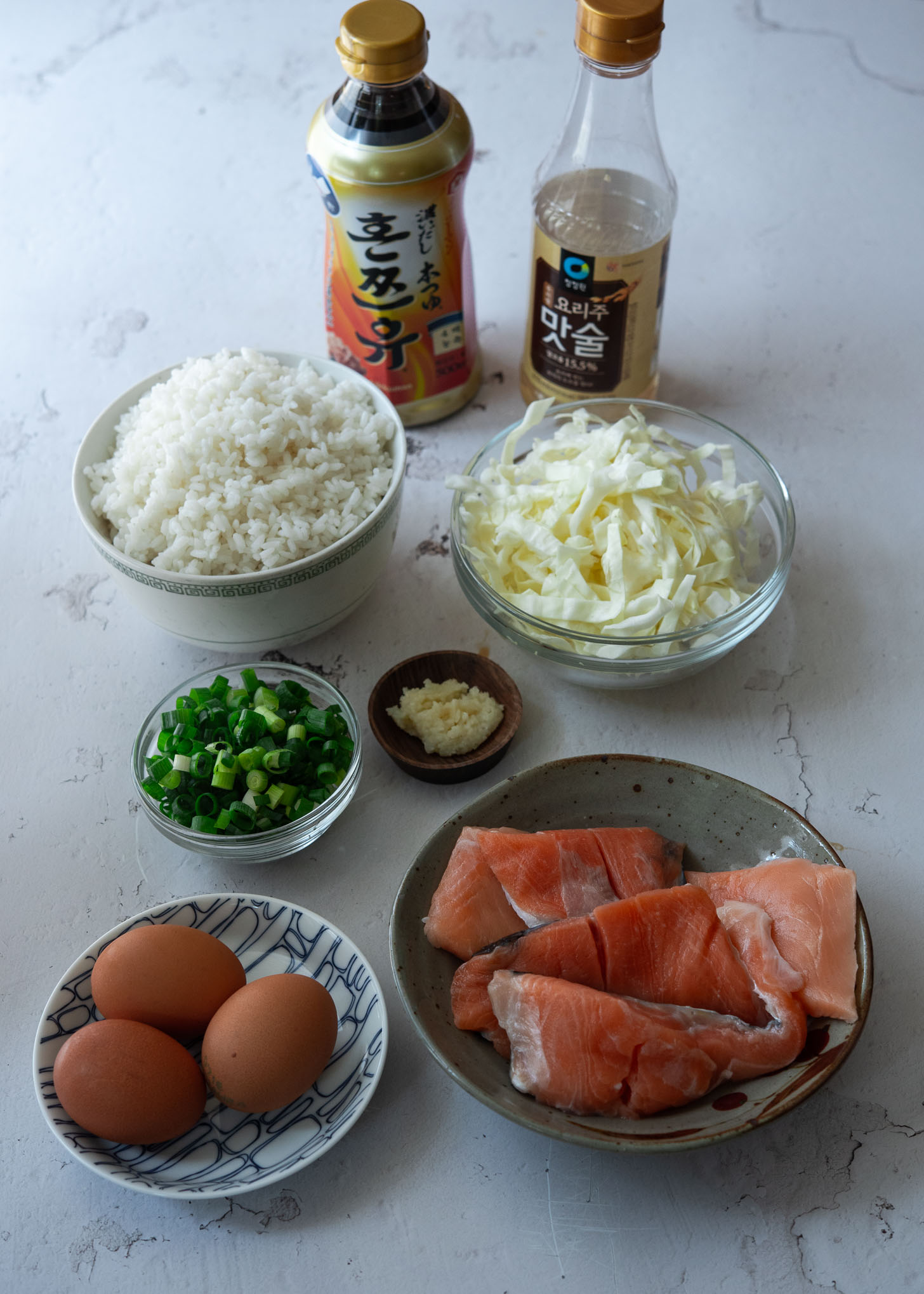
The preparation of this meal follows a standardized sequence designed to maintain the integrity of the ingredients. The process begins with the preparation of the salmon. If using fresh fillets, the protein is seared in a wok or large skillet to approximately 80% doneness to ensure moisture retention. The salmon is then removed from the heat to prevent overcooking.

Following the removal of the protein, eggs are scrambled directly in the same vessel, leveraging the residual fats and flavors. Once the eggs are set, they are also removed. The third phase involves the rapid sautéing of shredded cabbage and garlic. The goal at this stage is to soften the cabbage while maintaining a crisp texture, which adds structural contrast to the dish.
The fourth phase is the integration of the cold, pre-cooked rice. By spreading the rice across the surface of the heated wok, the cook facilitates a Maillard reaction, which contributes to the savory, toasted profile of the dish. Finally, the salmon and eggs are reintroduced to the pan. A light application of tsuyu—a Japanese seasoning base comprised of soy sauce, dashi, and mirin—is drizzled over the mixture. This specific seasoning choice is notable for its ability to provide umami depth without the excessive sodium or moisture levels associated with heavy soy sauce-based marinades, which could potentially result in soggy grains.

Nutritional Profile and Dietary Implications
From a nutritional perspective, this dish offers a profile rich in lean protein, omega-3 fatty acids, and essential vitamins. A standard serving contains approximately 540 calories, with 23 grams of protein and 18 grams of fat. The inclusion of cabbage adds dietary fiber, which is essential for digestive health, while the use of eggs provides high-quality protein and choline.
The dish is inherently dairy-free, catering to a broad demographic of consumers with lactose sensitivities or those following specific dietary regimens. Because the sodium content is moderated—clocking in at roughly 365 milligrams per serving—it represents a more heart-healthy alternative to many commercially processed or restaurant-prepared fried rice dishes, which often exceed the recommended daily sodium intake in a single serving.
Culinary Influence and Cultural Synthesis
The dish represents a synthesis of East Asian home-cooking influences. While fried rice is a ubiquitous staple across various Asian cuisines, the incorporation of tsuyu reflects a Japanese influence, while the reliance on cabbage as a primary vegetable mirrors techniques common in Korean domestic cooking. The result is a hybrid dish that avoids the rigid constraints of traditional regional recipes, favoring instead the principles of "fridge-clearing" that are common in modern global kitchens.
Industry analysts note that such recipes are gaining traction in online culinary media because they solve two specific consumer pain points: time scarcity and the desire for budget-friendly meal preparation. As weeknight schedules become increasingly compressed, the ability to assemble a meal from existing inventory—rather than needing to procure specific, perishable ingredients for a single use—has become a highly valued skill.
Broader Impact on Household Food Management
The long-term implications of adopting such cooking habits are significant. By mastering the art of the "one-pan" meal, households can significantly reduce their dependency on pre-packaged convenience foods. Research suggests that home-cooked meals, even those made from leftovers, are generally lower in processed additives and preservatives compared to pre-made meal kits or takeout.
Furthermore, the emphasis on using ingredients like cabbage—a highly shelf-stable vegetable—aligns with broader food security trends. Cabbage remains one of the most cost-effective and nutrient-dense vegetables available, and its ability to withstand longer periods of refrigeration makes it an ideal candidate for households that shop in bulk or less frequently.

Future Directions for Efficient Cooking
As the culinary landscape continues to evolve, the focus on recipes that minimize technical complexity while maximizing flavor extraction is expected to grow. The use of tsuyu as a "shortcut" ingredient is indicative of a broader trend toward using compound seasonings that provide a complex flavor profile in a single step. For the average consumer, this reduces the need for an extensive pantry of individual spices and sauces, lowering the barrier to entry for home cooking.
In summary, the preparation of salmon fried rice is not merely a method for utilizing leftovers, but a demonstration of efficient culinary logistics. By optimizing heat management, ingredient selection, and flavor layering, home cooks can produce high-quality, nutritionally sound meals that respect both the budget and the environment. As data continues to show the environmental and health benefits of reducing food waste, the adoption of such flexible, resource-conscious recipes will likely remain a cornerstone of domestic kitchen management for the foreseeable future. The simplicity of the dish belies the sophisticated balance of texture and flavor, confirming that effective cooking does not require complex procedures, but rather a strategic approach to the ingredients already on hand.
