

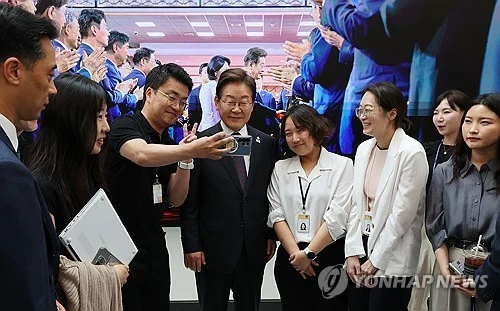
SEOUL — In a move designed to bridge the gap between the executive branch and the public, the presidential office announced Tuesday that a high-tech, four-cut photo kiosk will be unveiled at Cheong Wa Dae Sarangchae, the public pavilion situated on the grounds of the former presidential residence. The facility is scheduled to begin operations on Wednesday, coinciding with the official first-anniversary commemorations of President Lee Jae Myung’s inauguration.
The initiative represents a strategic shift in how the current administration engages with the citizenry, moving beyond traditional press briefings and formal state events to embrace the digital-native culture of modern South Korea. The kiosk allows visitors to capture memories within the historic setting of the Cheong Wa Dae complex, which was opened to the public in May 2022 following the administration’s decision to relocate the primary presidential office to Yongsan.
The Digital Integration of Statecraft
The kiosk, a staple of the "four-cut" photography trend currently dominating South Korean youth culture, has been customized to feature 32 distinct digital frames. These frames include virtual composites of President Lee Jae Myung and First Lady Kim Hea Kyung, as well as a curated selection of South Korea’s national cultural heritage assets.
According to technical specifications provided by the presidential office, the system is designed for seamless integration with mobile devices. Once a photo session is completed, visitors can instantly transfer their images to their smartphones via a QR code system. This integration reflects the administration’s focus on leveraging technology to make the presidential office more accessible and "relatable" to the younger demographic, who have shown a growing interest in the historical and political significance of the Cheong Wa Dae site.
A Chronology of the Cheong Wa Dae Transition
The opening of this pavilion attraction is the latest in a series of efforts to repurpose the former presidential compound. To understand the significance of this event, one must look at the timeline of the site’s transition:
- May 10, 2022: The Cheong Wa Dae complex is fully opened to the public as President Lee officially begins his term at the new Yongsan office.
- August 2023: The government announces a master plan to transform the Sarangchae pavilion into a more interactive cultural hub rather than a static historical museum.
- October 2025: The first anniversary of the administration’s policy reforms regarding public access to government archives and presidential history is marked by the renovation of visitor facilities.
- October 27, 2026: The announcement of the photo kiosk initiative, aimed at bolstering public engagement ahead of the anniversary.
- October 28, 2026: Official launch of the photo kiosk at Sarangchae.
The Sarangchae pavilion, which has long served as a reception space for guests, has undergone several refurbishments over the past year to transition from a formal diplomatic venue into an educational center that explains the democratic evolution of the Republic of Korea.
Supporting Data on Public Engagement
Since the opening of Cheong Wa Dae to the public, visitor statistics have remained robust, highlighting the sustained interest in the venue. Data from the Cultural Heritage Administration indicates that in the first 24 months following the site’s opening, over 3.5 million visitors walked the grounds of the former residence.
Surveys conducted by the administration suggest that 68% of visitors are aged between 20 and 40, a demographic that is increasingly interacting with the site through social media platforms. By installing a professional-grade photo booth, the office is catering directly to this demographic’s habit of documenting public experiences. Analysts note that this move is a deliberate attempt to generate organic social media content that promotes the presidential brand in a non-political, leisure-oriented context.
Official Responses and Administrative Strategy
While some critics have occasionally questioned the utility of such amenities, the presidential office maintains that these initiatives are essential for transparency and public ownership of the site. A spokesperson for the office stated on Tuesday, "The goal is to move away from the authoritative image of the presidency. By allowing citizens to take photos alongside the President and the First Lady in a digital format, we are fostering a sense of proximity and shared national identity."
Supporters of the move argue that the kiosk is a low-cost, high-impact method of encouraging foot traffic to the Sarangchae area, which supports local businesses in the vicinity of the historic district. The inclusion of national heritage assets in the frames also serves an educational purpose, ensuring that the technology is used to highlight the cultural legacy of the nation alongside the political figureheads.
Broader Implications for Political Communication
The deployment of the photo kiosk is a hallmark of modern "soft power" diplomacy at a domestic level. By placing the President’s image in a casual, consumer-friendly setting, the administration is utilizing techniques common in the corporate sector to humanize political leadership.
From an analytical perspective, this project signifies a broader trend in South Korean governance: the "gamification" of political spaces. As younger generations demand more interactive and less rigid forms of engagement, the government has responded by adopting the tools of the youth culture—specifically, the four-cut photo booth phenomenon, which has become a cultural touchstone in urban centers like Hongdae and Gangnam.
Furthermore, the timing of this launch—on the eve of the administration’s one-year anniversary—is significant. It serves as a symbolic gesture of continuity. It suggests that while the administration is focused on the heavy tasks of national policy and economic stabilization, it remains in touch with the daily lives and leisure activities of the average citizen.
Looking Ahead: The Future of Cheong Wa Dae
The success of the photo kiosk will likely be measured by the volume of social media engagement it generates in the coming months. If the initiative proves successful, sources within the administration have hinted that similar interactive kiosks could be installed at other public-facing government sites, including the National Museum of Korea and various regional cultural centers.
However, the administration faces the challenge of balancing this "pop-culture" engagement with the gravity of the office. The challenge for the President’s communications team will be to ensure that these initiatives do not trivialize the institution, but rather serve as an entry point for citizens to engage with deeper democratic processes.
As the nation marks this milestone, the scene at Sarangchae is expected to be one of curiosity and excitement. The kiosk, while simple in its function, acts as a bridge between the historical legacy of the Republic of Korea’s leadership and the future-oriented, digital-first mindset of its current population. The integration of technology into the very fabric of state-owned historical sites is a clear indication that the administration intends to keep pace with the rapidly evolving digital landscape, ensuring that the presidential office remains a relevant, accessible, and active part of the public consciousness.
The move also underscores a shift in how the "First Family" is presented to the public. By allowing for digital interaction with the First Lady, the office is signaling a more modern approach to the role of the presidential spouse, moving beyond traditional protocol to encompass a more visible and interactive public persona. As the first anniversary festivities commence, the photo kiosk stands as a quiet but significant monument to the administration’s desire to be seen not just as rulers, but as fellow citizens participating in the nation’s unfolding story.
