

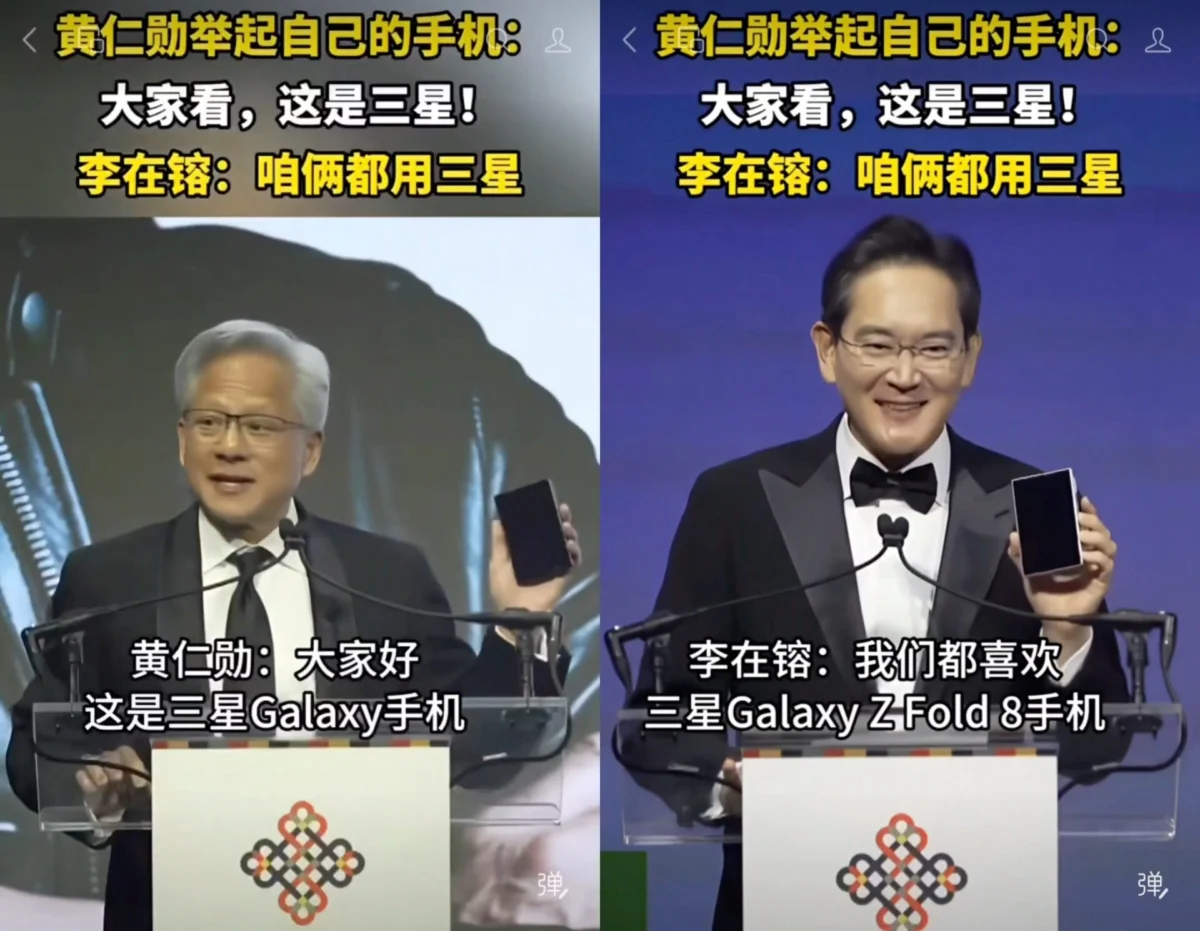
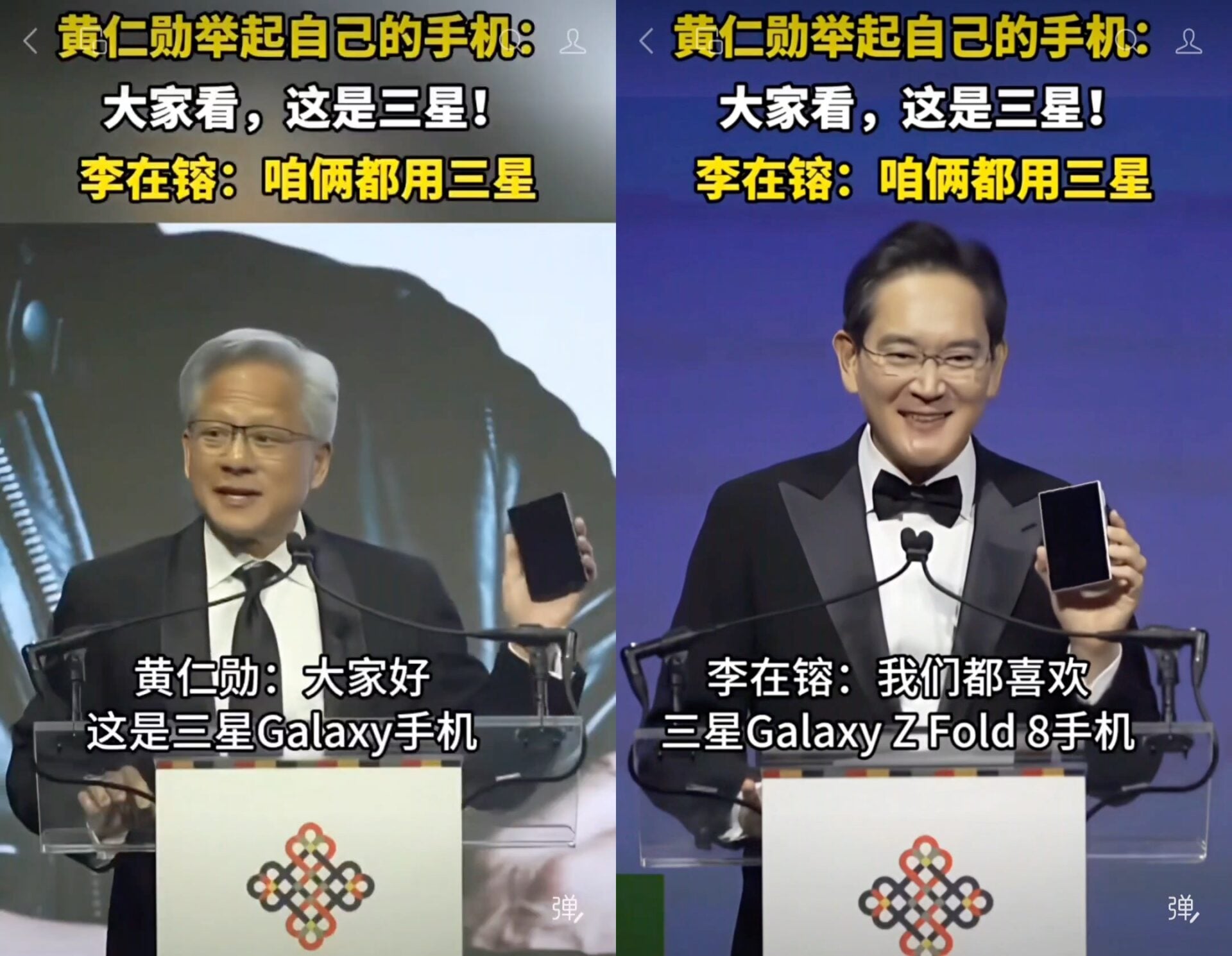
The landscape of executive technology preferences has shifted significantly in recent years, moving away from the monolithic dominance of a single smartphone ecosystem toward devices that prioritize multitasking and professional productivity. This trend was underscored during the 2026 Korea Society Gala, held at the historic Cipriani South Street in New York City. Among the distinguished guests, Nvidia CEO Jensen Huang provided an unscripted yet highly visible endorsement of the Samsung Galaxy Z Fold 8, effectively signaling his preference for Samsung’s flagship foldable hardware over the recently released foldable alternatives from competing manufacturers.
During his keynote address at the event, Huang reached into his pocket and produced the Galaxy Z Fold 8, holding it aloft for the audience to see. The moment took on a greater symbolic weight when Samsung Electronics Chairman Jay Y. Lee, who was also in attendance, joined him on stage to display his own device. This impromptu collaboration between two of the most influential figures in the global semiconductor and consumer electronics industries served as a vivid demonstration of the current market standing of the Fold 8 series.
A Timeline of Executive Preference
This public display is not an isolated incident but rather the latest chapter in a documented history of top-tier executives favoring Samsung’s foldable technology. Jensen Huang’s loyalty to the Z Fold series has been consistent; just months prior, he was identified by industry observers as a user of the Galaxy Z Fold 7. His transition to the Z Fold 8 confirms that the iterative improvements in display technology, hinge durability, and processing power found in the latest generation meet the stringent requirements of a leader operating at the center of the artificial intelligence revolution.
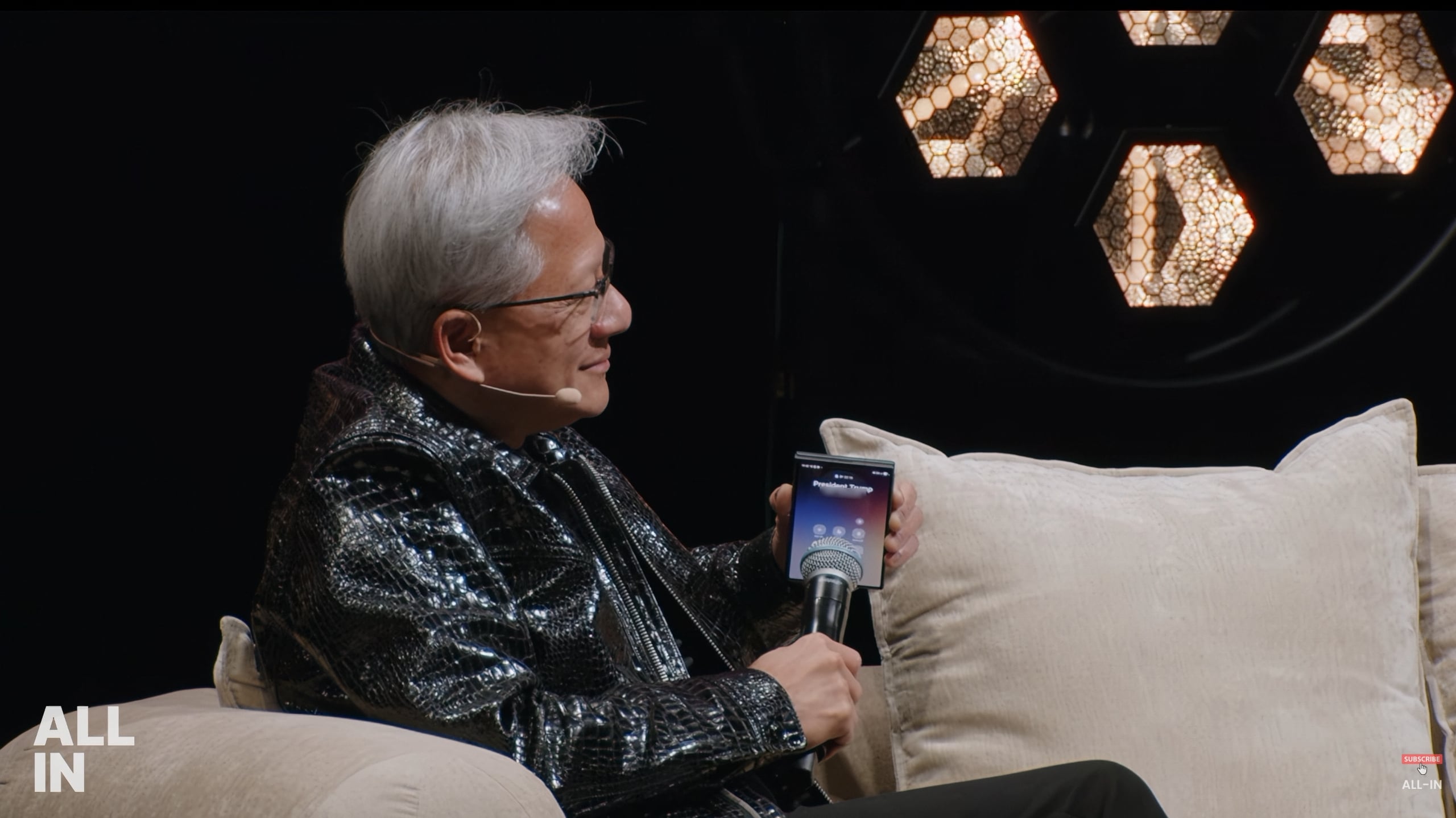
The broader tech sector has taken note of this "CEO-grade" hardware preference. Meta CEO Mark Zuckerberg has similarly diverged from the industry-standard iPhone, frequently utilizing the Samsung Galaxy S24 Ultra for his public demonstrations of Meta’s augmented reality (AR) and virtual reality (VR) platforms. When showcasing advanced software applications, such as high-fidelity video conferencing or complex interface navigation, these leaders appear to prioritize the expansive screen real estate and desktop-class multitasking capabilities offered by the Samsung Galaxy ecosystem.
Market Context and Competitive Pressures
The timing of Huang’s endorsement is particularly significant given the recent entry of Apple into the foldable market. While the debut of a foldable iPhone was positioned by analysts as a potential threat to Samsung’s long-standing dominance in the segment, the Galaxy Z Fold 8 has maintained a robust sales trajectory. According to preliminary reports from the 2026 launch cycle, the Galaxy Z Fold 8 series has exceeded 5 million preorders, setting a new benchmark for the foldable category.
Samsung has spent over seven generations refining the foldable form factor. While competitors are still navigating the initial challenges of hardware reliability—such as crease visibility, thermal management, and software optimization—Samsung has reached a stage of maturity. The Galaxy Z Fold 8 features an optimized under-display camera, a refined titanium-composite chassis, and a specialized version of the Snapdragon chipset tuned for high-intensity computing, which aligns with the professional needs of executives like Huang, who require mobile devices capable of handling complex data visualization and real-time communication.
Analysis of the Hardware Advantage
From a technical standpoint, the choice of the Galaxy Z Fold 8 by industry leaders is grounded in specific utility. The primary advantage of the Z Fold series remains its "tablet-in-a-pocket" utility. For an executive managing the rapid expansion of a multi-trillion-dollar company like Nvidia, the ability to transition seamlessly from a compact phone mode to an expansive 7.6-inch canvas is not merely a novelty but a productivity necessity.
Furthermore, the integration between the Galaxy ecosystem and Windows-based environments—which remains the standard for most enterprise-level computing—provides a level of interoperability that often exceeds the walled-garden approach of other smartphone manufacturers. The Z Fold 8 supports advanced multi-window workflows that allow users to manage email, slide decks, and real-time analytics simultaneously. This capability mirrors the demands of leaders who spend the majority of their time in transit or between high-level meetings, requiring a device that functions as a mobile workstation rather than a mere communication tool.
Implications for Brand Positioning
The visual of a tech titan like Jensen Huang, who is often described as the "architect of the AI era," holding a Samsung device provides the company with invaluable brand equity. In the world of high-stakes corporate leadership, the devices that CEOs choose to carry often serve as a tacit validation of the manufacturer’s engineering prowess.
While the interaction at the Korea Society Gala may have been perceived as a casual moment, it carries strategic implications for the perception of the foldable category. For years, the foldable smartphone market was viewed as a niche segment for enthusiasts. The public usage of the Z Fold 8 by major industry players suggests that foldables have reached a state of "enterprise readiness." By associating the product with leaders of the AI and social media industries, Samsung effectively bridges the gap between consumer electronics and high-performance professional tools.
Future Outlook and Industry Responses
As of this writing, no official statement has been released by Nvidia or Meta regarding their specific hardware procurement policies, nor has Samsung commented on the private preferences of these executives. However, the optics of the situation suggest a growing divide in the executive suite. While the smartphone market remains largely saturated, the premium segment—where prices exceed $1,500—is becoming a battleground for productivity-focused devices.
The trend of executives opting for devices that offer greater control, customization, and screen surface area is likely to continue. As mobile processing power reaches a point where it can emulate desktop environments, the hardware that best supports this transition will inevitably win the favor of the world’s most influential users.
Conclusion: A Shift in the Executive Standard
The Galaxy Z Fold 8’s popularity is a testament to Samsung’s persistent investment in a category that many critics initially dismissed. By continuing to iterate on the design and focusing on the core needs of power users, Samsung has managed to secure a foothold among the elite tier of the technology industry. Whether through the endorsement of figures like Jensen Huang or the practical integration into the daily workflows of innovators like Mark Zuckerberg, the Z Fold series has transitioned from a futuristic prototype to a staple of the modern executive’s toolkit.
As the competition intensifies and more manufacturers enter the foldable market, the pressure will be on Samsung to maintain this lead. However, the current momentum suggests that for those who define the future of technology, the Galaxy Z Fold 8 is currently the device of choice. The collaboration between the leadership of Nvidia and Samsung serves as a potent reminder that in the tech industry, the tools one chooses to use are as telling as the products one creates. The success of the Z Fold 8, marked by record-breaking preorders and high-profile visibility, suggests that the foldable era is no longer just a trend, but a fundamental shift in how the industry’s top minds approach mobile computing.
