

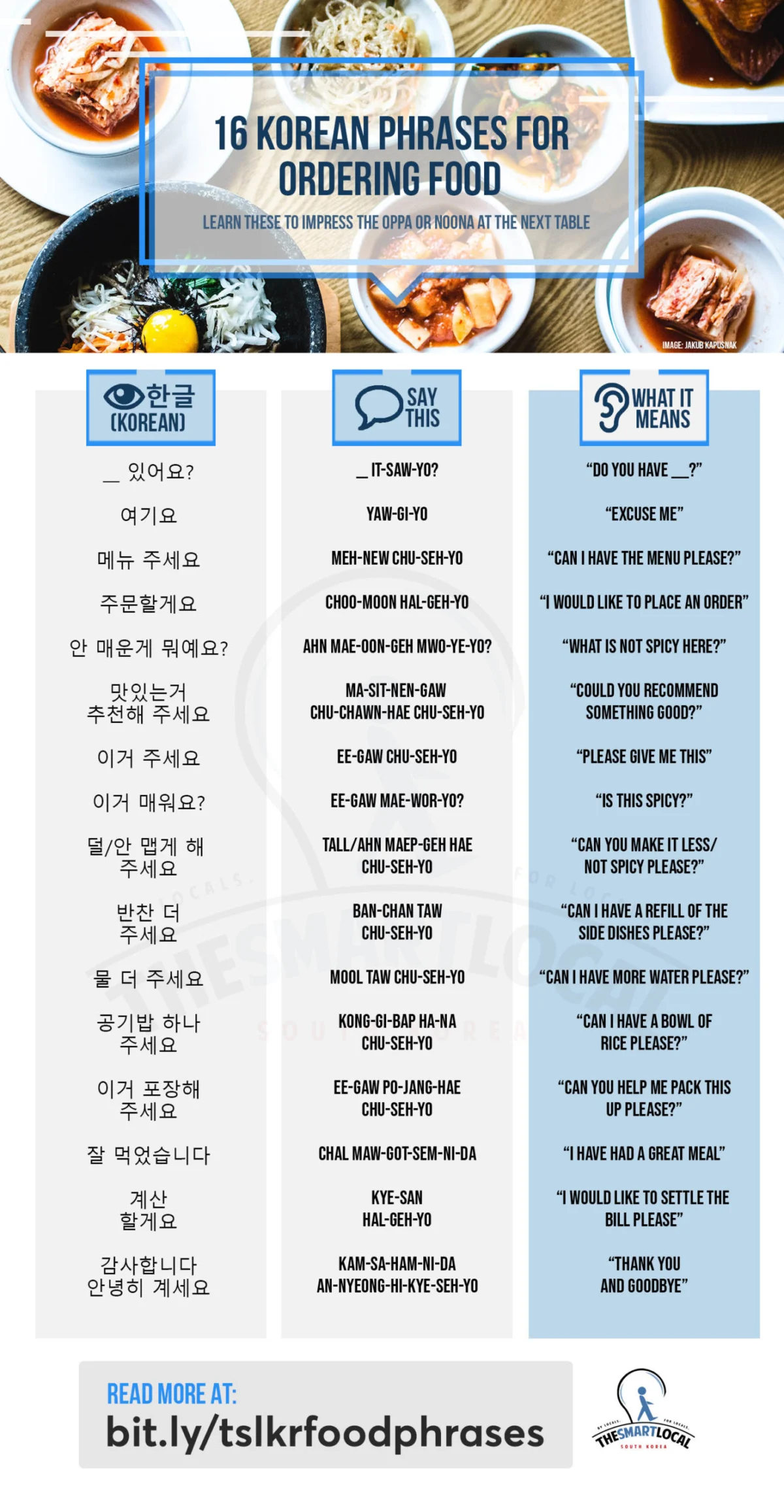
Navigating the culinary landscape of South Korea often presents a significant challenge for international travelers, primarily due to linguistic barriers and the intricacies of local dining etiquette. As the South Korean tourism sector continues to see an influx of visitors—with pre-pandemic figures exceeding 17 million annual arrivals and post-pandemic numbers steadily rebounding toward these benchmarks—the demand for practical, localized communication tools has grown. For many non-Korean speakers, the inability to effectively communicate preferences, particularly regarding the high spice levels prevalent in traditional Korean cuisine, can lead to a disconnect between the diner and the establishment.

The importance of linguistic assimilation in dining settings extends beyond mere convenience; it is a fundamental aspect of cultural respect. In South Korea, the restaurant industry is characterized by a high degree of efficiency and a specific social hierarchy that dictates interactions between patrons and service staff. Understanding the nuances of "polite" speech—a form of honorifics known as jondaemal—is essential for any traveler aiming to navigate these social spaces without causing unintentional offense.

The Dynamics of Korean Dining Culture
To understand why specific phrases are necessary, one must first consider the structural differences between Western and Korean dining environments. In Korea, the concept of the "service" (often referred to as seobisu) is deeply embedded in the dining experience. Unlike many Western restaurants where side dishes are fixed, Korean establishments typically provide an array of banchan (side dishes) that are complimentary and refillable. This unique economic model relies on a tacit understanding between the diner and the host.

Furthermore, the prevalence of gochujang (chili pepper paste) and gochugaru (chili powder) in staples such as kimchi jjigae (kimchi stew) or jjamppong (spicy seafood noodles) presents a challenge for those unaccustomed to high capsaicin content. Medical and nutritional experts have noted that while the inclusion of fermented, spicy ingredients offers various health benefits, including metabolism stimulation, the intensity can cause acute gastrointestinal distress for uninitiated visitors. Consequently, the ability to request a reduction in spice levels or to verify the spice content of a dish is a matter of practical necessity rather than mere preference.

Essential Communication Protocols
Effective communication in a Korean restaurant environment relies on a structured approach to ordering and service requests. The following phrases have been identified by language specialists as the most vital for seamless interaction:

1. Initiating Service: The Omnipresent "Yeogiyo"
The term Yeogiyo (literally meaning "over here") is the standard method for summoning a server. In a busy, high-turnover environment typical of Seoul’s bustling districts like Myeong-dong or Hongdae, verbal signals are the primary method of engagement. Unlike Western restaurants where servers circulate to check on tables, Korean staff typically wait to be summoned.

2. Clarifying Availability: "Isseoyo?"
To ascertain if a specific dish is available, the suffix isseoyo is appended to the item name. This serves as a universal inquiry for existence or availability. For example, if a patron wishes to know if a particular seasonal dish is served, the phrase "[Dish Name] isseoyo?" acts as a grammatically correct and polite inquiry.

3. Navigating the Menu: "Menyu juseyo"
While digital kiosks and visual menus are becoming increasingly common, many traditional matjib (famous restaurants) rely on wall-mounted menus in Hangeul. Requesting a physical menu using menyu juseyo ("Please give me the menu") is an essential step for those who cannot read native script.

4. The Ordering Process: "Jumunhalgeyo"
Once a selection is made, announcing the order with jumunhalgeyo ("I would like to place an order") signals to the staff that the patron is ready. Adding a title such as Sajangnim (the boss or owner) is considered a respectful gesture that acknowledges the hierarchy of the establishment.

Linguistic Adaptations for Dietary Preferences
The management of spice levels is perhaps the most significant hurdle for international tourists. Data suggests that travelers from regions with low-spice diets frequently encounter difficulty in identifying non-spicy alternatives.

- Inquiry: Igeo maewoyo? ("Is this spicy?") allows for a preemptive check before committing to a dish.
- Request: An maepge hae juseyo ("Please make it not spicy") or Deol maepge hae juseyo ("Please make it less spicy") provides the kitchen with clear instructions. While it is important to note that many traditional recipes rely on spicy pastes as a base, and thus cannot be entirely neutralized, staff are generally accommodating to requests for milder preparations when possible.
Logistics: Refills, Rice, and Takeaways
The Korean dining model is highly efficient, yet it follows strict logistical rules. For instance, banchan is complimentary and can be requested with banchan deo juseyo. In contrast, gonggibap (a bowl of steamed rice) is almost always a separate charge. Understanding that gonggibap is a staple accompaniment is vital for those who find the spice levels overwhelming, as rice serves as an effective palate cleanser.

Regarding food waste, which has become a significant policy concern for the South Korean government, requesting a takeaway—pojanghae juseyo—is a socially acceptable practice for unfinished portions. However, it is an unwritten rule that banchan is not for takeaway; only the main course should be requested for packaging.

Chronology of the Dining Experience
A typical successful interaction follows a chronological flow:

- Entry: A greeting is generally expected, though often initiated by the staff with "Eoseo oseyo" (Welcome).
- Summoning: Use Yeogiyo to get the server’s attention once seated.
- Menu/Ordering: Use Menyu juseyo followed by Jumunhalgeyo for the chosen items.
- Maintenance: Use Mool deo juseyo for water refills and Banchan deo juseyo for side dish replenishment.
- Conclusion: Use Gyesanhalgeyo to signal for the bill at the counter.
- Departure: A parting Gamsahamnida (Thank you) and Annyeonghi gyeseyo (Goodbye to those staying) completes the interaction.
Broader Impact and Implications
The adoption of these linguistic tools by travelers has broader implications for the tourism industry. Beyond personal convenience, using local phrases fosters a more positive rapport between the local population and international guests. Research into cultural tourism indicates that travelers who make an effort to use the local language report higher satisfaction levels and are perceived more favorably by service providers.

From an economic perspective, the ability of foreign visitors to navigate restaurant operations reduces the burden on service staff, who are often managing high volumes of customers during peak hours. In cities like Seoul and Busan, where the culinary sector is a pillar of the tourism economy, efficient communication contributes to a more sustainable and less stressful service environment.

Conclusion: Bridging the Cultural Gap
While these 15 phrases provide a solid foundation for navigating the dining landscape in South Korea, they should be viewed as an entry point into a deeper cultural engagement. The Korean language is heavily influenced by social context and status, and as a traveler becomes more familiar with the local environment, they may find opportunities to further refine their interactions.

Ultimately, the goal of learning these phrases is to ensure that the primary purpose of the visit—experiencing the rich, diverse, and historical flavors of Korean cuisine—is not hindered by avoidable misunderstandings. By approaching dining with both a hunger for local food and a respect for local communication, travelers can transform what might have been a stressful, confusing experience into an opportunity for authentic cultural connection. Whether it is a small street-side stall or an upscale establishment in Gangnam, the application of polite, localized language remains the most effective bridge between a visitor and the vibrant, bustling world of the Korean restaurant.
