

Seoul has cemented its reputation as a global retail powerhouse, drawing millions of international visitors annually to its sprawling shopping districts. From the youth-centric streets of Hongdae to the luxury corridors of Gangnam and the bustling traditional markets of Myeongdong, the city’s commerce landscape is as diverse as it is fast-paced. As the South Korean retail sector continues to integrate advanced digital payment systems and tax-free incentives for foreign tourists, the barrier to entry for international shoppers has significantly decreased. However, navigating the nuance of local etiquette remains a vital skill for those seeking to maximize their purchasing power. Mastering fundamental Korean phrases not only facilitates smoother transactions but also fosters positive interactions with local business owners, locally referred to as sajangnim.

The Evolution of Seoul’s Retail Landscape
The trajectory of Seoul’s retail economy over the last decade has been characterized by a blend of rapid modernization and a stubborn adherence to traditional merchant culture. According to data from the Korea Tourism Organization, retail remains the primary expenditure category for international tourists visiting Seoul. The government has strategically supported this through the expansion of the "Tax-Free Korea" initiative, which allows non-residents to receive immediate VAT refunds at participating merchants.
This economic environment necessitates a basic grasp of the Korean language. While major department stores often employ multilingual staff, the true essence of Seoul’s shopping culture—found in the independent boutiques of Dongdaemun and the vibrant stalls of Gwangjang Market—relies on direct communication. Effective communication with shopkeepers can be the deciding factor in securing a discount or confirming the availability of high-demand goods, such as K-beauty products, which consistently rank as the top-exported retail item in the country.

Foundational Communication Strategies
For the international shopper, the primary goal is clarity. Because the Korean language uses distinct honorifics, visitors are encouraged to use the polite form of speech, which is universally accepted in commercial settings. The core of these interactions typically revolves around three pillars: availability, pricing, and transactional logistics.
1. Inquiring About Stock Availability
The phrase "___ isseoyo?" serves as the most effective tool for inventory checks. When looking for specific items like facial masks, lipsticks, or the popular honey-butter almonds, using this structure ensures the store assistant can quickly verify stock without a prolonged search. In many cases, these items are known by their Konglish names, making the pronunciation intuitive for English speakers.

2. Pricing and Valuation
"Igeo eolmayeyo?" is the standard inquiry for pricing. In the absence of price tags, which is common in smaller, independently owned stalls, this question initiates the transaction. It is customary for the shopkeeper to either reply verbally or, more frequently, to present a calculator displaying the cost in Korean Won (KRW).
3. Transactional Directives
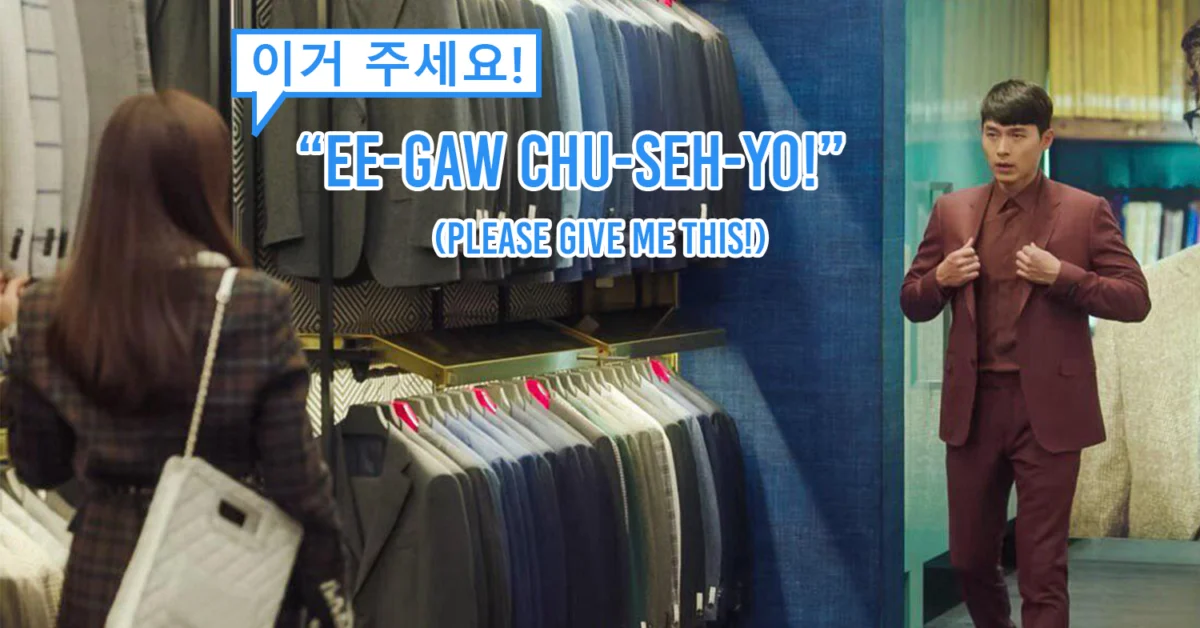
Once a purchase decision is made, "Igeo juseyo" (Please give me this) provides a clear intent to buy. Following this, if the shopper requires a receipt for tax refund purposes, requesting a "Yeongsujeung" is essential. Tax-free shopping in Korea is a highly regulated system that requires documentation; failing to secure a receipt at the point of purchase can result in the loss of a 7-10% tax rebate at airport customs offices.

Navigating Negotiations and Cultural Nuance
While fixed-price policies prevail in modern shopping malls, traditional markets operate under a different set of social norms. The art of negotiation, while not as aggressive as in other parts of Asia, is accepted under specific circumstances.
The Economics of the "Kkakka Juseyo"
Asking for a discount ("Kkakka juseyo") is generally reserved for situations where a customer is purchasing multiple items or spending a significant amount at a family-run establishment. Analytical observation of market behavior suggests that these requests are most successful when the buyer demonstrates a respectful demeanor. Students, in particular, may find success by identifying themselves as such ("Haksaeng ee-ye-yo"), as many local business owners prioritize affordability for the student demographic.

Cash-Only Dynamics and Digital Integration
Despite Korea being one of the world’s most "cashless" societies, certain smaller vendors maintain a preference for cash to avoid credit card processing fees. When a vendor expresses a preference for cash, a shopper may ask, "Hyeongeumeulo gyesanhamyeon eolmana ssage hae jul su isseoyo?" (If I pay with cash, how much of a discount can I get?). This approach acknowledges the merchant’s preference while potentially securing a mutually beneficial price reduction.
Essential Logistics for International Shoppers
Beyond basic negotiation, logistical queries ensure a seamless experience.

- Size and Color Variations: When shopping for apparel, knowing how to ask for a "Taw keun" (bigger) or "Jah-geun" (smaller) size is critical, as Korean clothing sizing often runs smaller than Western standards. Similarly, asking for color availability ("__ saek it-saw-yo?") allows shoppers to access inventory that may not be displayed on the floor.
- Returns and Exchanges: Before completing a transaction, clarifying the return policy ("Gyohwan ganeunghaeyo?" for exchange, or "Hwanbul ganeunghaeyo?" for refund) is a prudent step. Most smaller boutiques operate on a strict no-refund policy unless an item is demonstrably faulty.
- Environmental Regulations: Korea has stringent laws regarding plastic bag usage. Many retailers now charge a small fee for bags or are prohibited from providing them entirely. Familiarity with the phrase "Bongtu hana deo juseyo" (Please give me one additional bag) is helpful for those navigating the city with multiple purchases.
Broader Economic Implications of Retail Tourism
The importance of these linguistic tools extends beyond simple convenience; they are a bridge between the tourist and the local economy. As Seoul continues to attract a global audience, the ability of the visitor to interact respectfully and effectively with local sajangnims supports the sustainability of small-to-medium-sized enterprises.
Data shows that tourists who engage in local commerce—beyond just the major duty-free department stores—have a higher rate of return visits to Seoul. The "shopping like a local" experience is a significant driver of the city’s tourism GDP. By learning these 15 key phrases, visitors move from being passive consumers to active participants in the local economy.

While the prospect of learning a new language can be daunting, the Korean retail sector is uniquely forgiving of non-native speakers. The effort to bridge the language gap is frequently met with appreciation from merchants, often resulting in a more personalized shopping experience. As with any cultural exchange, the intent behind the communication is as vital as the accuracy of the pronunciation. By prioritizing politeness and clear, concise inquiries, international visitors can ensure that their shopping experience in Seoul is both productive and culturally enriching.
