

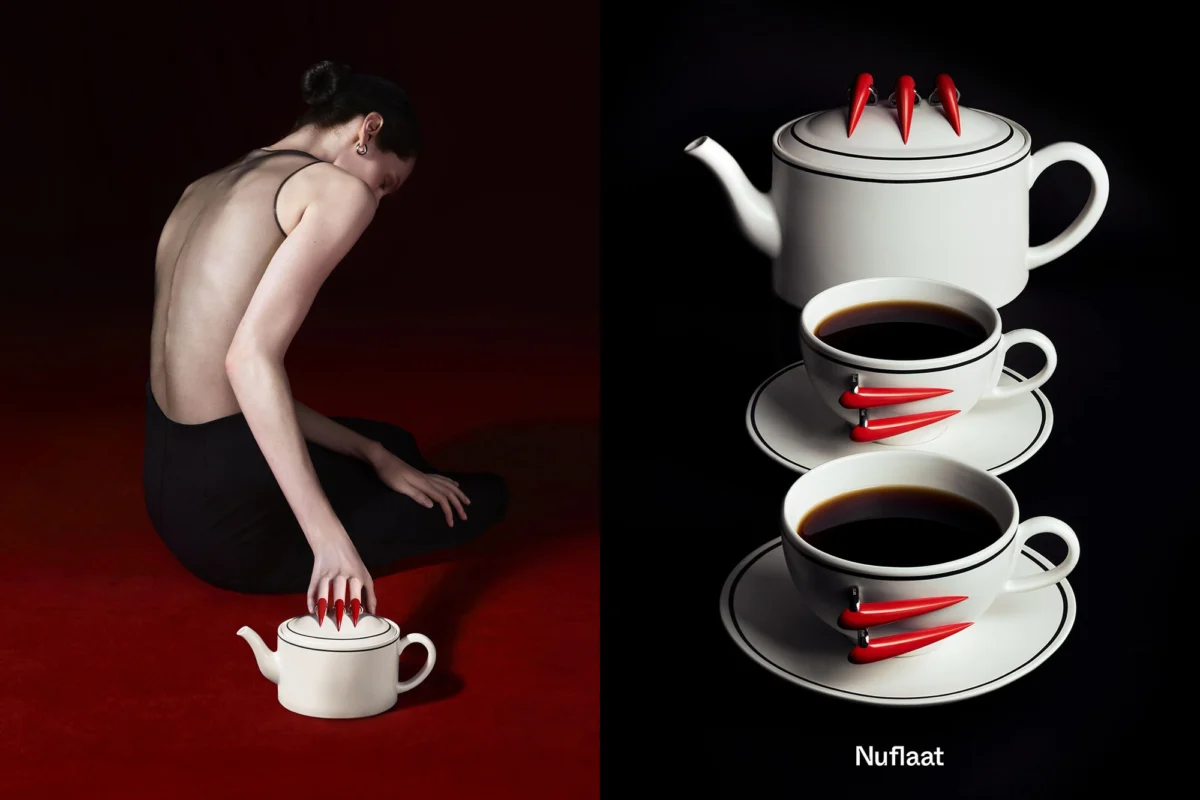
The landscape of modern retail and experiential lifestyle branding is undergoing a radical transformation, spearheaded by companies that refuse to be confined to a single industry. IICOMBINED, the innovative South Korean parent company globally recognized for its avant-garde eyewear pioneer Gentle Monster, has officially entered a new market segment with the introduction of its latest venture, Nuflaat. Moving beyond fashion, accessories, and cosmetics, the company is now setting its sights on the culinary and domestic sphere, focusing heavily on handcrafted tools, cutlery, and high-end dining aesthetics.
This strategic expansion represents more than mere product diversification; it is the latest chapter in a calculated corporate evolution that marries high-concept art installation with commercial retail. By building a diverse portfolio that now spans optical fashion, fragrance, specialized headgear, food and beverage concepts, and domestic tableware, IICOMBINED is engineering a lifestyle ecosystem. The unveiling of Nuflaat, alongside the grand opening of the ambitious retail concept space Haus Nowhere, underscores the firm’s ambition to dictate contemporary culture across multiple sensory dimensions.
The Genesis of Nuflaat: Bridging Culinary Arts and Design
Nuflaat arrives as a spiritual successor to Nudake, the widely popular experimental dessert and café brand established under the IICOMBINED umbrella. While Nudake successfully redefined the intersection of pastry arts and sculptural design—frequently drawing massive crowds with its surreal, high-fashion interpretations of baked goods—Nuflaat pivots toward the permanent apparatus of dining. The brand centers its foundational ethos on hand tools, artisan cutlery, and sophisticated tableware designed to elevate the everyday ritual of eating into a performance of modern design.
Industry insiders note that the launch strategy for Nuflaat follows the signature playbook that has made IICOMBINED brands viral sensations across global digital platforms: mystery, high-profile associations, and striking visual storytelling. Ahead of its full commercial rollout, Nuflaat released a series of promotional teaser videos featuring Ella of the rising K-pop girl group Meovv. In the widely shared visual assets, Ella is seen interacting with minimalist coffee cups, framed by dramatic, elongated red manicures that heighten the brand’s signature penchant for bold, unconventional aesthetics.
This calculated use of celebrity power aligns seamlessly with IICOMBINED’s broader marketing architecture. The company has historically bypassed traditional advertising channels, opting instead to position its brands within the cultural zeitgeist through strategic partnerships with the world’s most influential artists and performers.
A Timeline of Innovation: From Gentle Monster to Haus Nowhere
To understand the strategic significance of Nuflaat, it is essential to examine the rapid chronology of expansion that has defined IICOMBINED’s trajectory over the past decade. Founded on the principle of emotional branding through spatial design, the parent company has systematically dismantled traditional retail boundaries.
The journey began with Gentle Monster, which disrupted the global optical industry by transforming retail stores into surreal art galleries rather than conventional shops. By prioritizing experiential retail—where consumers encounter robotic kinetic sculptures, alien landscapes, and shifting architectural installations—the brand cultivated a dedicated following among international fashion elites. This foundation allowed Gentle Monster to secure landmark collaborations with global superstars, including BLACKPINK member Jennie, and more recently, Mingyu of Seventeen, who generated substantial foot traffic during his appearance for the grand re-opening of the brand’s Marina Bay Sands flagship store in Singapore.
Building upon this momentum, the company expanded its sensory footprint into cosmetics and fragrance with the launch of Tamburins, a brand that similarly leverages dramatic spatial design and high-profile endorsements, notably featuring BLACKPINK’s Jennie as a central face of its campaigns.
The diversification accelerated further in May of this year with the official debut of ATiiSSU, a specialized headgear and cap brand designed to capture the lucrative streetwear market. True to form, ATiiSSU quickly established its cultural footprint through high-profile collaborations with Felix of Stray Kids, cementing the company’s ability to mobilize the world’s most dedicated fandoms for newly minted labels.
The culmination of these diverse creative threads is manifested in the company’s latest and most ambitious architectural project: Haus Nowhere. Opening its doors in September, Haus Nowhere is designed to defy standard retail categorization. Operating under the conceptual premise of "a space found nowhere," the multi-story destination serves as a physical archive of IICOMBINED’s corporate philosophy, bringing together Gentle Monster, Tamburins, ATiiSSU, and now potentially Nuflaat under a single, futuristic roof.

Star-Studded Launch Events and Global Reach
The official opening event for Haus Nowhere, held on September 3, served as a powerful testament to the global cultural cachet that IICOMBINED commands. The red carpet—or rather, the experimental, dystopian runway characteristic of the brand’s aesthetic—attracted an elite roster of international talent and fashion icons.
Among the high-profile attendees were Felix of Stray Kids, Karina of aespa, renowned British actress Tilda Swinton, and acclaimed Taiwanese actor Greg Hsu. The convergence of such diverse, cross-border star power highlights the universal appeal of IICOMBINED’s design language. By uniting figures from British cinema, K-pop royalty, and Taiwanese drama, the company reinforces its positioning as a global tastemaker capable of transcending regional and linguistic boundaries.
The event generated millions of impressions across social media platforms like Instagram, TikTok, and X (formerly Twitter), demonstrating the commercial potency of experiential experiential marketing. For a company expanding into niche categories like artisanal cutlery with Nuflaat, this existing web of celebrity endorsement and digital engagement provides an invaluable launchpad.
Strategic Implications and Market Analysis
The introduction of Nuflaat and the opening of Haus Nowhere signal profound shifts in how direct-to-consumer lifestyle brands must operate in a saturated global market. Analysts observing the retail sector point to several key implications of IICOMBINED’s recent maneuvers:
-
The Rise of the Lifestyle Ecosystem: Modern consumers, particularly within Gen Z and Millennial demographics, increasingly purchase brands not merely for functional utility, but for the lifestyle narrative they project. By expanding from eyewear to cosmetics, headwear, and now tableware, IICOMBINED ensures that its consumers can inhabit a completely branded environment from the moment they wake up and drink morning coffee to the moment they step out in the evening.
-
Experiential Retail as Defense Against E-Commerce: As digital shopping continues to claim market share, physical retail spaces must offer something that cannot be replicated on a computer screen. Haus Nowhere and the artistic retail installations of Gentle Monster and Nuflaat treat real estate as a cultural destination. Consumers visit not just to transact, but to consume art, take photographs, and immerse themselves in a curated world.
-
Leveraging the Halation Effect of K-Culture: While IICOMBINED maintains a global perspective, its roots in the South Korean creative economy allow it to leverage the unprecedented global reach of Hallyu (the Korean Wave). By aligning brands like Nuflaat, ATiiSSU, and Gentle Monster with globally dominant musical acts and actors, the company bypasses traditional trust-building phases, instantly validating its new ventures on the world stage.
The Road Ahead for Nuflaat and IICOMBINED
As Nuflaat prepares to roll out its initial product offerings to the public, industry observers will be closely monitoring how the brand translates its unorthodox design philosophy into the highly tactile world of dining and kitchenware. Given the precedent set by Nudake, consumers should expect tableware that challenges conventional ergonomics in favor of striking, sculptural geometry.
Furthermore, the integration of Nuflaat within the ecosystem of Haus Nowhere suggests that physical retail displays will play a critical role in how the cutlery and hand tools are showcased. Rather than sitting passively on sterile department store shelves, these items will likely be contextualized within elaborate, futuristic dining installations that invite consumers to view kitchen implements as objects d’art.
Ultimately, IICOMBINED’s trajectory demonstrates that modern retail success belongs to those willing to blur the lines between art, commerce, and daily life. With Nuflaat now joining the corporate fold and Haus Nowhere welcoming its first waves of international visitors, the company is proving that its appetite for creative disruption remains insatiable. As the brand continues to scale its operations across new categories, the boundary between what we wear, how we smell, and how we dine will never look the same again.
