

As South Korea’s second-largest metropolitan area and its principal maritime gateway, Busan has evolved from a vital industrial port into a world-class destination for international tourism, culture, and commerce. While the city’s historic reputation rests primarily upon its expansive golden-sand beaches and bustling fresh seafood markets, contemporary Busan offers a sophisticated urban ecosystem that seamlessly integrates traditional heritage with ultra-modern infrastructure. Tourism boards report a steady influx of global travelers seeking alternatives to the capital of Seoul, drawn by Busan’s unique geographical juxtaposition of rugged mountains, urban developments, and sweeping coastal horizons. This comprehensive analysis outlines the premier accommodations, cultural landmarks, recreational facilities, and culinary traditions necessary for navigating the city effectively.

Strategic Accommodations: Balancing Luxury and Accessibility

The hospitality sector in Busan mirrors the city’s diverse economic demographics, offering everything from ultra-luxurious 5-star international chains to traditional vernacular dwellings. Sector analysts emphasize that accommodation selection heavily influences travel efficiency due to the city’s expansive topography.

For high-end travelers, the Haeundae district remains the epicenter of luxury. Properties such as the Park Hyatt Busan, situated at 51 Marine city 1-ro, provide high-net-worth visitors with panoramic vistas of the East Sea and the iconic Gwangan Bridge. Featuring floor-to-ceiling architectural glass and modern minimalist interiors, the 5-star establishment capitalizes on its proximity to Haeundae Beach while maintaining logistical connectivity via Dongbaek Station, located a 17-minute walk away.

Conversely, budget-conscious visitors frequently opt for mid-tier alternatives like the H Avenue Hotel Gwangalli, located at 29 Millaksubyeon-ro in the Suyeong-gu district. Positioned approximately 190 meters from Gwangalli Beach, the hotel offers high-value ocean views at a fraction of luxury rates. Urban transit planners note that the property benefits from proximity to Gwangan Station and local bus networks, making it an optimal base for travelers prioritizing cost-efficiency without sacrificing scenic coastal access.

For backpackers and solo travelers, the Seomyeon district serves as the commercial heartland. Uniqstay Hostel & Suite, located at 59 Bujeon-ro, offers affordable accommodations nestled within Busan’s premier shopping and transit hub. Its location facilitates immediate access to the Seomyeon Underground Shopping Centre and the local subway system, reducing transit expenditures for tourists.

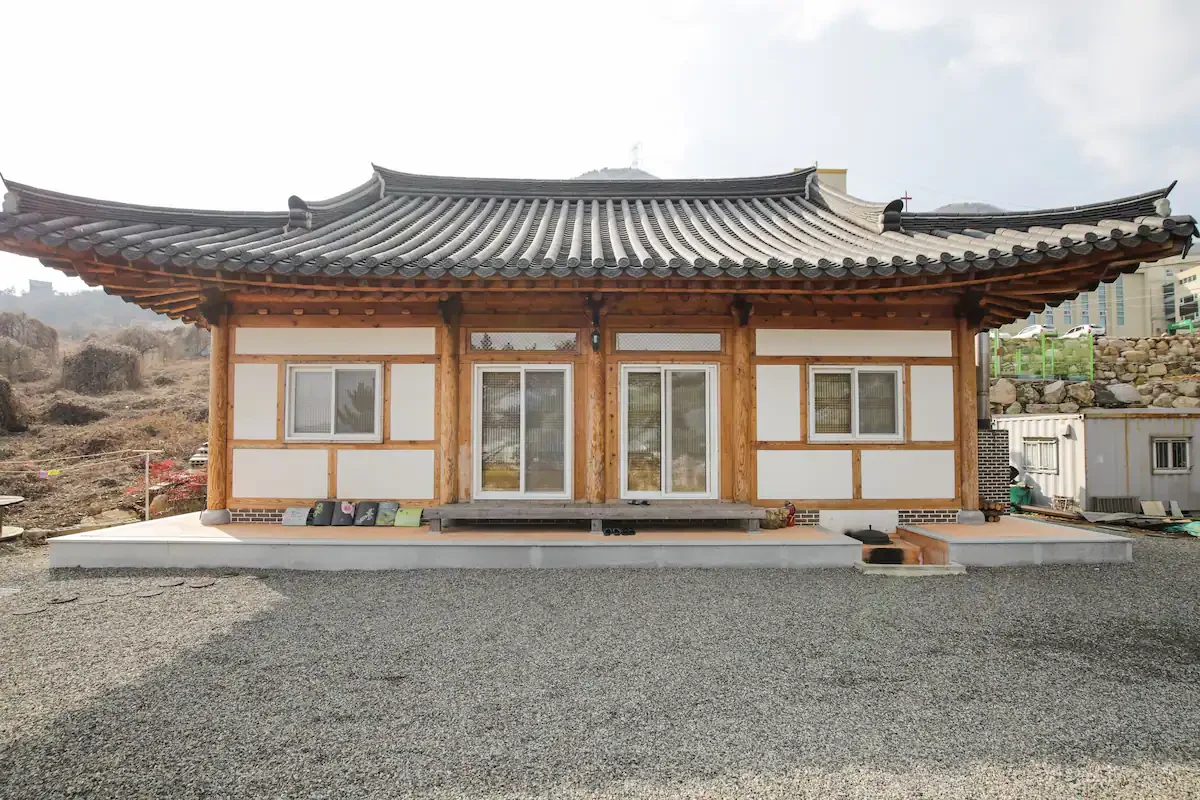
Visitors seeking historical immersion can travel to the periphery of the city to experience Daranhyang Hilltop, located at 626-7 Gomnae-gil in Gijang-gun. As one of the few surviving traditional hanok (Korean wooden-frame houses) accommodations in the region, this hilltop property offers a stark contrast to the urban core, allowing guests to engage with historical domestic architecture, traditional heating systems (ondol), and rural tranquility.

Immersive Cultural Landmarks and Recreational Infrastructure

Busan’s municipal government has invested heavily in urban regeneration projects, transforming historic residential enclaves and industrial zones into world-renowned cultural tourism assets.

Gamcheon Culture Village, situated at 200 Gamnae 1-ro in Saha-gu, stands as a prime example of successful urban revitalization. Originally constructed as a mountainside settlement for refugees fleeing the Korean War, the steep, terraced neighborhood was painted in vibrant hues and populated with public art installations in 2009. Today, it functions as an open-air architectural museum. Cultural economists note that the village’s stamp tour initiative—priced at KRW2,000—successfully encourages visitors to patronize local micro-businesses, art studios, and independent cafes while dispersing tourist foot traffic throughout the residential alleyways.

Similarly, Huinnyeoul Culture Village, located on the coastline of Yeongdo-gu, capitalizes on dramatic cliffside geography. Formerly a cluster of makeshift homes established by displaced persons, the area has undergone systematic gentrification by local artists, indie booksellers, and boutique coffee roasters. Its winding pedestrian paths offer unobstructed views of international shipping lanes entering Busan Port.

For modern family entertainment, the eastern Gijang-gun coastline has emerged as a major leisure cluster. Opened in March 2022, Lotte World Adventure Busan spans a vast footprint with 16 signature attractions, anchored by the high-velocity "Giant Digger" roller coaster featuring multiple 360-degree inversions. Adjacent to the theme park is Skyline Luge Busan, an gravity-fueled cart attraction imported from New Zealand that accommodates multi-generational family groups across paved downhill tracks.

The adjacent Haedong Yonggungsa Temple provides historical and spiritual balance to the high-tech entertainment district. Built in 1376 by the Buddhist teacher Naong during the Goryeo dynasty, the temple is exceptionally rare in South Korea for its direct oceanfront positioning. Unlike most Korean temples located in mountainous retreats, Haedong Yonggungsa allows worshippers and tourists to observe crashing waves against rock formations while participating in seasonal rituals, such as lighting zodiac-aligned candles.

Urban Transit Innovations: Scenic Rail and Historic Infrastructure

Busan’s challenging topography—defined by steep hills and indented coastlines—has driven the development of unique public and recreational transit systems that double as tourist attractions.

The Haeundae Blueline Park represents a masterclass in industrial repurposing. Utilizing an abandoned coastal railway formerly part of the Donghae Nambu line, municipal authorities established the Haeundae Beach Train and the elevated Sky Capsule. The automated Sky Capsule carriages suspend travelers in private pods along an elevated monorail track, offering uninterrupted views of the Haeundae shoreline between Mipo and Songjeong stations. Transportation statistics indicate that pre-booking is essential due to high demand and strict capacity limits.

In the historic Dong-gu district, the 168 Stairs and Monorail address the steep elevation changes of the hillside neighborhoods. Originally constructed to assist residents navigating the precipitous slope connecting the port area to the upper residential zones, the newly installed free-of-charge monorail now serves both elderly locals and tourists. The site features community-led initiatives, including traditional dosirak (lunch box) eateries and small-scale museums that chronicle the socioeconomic history of post-war Busan.

Further south, the Songdo Cable Car system—operating as Busan Air Cruise and Crystal Cruise—transports passengers across Songdo Bay. The Crystal Cruise variant features transparent glass flooring, providing a direct vertical perspective of the sea 85 meters below, thereby catering to adventure tourism demographics.

Culinary Traditions: Seafood, Street Food, and Heritage Broths

Busan’s identity as a port city is intrinsically linked to its gastronomic offerings, which heavily feature marine produce and hearty labor-class comfort foods born from historical scarcity.

Jagalchi Market, located at 52 Jagalchihaean-ro, is the undisputed epicenter of South Korea’s seafood trade. Operating as both a wholesale distribution hub and a retail culinary destination, the multi-story facility allows consumers to select live marine life—ranging from flatfish and octopus to king crab and sea squirts—on the ground floor and have it prepared as fresh sashimi or spicy stews (maeuntang) by second-floor vendors. Economic analysts note that the market serves as a critical economic engine for the city’s commercial fishing sector.

For street food enthusiasts, BIFF Square in Nung-gu is internationally recognized for its regional variation of hotteok, specifically Ssiat Hotteok. Unlike the traditional cinnamon-filled sweet pancake found in central regions, Busan’s version is slit open after frying and stuffed with a generous mixture of sunflower seeds, pumpkin seeds, peanuts, and brown sugar.

In the realm of hearty regional dishes, Dwaeji Gukbap (pork soup with rice) holds cultural supremacy. Establishments such as Yeongdong Milmyeon & Dwaeji Gukbap specialize in a milky, deeply savory pork bone broth simmered for hours, traditionally seasoned with fermented salted shrimp (saeujeot), chives, and chili paste. Alongside the soup, the restaurant serves milmyeon—wheat flour noodles developed during the Korean War when buckwheat was scarce, served in either an iced broth or a spicy, sweet chili sauce.

The city’s burgeoning café culture is equally prominent. Horangi Gelatteok in Haeundae specializes in handcrafted mochi ice cream, wrapping dense artisanal gelato flavors like roasted pistachio and Jeju matcha inside delicate, chewy rice cake (tteok) skins. Meanwhile, Cafe Magnate in Nam-gu—famously operated by the family of BTS member Jimin—draws global fans with specialty beverages like the Cream Gialio (earl grey tea with lemon cream) and an extensive inventory of artisanal pastries, including Ang Butter Croissants.

Wellness and Urban Parks

To decompress from urban exploration, visitors frequent institutions like Hurshimchung Spa, located within Hotel Nongshim in Dongnae-gu. Recognized as one of the largest hot spring complexes in Asia, the facility harnesses natural alkaline hot spring waters rich in magnesium and calcium. Operating within the traditional jimjilbang (Korean public bathhouse) framework, the complex features dozens of specialized baths, saunas, and wellness facilities maintained at varying temperatures.

Urban planners view Busan’s comprehensive integration of historical preservation, modern leisure infrastructure, and culinary heritage as a model for sustainable metropolitan tourism. As international flight connectivity continues to expand, Busan remains uniquely positioned to capture a growing share of travelers seeking an authentic yet modern coastal Korean experience.
