

Busan, South Korea’s vibrant second-largest metropolis, has firmly established itself as a premier destination for both domestic travelers and international tourists. While the coastal city is internationally renowned for its sweeping sandy beaches and bustling seafood markets, a deeper exploration reveals a multifaceted urban landscape blending modern infrastructure, rich maritime heritage, and dynamic cultural districts. As South Korea continues to experience a surge in inbound tourism following global post-pandemic travel normalization, regional authorities have placed increased emphasis on decentralized tourism, steering visitors beyond Seoul to coastal hubs like Busan. This comprehensive guide provides an exhaustive analysis of the city’s premier accommodations, landmark attractions, and culinary staples, offering a structured framework for navigating South Korea’s premier coastal destination.

Strategic Accommodations: From Luxury Resorts to Traditional Hanoks

Choosing the right base of operations is critical for navigating Busan’s sprawling geography, which stretches from industrial ports to picturesque cliffside communities. The hospitality sector in Busan caters to a diverse demographic, spanning high-net-worth travelers, budget-conscious backpackers, and cultural purists.

For luxury travelers, the Haeundae district remains the epicenter of high-end hospitality. The Park Hyatt Busan, a 5-star establishment situated in the prestigious Marine City enclave, offers panoramic views of the iconic Gwangan Bridge and the surrounding marine expanse. Designed with floor-to-ceiling glass architecture, the property provides immediate proximity to Haeundae Beach while maintaining a sophisticated, secluded ambiance.

Conversely, budget-conscious travelers frequently gravitate toward the Gwangalli beach corridor. The H Avenue Hotel Gwangalli delivers accessible, sea-facing accommodations without the premium price tag associated with luxury chains. Situated within walking distance of Gwangan Station and local commercial districts, the property exemplifies the city’s push toward high-value, mid-tier tourism infrastructure.

For younger demographics and solo travelers, the Seomyeon district—historically recognized as the commercial and financial heart of Busan—offers efficient hostel accommodations such as the Uniqstay Hostel & Suite. Positioned adjacent to the Seomyeon Underground Shopping Centre and major transit lines, this sector maximizes urban mobility.

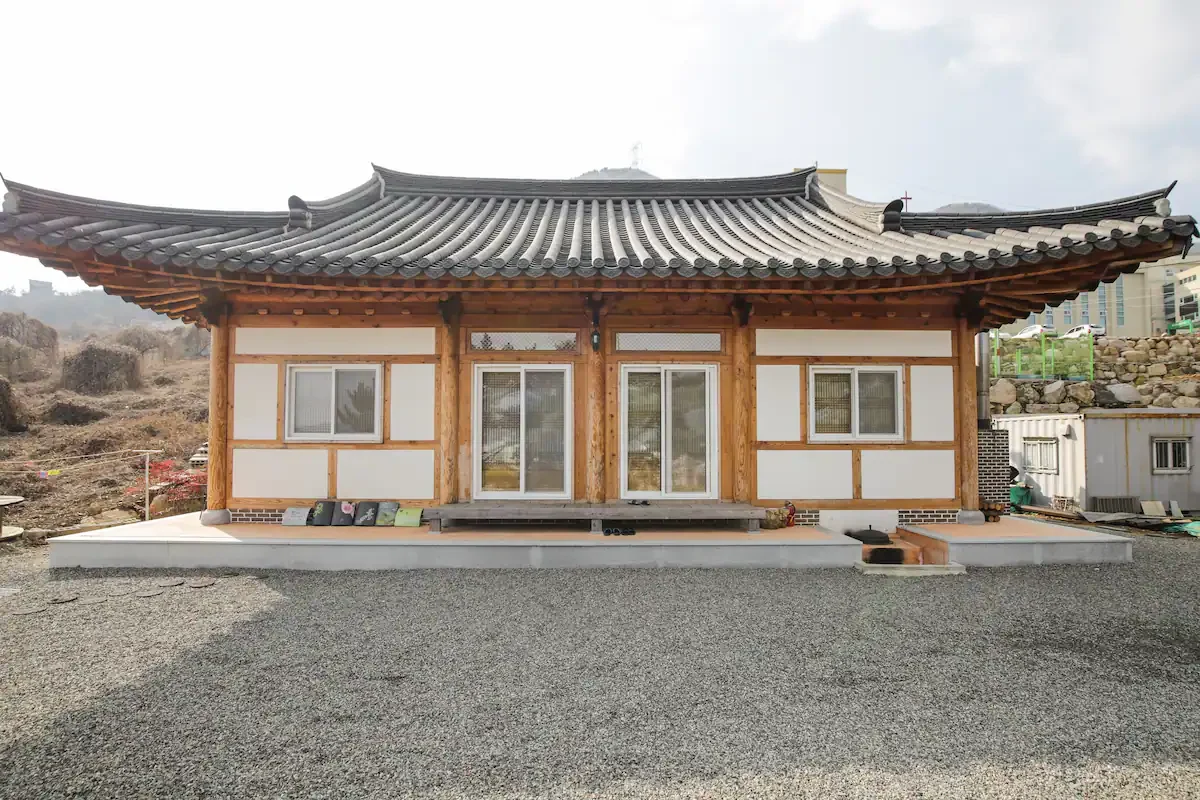
In a departure from modern vertical architecture, cultural preservation initiatives have introduced traditional lodging options to outlying areas. Daranhyang Hilltop, located in the northern district of Gijang-gun, represents one of the rare surviving hanok (traditional Korean house) experiences within the municipal boundaries. By offering an immersion into historical domestic architecture away from the urban center, these properties cater to a growing segment of travelers seeking authentic heritage experiences.

Iconic Landmarks and Urban Regeneration Projects

Busan’s modern tourism appeal is deeply rooted in successful urban regeneration initiatives that transformed historical settlements into vibrant cultural hubs. Chief among these is the Gamcheon Culture Village, located in Saha-gu. Originally a hillside shantytown established by refugees fleeing the Korean War in the 1950s, Gamcheon underwent a dramatic municipal revitalization project in 2009. Artists and local residents painted the multi-tiered pastel homes and installed public art projects throughout the labyrinthine alleys. Today, the village serves as a case study in community-led urban renewal, drawing millions of annual visitors who participate in structured stamp-collection tours to support local artisans.

Similarly, the Huinnyeoul Culture Village on Yeongdo Island utilizes its dramatic coastal topography to blend residential living with contemporary creative spaces. Perched on a high cliff overlooking the Korea Strait, the village has evolved from a historic resettlement area into a thriving enclave of independent cafes, stationery shops, and art galleries, reflecting the city’s broader strategy of coastal economic revitalization.

Infrastructure Expansion and Family Entertainment

To maintain its competitive edge against other East Asian tourism markets, Busan has significantly expanded its family-entertainment and transit infrastructure over the past decade. The March 2022 opening of Lotte World Adventure Busan in Gijang-gun marked a major milestone in the region’s amusement sector. Spanning a vast multi-hectare site, the park features adrenaline-centric attractions such as the Giant Digger roller coaster alongside cultural parades centered around the Lory Castle. Adjacent to the theme park, the Skyline Luge Busan introduces gravity-fueled karting tracks that cater to multi-generational family tourism.

Transportation corridors have similarly undergone technological and aesthetic upgrades. The Haeundae Blueline Park repurposes an abandoned coastal railway facility into a premier eco-tourism attraction. Operating along the former Donghae Nambu line, the facility offers two distinct transit experiences: the Haeundae Beach Train, which runs parallel to the coastline, and the Sky Capsule, an elevated private monorail that affords passengers unobstructed sea views between Mipo and Songjeong.

Culinary Heritage: Maritime Delights and Modern Gastronomy

No analysis of Busan is complete without examining its distinct culinary profile, which is heavily influenced by its status as South Korea’s primary port city. The gastronomy sector ranges from raw seafood distribution centers to historic comfort food establishments and celebrity-affiliated modern cafes.

At the core of the city’s seafood trade is the Jagalchi Market, the largest physical seafood market in the country. Operating since the Korean War, the multi-story facility functions as both a wholesale market and a direct-to-consumer dining destination, where patrons select fresh marine products from ground-floor vendors to be prepared in upper-level restaurants. This direct supply chain underpins the regional obsession with fresh hoe (Korean-style raw fish) and assorted marine stews.

Street food culture thrives in proximity to historic commercial hubs, notably at the Busan International Film Festival (BIFF) Square in Jung-gu. The area is celebrated for its regional variant of hotteok, specifically Ssiat Hotteok. Unlike the standard cinnamon-filled pancake found elsewhere in the peninsula, the Busan iteration is split open after frying and stuffed generously with sunflower seeds, pumpkin seeds, peanuts, and brown sugar syrup, reflecting historical trade influences through the port.

For hearty comfort fare, the city is synonymous with Dwaeji Gukbap (pork soup with rice). Establishments such as Yeongdong Milmyeon & Dwaeji Gukbap specialize in rich, long-simmered pork bone broths served alongside traditional milmyeon (wheat noodles), a regional noodle variety developed during the Korean War when buckwheat—the traditional ingredient for naengmyeon—was scarce due to supply chain disruptions.

Modern cafe culture has also become a major economic driver, intersecting with pop culture phenomena. Cafe Magnate, located in Nam-gu and operated by the family of BTS member Jimin, draws international fandoms while anchoring local commercial development. The establishment exemplifies how Hallyu (the Korean Wave) continues to stimulate localized tourism and small-business growth across non-capital regions.

Broader Economic Implications and Future Outlook

The continuous development of Busan’s tourism infrastructure underscores a deliberate economic shift toward service-sector and hospitality-driven growth. By leveraging its natural topography, historical narratives, and cultural assets, the municipal government has successfully mitigated the economic vulnerabilities associated with traditional heavy industries, such as shipbuilding and shipping logistics, which historically dominated the region.

As international flight connectivity to Gimhae International Airport continues to recover and expand, Busan is well-positioned to retain its status as a cornerstone of South Korea’s national tourism strategy. The integration of modern transit systems, preservation of historical settlements, and elevation of regional cuisine ensure that the city will remain a globally competitive destination for decades to come.
