
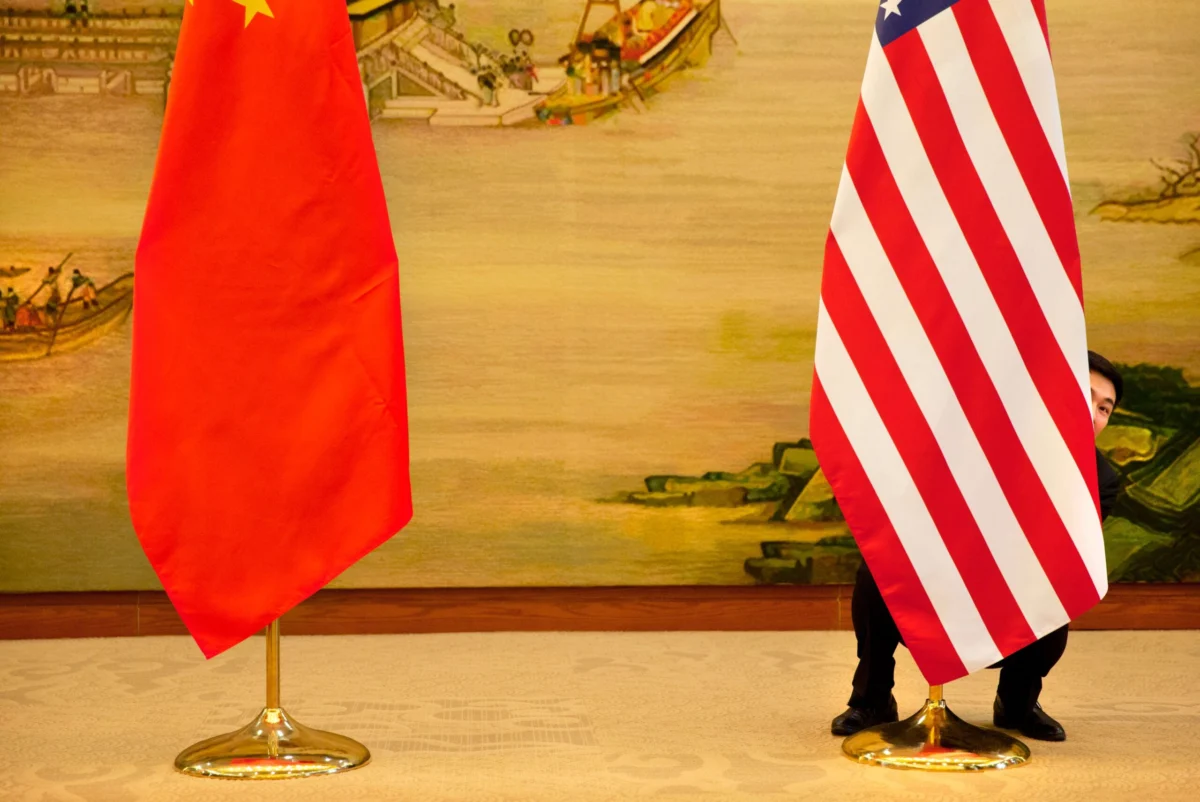
As nations race to secure leadership in the automation age, Washington has launched a sweeping defensive campaign to insulate its domestic technology ecosystem from foreign dominance. In a series of aggressive policy maneuvers throughout July and August, the United States government dramatically tightened restrictions on foreign-made advanced robotic systems. These actions were swiftly followed by the announcement of steep, targeted tariffs on imported unmanned aerial vehicles (UAVs) and their underlying components, with national security cited as the primary catalyst.
The impending implementation of these trade barriers—scheduled to take effect for finished drones in September, with component tariffs rolling out through 2027—marks a critical inflection point for the global robotics industry. Far from being isolated trade disputes, these measures represent the latest escalation in a multi-year technological decoupling between the world’s two largest economic superpowers. By drawing hard regulatory lines around critical dual-use hardware, the U.S. is fundamentally altering how humanoid robots, autonomous drones, and intelligent industrial automation are developed, manufactured, and deployed worldwide.
The Evolution of the U.S. Technology Restrictions
To understand the gravity of the current restrictions, one must examine the regulatory framework that preceded them. The United States’ systematic effort to restrict foreign technology in strategically vital sectors began in earnest with the establishment of the Federal Communications Commission’s (FCC) Covered List in 2021.
Initially, the Covered List was narrowly tailored to address national security vulnerabilities within telecommunications and video surveillance infrastructure. It famously targeted major Chinese hardware and software providers such as Huawei Technologies, ZTE, and Hangzhou Hikvision Digital Technology, barring their equipment from receiving authorization for sale in the U.S. market due to perceived risks of espionage and critical infrastructure disruption.
Over the ensuing years, however, the scope of the Covered List expanded significantly. Recognizing that national security risks extend well beyond traditional telecom networks, regulators began turning their attention to the skies, ultimately adding foreign-made commercial and consumer drones to the restricted roster. The policy logic driving these decisions has now naturally extended to the ground, culminating in the July restrictions targeting advanced robotic systems.
This legislative and regulatory escalation coincides with a profound commercial reality: Chinese manufacturers have rapidly established commanding, nearly insurmountable positions in both the drone and humanoid robotics sectors. Operating with vast economies of scale, deep supply-chain integration, and aggressive pricing models, Chinese firms have successfully captured market share on a global scale, often offering products at price points that domestic U.S. and European manufacturers simply cannot match. Consequently, the latest regulatory interventions raise a profound strategic question for the international technology sector: If Chinese autonomous systems are systematically barred from the American market, where does global competition migrate next, and how will the economics of robotics adapt?
The Scale Gap: Decoding China’s Manufacturing Dominance
While the United States and China remain deeply interconnected across various technology supply chains, the two nations enter the robotics race with fundamentally divergent advantages. Analysts point out that unlike the semiconductor industry—which relies on high-barrier, highly concentrated choke points like extreme ultraviolet (EUV) lithography machines—robotics is a multifaceted discipline that does not hinge on a single, easily controllable chokepoint technology.
Instead, the global robotics landscape is defined by a stark divide between software prowess and physical manufacturing might. According to Ankur Saxena, an investment director at TDK Ventures, the U.S. undeniably leads the world in frontier artificial intelligence, advanced software development, and semiconductor innovation. However, China holds an overwhelming lead in manufacturing scale, supply-chain depth, and cost efficiency.
This structural divide is vividly illustrated in the market for humanoid robots. Data compiled by market intelligence firm Counterpoint Research reveals that global humanoid robot shipments soared by nearly 300 percent year-over-year in the first half of 2026, reaching a total of 22,000 units globally. The vast majority of these shipments originated from Chinese factories. In fact, Counterpoint’s data shows that the world’s five largest humanoid robot manufacturers by volume during this period—AgiBot, Unitree Robotics, Galbot, UBTECH Robotics, and Leju Robotics—were entirely Chinese-owned and operated. Combined, these five companies accounted for an astounding 86 percent of all global humanoid shipments in the first half of 2026.
This concentration of production volume creates a powerful compounding advantage. Lower consumer and enterprise price points allow Chinese manufacturers to deploy thousands of robots into real-world operational environments. These deployments generate massive streams of operational data, which engineers then use to refine AI algorithms, improve mechanical reliability, and accelerate product iteration cycles. In turn, higher production volumes drive down per-unit manufacturing costs even further, widening the competitive moat against Western alternatives.
Furthermore, Chinese humanoid makers are systematically lowering costs by bringing more of the technology stack in-house and leveraging pre-existing domestic manufacturing ecosystems. Companies like Unitree are aggressively developing critical actuators, sensors, and controllers internally. Meanwhile, established electric vehicle manufacturers, such as XPeng, are successfully transitioning their expertise in high-volume automotive manufacturing, battery integration, and custom silicon development into the burgeoning humanoid robotics sector.
This immense manufacturing edge has allowed Chinese firms to compress humanoid robot pricing at a velocity that Western startups find difficult to replicate. As Saxena succinctly observed in interviews with industry publications, governments cannot simply sanction their way around a steep cost curve; they can only out-build it. To date, the United States has yet to commit to the decade-long capital expenditure and industrial policy investments required to match that level of physical production capacity.
Industry Responses and Strategic Adaptations
As the regulatory walls close in around the North American market, Chinese robotics companies are actively recalibrating their global expansion strategies. Industry experts note that even if Chinese firms are effectively locked out of the United States, they retain a massive, highly receptive domestic market alongside significant growth opportunities across international territories where demand for affordable automation is surging.
According to Soumen Mandal, a principal analyst at Counterpoint Research, Chinese robotics makers are already aggressively targeting price-sensitive markets grappling with severe labor shortages. Regions such as Europe, Southeast Asia, Latin America, and the Middle East have become primary targets for commercial expansion. Mandal notes that humanoid robotics manufacturers are likely mirroring the playbook successfully written by Chinese electric vehicle (EV) manufacturers: build dominant scale within the domestic market first, expand aggressively into overseas developing markets, and eventually establish localized assembly plants abroad. Countries facing acute demographic decline and chronic labor deficits—particularly in manufacturing, logistics, and warehousing sectors—are expected to serve as early adopters of these affordable automated systems.
A Glimpse into the Future: The Fragmented Drone Market
The commercial drone industry offers a clear preview of what a permanently fragmented global robotics market looks like. Bentzion Levinson, founder and CEO of Virginia-based drone manufacturer Heven AeroTech, describes an industry that has effectively split into two distinct, parallel ecosystems. On one side stands a U.S.-led market centered around American-made, National Defense Authorization Act (NDAA)-compliant systems designed for maximum security and government use. On the other side sits a China-led market focused on high-volume, cost-effective consumer and commercial applications.
Levinson argues that Western manufacturers cannot realistically outcompete Chinese companies in the low-end consumer drone sector, where hardware costs and supply chain efficiencies dictate market survival. Instead, U.S. and allied companies are carving out viable niches by competing in specialized, high-margin sectors—such as long-range autonomous systems for military defense, search and rescue, and critical infrastructure inspection—where strict cybersecurity and supply-chain provenance carry paramount weight.
Looking ahead, Levinson believes the next competitive frontier will shift away from the basic airframes or robotic chassis toward the core technologies that power them. The battleground is rapidly evolving over who owns next-generation energy and payload architectures, particularly given persistent battery limitations. As autonomous drones and mobile robots become increasingly capable, overcoming power density constraints will dictate operational utility, making advanced energy systems a critical point of international competition.
Meanwhile, domestic robotics developers have expressed cautious optimism regarding the federal government’s protective measures. Agility Robotics publicly welcomed the FCC’s restrictive actions in July, emphasizing the importance of mitigating security risks associated with foreign-made advanced robots before they become deeply embedded in U.S. commercial infrastructure—a phenomenon the company argues already occurred in the commercial drone space. Agility continues to champion its domestically designed and assembled Digit humanoid robot, while simultaneously advocating for continued access to the specialized tools and global technologies required to sustain advanced robotics research and development.
The Rise of Regionalized Robotics and Allied Supply Chains
Rather than resulting in a clean, binary division between U.S.-led and China-led technology blocs, the current wave of trade restrictions is accelerating the emergence of a multi-polar, regionalized robotics market.
Industry analysts emphasize that the realistic alternative to total reliance on Chinese manufacturing is not a purely domestic U.S. supply chain, but rather a diversified, allied manufacturing network spanning multiple strategic geographies. This dynamic creates distinct opportunities for other Asian technology powerhouses. Japan brings decades of specialized experience in industrial robotics and high-precision mechanical manufacturing. South Korea boasts world-class capabilities in advanced electronics, lithium-ion battery chemistry, and automotive engineering. Taiwan remains the indispensable linchpin of global semiconductor fabrication.
However, industry experts caution that these allied nations cannot simply substitute for China overnight, given how deeply Chinese components remain embedded across every tier of the global robotics supply chain. Instead, Asian manufacturers outside of China are well-positioned to occupy a profitable middle ground, offering products that bridge the gap between low-cost Chinese robots and high-priced U.S. alternatives. Automotive giants such as South Korea’s Hyundai (which owns Boston Dynamics) and Japan’s Toyota are heavily investing in humanoid and mobile robotics, leveraging their decades of vehicle manufacturing expertise to bridge the gap.
Yang Fang, an executive at California-based agricultural technology startup Beagle Technology—which integrates advanced AI and robotics software into conventional farm machinery to create autonomous agricultural tools—notes that robotics design is inherently contextual. Machines are increasingly being engineered to match the specific labor requirements, regulatory environments, and working conditions of their respective home markets. Chinese robotics firms naturally optimize their machines for conditions prevalent in Asia, while U.S. companies build solutions tailored to the expansive industrial landscapes of North America.
Conclusion: Navigating the New Automation Order
The sweeping U.S. restrictions on foreign advanced robotics and drones signal the definitive end of a hyper-globalized, frictionless era in automation technology. As tariffs take full effect and regulatory enforcement tightens, the global robotics industry is crystallizing into a complex, fragmented mosaic.
Chinese enterprises will continue to leverage their unmatched manufacturing scale and cost structures to dominate price-sensitive emerging markets across the globe. Concurrently, U.S. and allied manufacturers will fortify their positions in security-critical, defense, and high-end industrial sectors where data sovereignty and regulatory compliance outweigh upfront hardware costs. Meanwhile, industrial powerhouses in Japan, South Korea, and Taiwan will vie to carve out resilient market segments in between. Ultimately, the future of global robotics will not be decided by protectionist tariffs alone, but by which nations can successfully couple advanced artificial intelligence with sustainable, long-term investments in industrial manufacturing capacity.
