
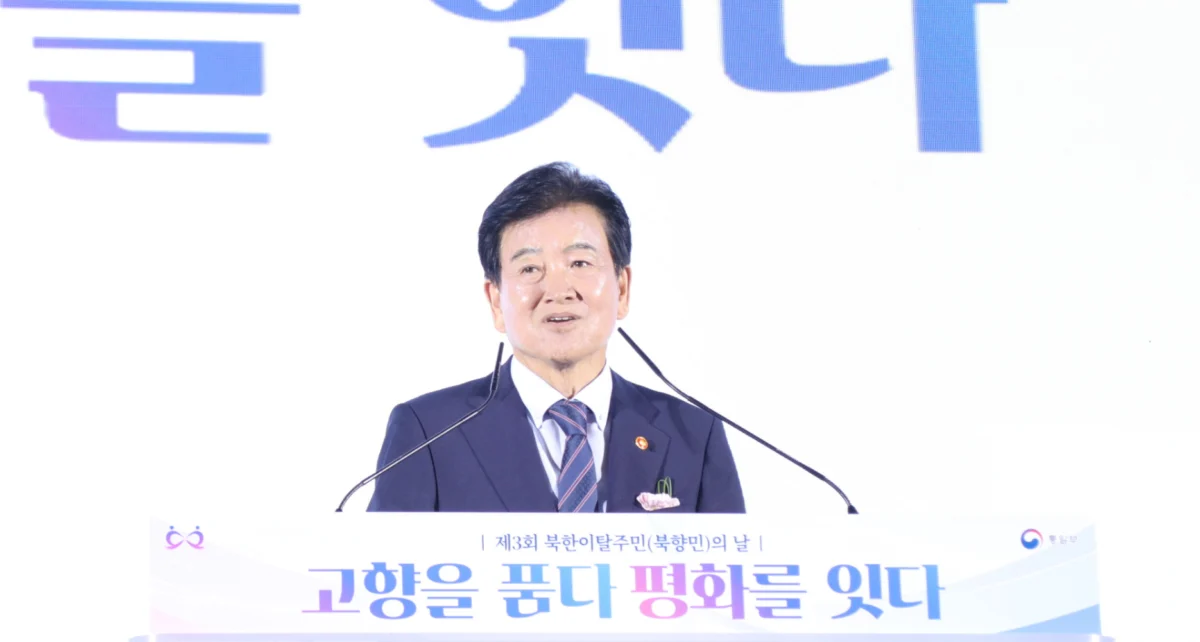
In a significant move aimed at de-escalating tensions on the Korean Peninsula, South Korean Unification Minister Chung Dong-young called for the government to officially retire the designation of North Korea as the nation’s "main enemy." Speaking during a comprehensive policy briefing in Seoul on Wednesday, Minister Chung argued that the path toward rebuilding inter-Korean trust and establishing a sustainable peace begins with a fundamental shift in the language used by the two neighbors. He emphasized that the abandonment of rhetoric fueling hostility and confrontation is not merely a symbolic gesture but a strategic necessity for regional stability.
According to Minister Chung, the two Koreas should transition toward a relationship defined by mutual recognition, starting with the simple act of "calling each other by name." He asserted that the "main enemy" label, which has long been a fixture of South Korean defense doctrine during periods of high tension, serves as a barrier to genuine dialogue. The Minister’s remarks follow a series of internal discussions within the administration regarding the future of inter-Korean relations, signaling a potential shift in the Republic of Korea’s (ROK) approach to its northern neighbor.
The Linguistic Foundation of Inter-Korean Diplomacy
Minister Chung’s proposal focuses on the psychological and diplomatic weight of official terminology. In his address to reporters, he explained that expressions such as "main enemy" are inherently confrontational and prevent the development of a framework based on mutual respect. "To achieve genuine mutual respect, we must first address the language that defines our relationship," Chung stated. He added that he intends to pursue "constructive discussions" with other government agencies, including the Ministry of National Defense and the Office of National Security, to evaluate the impact of this terminology on the broader security environment.
The Unification Minister’s stance is rooted in the belief that diplomatic breakthroughs are often preceded by a softening of public and official rhetoric. By moving away from the "main enemy" designation, the South Korean government could potentially signal to Pyongyang a willingness to engage in high-level talks without the prerequisite of immediate denuclearization—a stance that has historically led to stalemates. However, the proposal is expected to face scrutiny from conservative factions within the South Korean legislature who view the label as an accurate reflection of the security threats posed by North Korea’s nuclear and missile programs.
Historical Context: The Evolution of the Main Enemy Label
The term "main enemy" (jujeok) has a volatile history in South Korean politics, often serving as a barometer for the state of inter-Korean relations. The designation was first introduced in the 1995 Defense White Paper, a direct response to a 1994 incident where a North Korean official threatened to turn Seoul into a "sea of fire" during a working-level meeting at Panmunjom. The threat shocked the South Korean public and prompted the Ministry of National Defense to explicitly define the North Korean military as the primary threat to national security.
Throughout the late 1990s and early 2000s, during the era of the "Sunshine Policy" spearheaded by Presidents Kim Dae-jung and Roh Moo-hyun, the usage of the term became a point of contention. Proponents of engagement argued that labeling the North as the "main enemy" was counterproductive to the goal of reconciliation. Consequently, the term was omitted from the 2004 Defense White Paper, replaced by more neutral language such as "direct military threat" or "existing military threat."
The label was reinstated following the 2010 sinking of the ROKS Cheonan and the shelling of Yeonpyeong Island, events that led to a sharp deterioration in bilateral ties. Under subsequent conservative administrations, the term was intermittently used or modified. Most recently, the administration of President Yoon Suk-yeol reinstated the "main enemy" label in the 2022 Defense White Paper, citing North Korea’s continued nuclear provocations and its designation of South Korea as an "undoubted enemy" in its own state rhetoric.
Chronology of the Main Enemy Designation in South Korean Defense Policy
To understand the weight of Minister Chung’s proposal, it is essential to examine the timeline of how South Korea has officially characterized North Korea over the last three decades:
- 1994: North Korean negotiator Park Yong-su makes the "sea of fire" threat during talks.
- 1995: The South Korean Defense White Paper officially uses the term "main enemy" for the first time.
- 2000: Following the historic first Inter-Korean Summit, the government begins debating the removal of the term to foster a cooperative atmosphere.
- 2004: The term is removed from the Defense White Paper under the Roh Moo-hyun administration, replaced by "direct military threat."
- 2010: Following the Cheonan and Yeonpyeong incidents, the 2010 White Paper describes the North Korean regime and military as "the enemy."
- 2018: During a period of intense diplomacy involving President Moon Jae-in and Chairman Kim Jong Un, the 2018 White Paper avoids the specific term "enemy," instead describing threats more broadly to include all forces that threaten South Korea’s sovereignty.
- 2023: The Yoon Suk-yeol administration formally reinstates the "main enemy" label in its first Defense White Paper, reflecting a "peace through strength" policy.
- 2026 (July): Unification Minister Chung Dong-young calls for the permanent removal of the label to facilitate a new era of "naming and respect."
Security Implications and Domestic Reactions
The proposal to drop the "main enemy" designation is not without significant risk. National security hawks argue that the label is a necessary tool for maintaining military readiness and moral clarity within the ROK Armed Forces. If the military is not taught who its primary adversary is, critics argue, it could lead to a degradation of combat mindset and national defense posture.

A spokesperson for the leading opposition party issued a statement shortly after the briefing, expressing concern that "changing a label does not change the reality of the North’s nuclear arsenal." The statement emphasized that any change in terminology should be reciprocal, noting that North Korea has recently codified South Korea as its "primary foe" and "invariable principal enemy" in its own constitution and military doctrines.
Conversely, supporters of the Unification Minister’s proposal argue that South Korea must take the first step to break the "vicious cycle" of escalatory rhetoric. Academic experts in inter-Korean affairs suggest that while the "main enemy" label satisfies a domestic political base, it provides no functional advantage in military deterrence while simultaneously closing doors to diplomatic de-escalation.
Data from recent public opinion polls in South Korea show a deeply divided electorate on this issue. A June 2026 survey indicated that 48% of respondents supported maintaining the "main enemy" label due to North Korea’s continued missile testing, while 42% believed that a change in rhetoric was necessary to prevent an accidental military conflict.
The Role of the Ministry of Unification vs. Ministry of Defense
The current debate highlights a long-standing tension between the Ministry of Unification (MOU) and the Ministry of National Defense (MND). The MOU is tasked with managing dialogue, exchange, and the long-term goal of reunification, necessitating a diplomatic and often conciliatory tone. In contrast, the MND is focused on deterrence, defense, and clear-eyed assessments of external threats.
Minister Chung’s comments suggest he is attempting to reassert the MOU’s influence over the administration’s North Korea policy, which has been dominated by a defense-centric approach for several years. By advocating for "constructive discussions" on the "main enemy" issue, Chung is effectively challenging the current security paradigm, proposing that language itself is a tool of national security.
Regional and Global Implications
The international community, particularly the United States and China, monitors South Korea’s official rhetoric closely. For the United States, a shift in South Korea’s stance could complicate the unified front on "integrated deterrence," although some in Washington might welcome a reduction in peninsula tensions that allows for a greater focus on other regional challenges.
China, which has consistently urged both Koreas to "meet halfway," would likely view the removal of the "main enemy" label as a positive step toward regional stability. For North Korea, the reaction is harder to predict. While Pyongyang has historically bristled at being called the "main enemy," it has also shown a tendency to dismiss such changes in South Korean policy as "deceptive maneuvers" unless accompanied by a change in joint military exercises with the U.S.
Analysis of Potential Outcomes
If the South Korean government moves forward with Minister Chung’s recommendation, several outcomes are possible:
- De-escalation of Rhetoric: North Korea might respond by softening its own state-run media attacks on the South Korean leadership, creating a "cooling-off" period.
- Increased Domestic Polarization: The move could lead to significant political infighting in Seoul, potentially stalling other legislative agendas as the administration defends its security credentials.
- Diplomatic Opening: The removal of the label could serve as a pretext for a new round of working-level talks, perhaps focused on humanitarian issues or family reunions, which have been suspended for years.
- No Change in Material Threat: Critics will remain focused on the fact that regardless of the label, the North’s nuclear development continues, suggesting that linguistic shifts are "empty" without accompanying North Korean concessions.
Conclusion: Toward a New Framework of Recognition
Minister Chung Dong-young’s call to "call each other by name" represents a fundamental philosophical question for the Republic of Korea: Is the primary goal of the state to defeat the enemy or to transform the enemy into a partner for peace? By challenging the "main enemy" designation, the Unification Minister is betting that a change in perception can eventually lead to a change in reality.
As the administration weighs this proposal, the focus will remain on whether North Korea is willing to reciprocate. For now, the "main enemy" debate serves as a microcosm of the broader struggle to find a path forward in one of the world’s most enduring and dangerous standoffs. The transition from "hostile rhetoric" to "constructive discussion" remains a steep climb, but as Minister Chung suggested, it is a journey that must begin with the words spoken in the halls of power in Seoul.
