

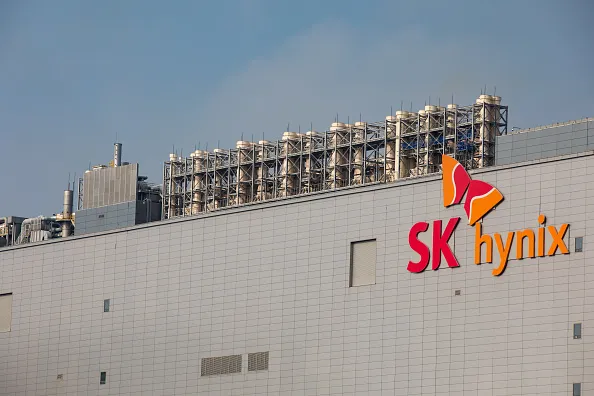
Global memory chip giant SK Hynix finds itself at the intricate intersection of international trade policy, national security mandates, and soaring market demand. As the semiconductor industry grapples with an acute component shortage fueled by the explosive growth of artificial intelligence, SK Hynix’s flash memory subsidiary, Solidigm, is reportedly leveraging its potential multibillion-dollar investments in domestic American manufacturing to secure crucial regulatory allowances for its operations in China.
According to industry insiders familiar with the negotiations, Solidigm is conditioning its ongoing plans to establish a new NAND flash memory manufacturing facility in the United States—with upstate New York emerging as a leading prospective site—on obtaining formal U.S. approval to ship advanced American semiconductor manufacturing equipment to its existing production plant in Dalian, China. This delicate diplomatic and commercial dance highlights the immense pressure foreign chipmakers face as they attempt to satisfy Washington’s aggressive localization mandates while maintaining complex, highly integrated global supply chains.
The Stakes of the U.S. Expansion and Dalian Operations
The potential establishment of a domestic U.S. facility by Solidigm represents a significant alignment with Washington’s broader legislative and economic goals. Over the past several years, U.S. policymakers have systematically incentivized foreign and domestic semiconductor firms to onshore chip production, seeking to insulate critical supply chains from geopolitical volatility and safeguard national security. Commerce Secretary Howard Lutnick has been particularly vocal on this front, confirming earlier this year that the U.S. government has been in active, direct discussions with major memory manufacturers, including SK Hynix and Samsung, to substantially ramp up memory output within U.S. borders.
Simultaneously, Solidigm is striving to optimize its manufacturing footprint abroad. Sources indicate that the firm is seeking to install additional semiconductor fabrication tools into currently vacant cleanroom space at SK Hynix’s Dalian facility, designated as Mod B, which was completed in 2023. By boosting NAND chip production at the Dalian plant, Solidigm aims to capture surging market demand and alleviate global supply constraints.
However, any movement of advanced manufacturing hardware into mainland China remains heavily restricted, requiring precise navigation of export control frameworks implemented by the United States Department of Commerce.
A Chronology of U.S. Export Controls and Policy Tightening
To fully understand the complexity of Solidigm’s current positioning, one must examine the rapid evolution of U.S. export controls targeting the Chinese semiconductor sector:
- October 2022: The U.S. Department of Commerce’s Bureau of Industry and Security (BIS) implements sweeping and unprecedented export controls designed to restrict the shipment of advanced computing chips and semiconductor manufacturing equipment to entities in the People’s Republic of China, citing critical national security risks.
- October 2023: Washington further tightens these restrictions, closing potential loopholes, lowering technical performance thresholds, and broadening the scope of controlled items to prevent China from acquiring foundational capabilities for domestic advanced chip production.
- September 2025: The regulatory landscape shifts further when the administration revokes special export exemptions that had previously allowed specific facilities operated by multinational chip giants—including SK Hynix, Samsung, and Intel—to receive routine equipment upgrades and maintenance tools in China.
- Late 2025: Recognizing the potential disruption to global memory supply chains, the U.S. government shifts toward a more managed compliance structure. By December 2025, reports indicate that Samsung and SK Hynix have successfully secured annual licensing agreements from Washington, permitting tightly monitored shipments of necessary manufacturing tools to their respective plants in China.
- Throughout 2026: Trade negotiations remain dynamic. SK Hynix and its subsidiaries find themselves balancing compliance frameworks with the commercial imperative to scale production amid a severe memory shortage.
Market Dynamics: The AI Boom and Rising NAND Prices
The backdrop to these high-stakes regulatory negotiations is an intensifying global supply crunch. NAND flash memory chips—the foundational components utilized in solid-state storage drives (SSDs)—power an extraordinarily broad spectrum of modern technology, ranging from everyday consumer electronics like smartphones and laptop computers to hyperscale artificial intelligence data centers.
The unprecedented expansion of AI infrastructure has triggered a massive demand spike for high-capacity, high-speed data storage and memory solutions. Because semiconductor fabrication lines require extended lead times to scale, supply has struggled to keep pace with demand. Consequently, component prices have climbed steadily. According to projections published by prominent market research firm TrendForce, average selling prices for NAND flash memory are anticipated to surge by 15% to 20% in the fourth quarter alone.
This environment places immense operational pressure on memory producers. While SK Hynix and Solidigm possess the technological capacity and market appetite to supply these critical components, their ability to execute is perpetually constrained by the regulatory checkboxes required to move equipment across international borders.
Corporate Clarifications and Official Responses
In the wake of reports detailing the conditions surrounding Solidigm’s U.S. expansion plans, SK Hynix has moved to clarify its operational posture. Representatives for the South Korean chip giant firmly stated to technology publication TechCrunch that the company is not actively seeking to expand overall production capacity at its Dalian Mod B facility beyond its original structural layout.
Furthermore, SK Hynix emphasized that any ongoing or proposed equipment installations at the Chinese plant are being executed strictly in transparent consultation with, and under the explicit authorization of, the United States government. This distinction is vital for maintaining compliance with BIS regulations, as unauthorized transfers of controlled dual-use technologies can result in severe legal and operational penalties.
The Road Ahead: Solidigm’s Planned IPO and Financial Horizon
Beyond the immediate geopolitical and manufacturing hurdles, SK Hynix is preparing its flash memory subsidiary for a monumental financial milestone. Financial markets have been closely following reports that Solidigm is actively selecting investment banking partners to orchestrate a major U.S. initial public offering (IPO), slated tentatively for 2027.
Industry analysts estimate that the forthcoming public debut could generate approximately $10 billion in capital, potentially valuing the enterprise at up to $100 billion. Successfully executing this public offering will require Solidigm to demonstrate robust, predictable operational growth, stable supply chain logistics, and seamless navigation of regulatory landscapes in both the United States and Asia.
Implications for the Global Semiconductor Ecosystem
The situation surrounding SK Hynix, Solidigm, and their cross-border negotiations serves as a definitive case study for the modern semiconductor industry. As governments weaponize trade policy and supply chain security as instruments of national strategy, multinational corporations no longer operate purely on traditional economic fundamentals. Instead, capital allocation, geographic expansion, and technology deployment are inextricably bound to diplomatic approvals.
If Solidigm successfully finalizes its plans for an upstate New York manufacturing facility while securing the necessary regulatory clearance for its Dalian operations, it could establish a blueprint for how foreign technology firms can successfully bridge the ideological and regulatory divide between Washington and Beijing. Conversely, any misstep in these delicate negotiations risks bottlenecking crucial memory supplies at a time when the global digital economy—increasingly reliant on generative AI and high-performance computing infrastructure—can ill afford further disruptions.
