

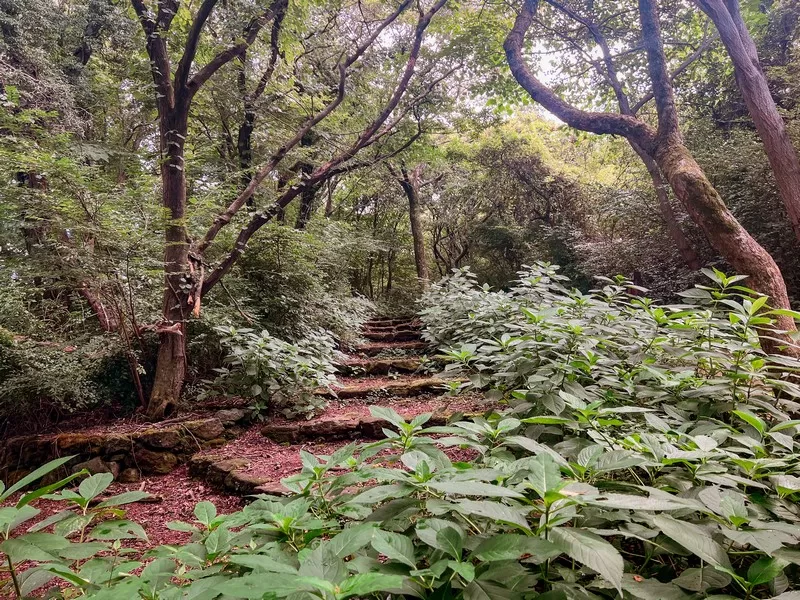
The Jeju Stone Culture Park, sprawling across 3.27 million square meters of pristine terrain in Jeju-si, South Korea, stands as a premier cultural institution dedicated to deciphering the intricate relationship between volcanic geology and human civilization. Far exceeding the scope of a conventional sculpture garden or regional museum, the complex integrates outdoor walking trails through protected Gotjawal forest, traditional architecture, contemporary art galleries, and comprehensive exhibition halls. Designated as one of South Korea’s top tourist attractions and recognized consistently for excellence in public museum administration, the park serves as an essential nexus for understanding the identity of an island forged entirely by fire and basalt.

Chronological Evolution and Landscape Integration

The genesis of Jeju Stone Culture Park traces back to decades of dedicated curation by Baek Un-cheol, who amassed a vast collection of stones, tree roots, and folk objects through the former Tamna Mokseokwon. In 1999, these preservation efforts crystallized into a public-private partnership with the local government. Construction of the subterranean Jeju Stone Museum commenced in 2001, culminating in the park’s official public opening on June 3, 2006.

Subsequent phases of development introduced specialized art spaces, outdoor stone culture exhibits, and a reconstructed traditional village. Most notably, the Seolmundae Halmang Exhibition Hall officially opened to the public in June 2025. The site itself carries a unique environmental history, having functioned as a household waste landfill from 1989 through 1999. Because the landfill produced no leachate, urban planners successfully transformed the depressed topography into a subterranean architectural marvel. Architects prioritized the preservation of the surrounding ecosystem, restricting physical structures primarily to former pasturelands while leaving more than 80 percent of the dense Gotjawal forest entirely untouched.

Geological Significance and Volcanic Origins

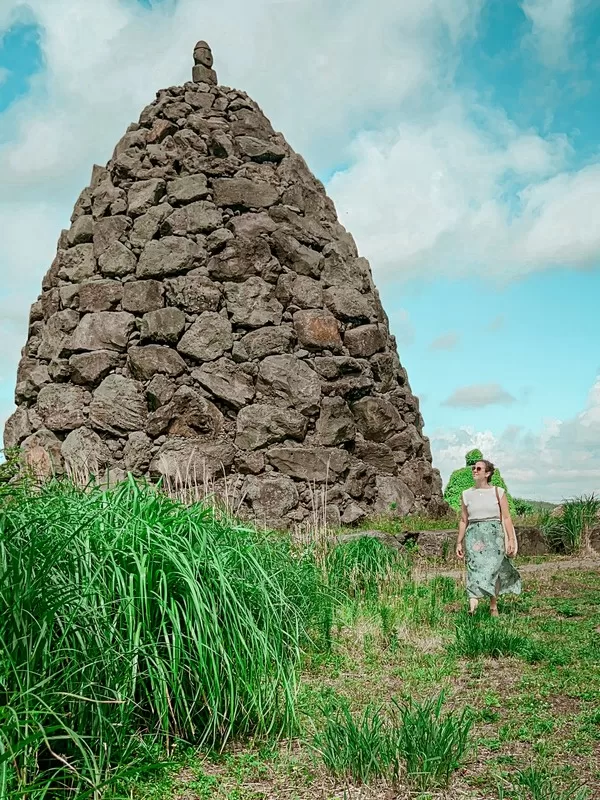
To comprehend the sociological and architectural history of Jeju Island, commonly referred to as the "Island of Stones," analysts must examine the basaltic composition that dictates its physical reality. Repeated volcanic eruptions over millennia generated the porous black lava rock that forms the foundation of the island’s agricultural fields, boundary walls, dwellings, burial sites, and spiritual shrines. The ubiquitous stone walls—engineered with strategic gaps to allow fierce island winds to pass through without compromising structural integrity—demonstrate generations of empirical engineering and adaptation to a harsh environment.
The Jeju Stone Museum elucidates this geological narrative through an expansive subterranean facility centered around a 12-meter-long topographical model of the island floating atop water. Permanent exhibitions categorized into nine distinct themes explore planetary formation, regional geological strata, volcanic ejecta, subterranean lava tubes, oreums (volcanic cones), sedimentary layering, and vital groundwater systems. This geological framework provides critical context for researchers and visitors navigating the complex hydrology of an island reliant on water retained within porous volcanic rock.

Mythological Framework and Cultural Heritage

The cultural core of the institution is anchored in regional folklore, most prominently the legend of Seolmundae Halmang, the giant creator goddess of Jeju mythology. According to oral tradition, the goddess formed Hallasan and the hundreds of surrounding oreums by carrying earth within her skirt, creating smaller mounds when soil sifted through tears in the fabric. Additional permanent galleries are dedicated to the Twelve Bonpuri—narrative shamanic songs detailing the origins and functions of the island’s pantheon of 18,000 deities.

Scholars emphasize that the park treats indigenous spiritual systems as a living cultural continuity rather than a static historical exhibit. Village shrines, known as dang, are meticulously represented to illustrate their ongoing role in community cohesion, agricultural rites, and seasonal festivals. Furthermore, the newly integrated Folklore and History halls house over 1,100 artifacts, ranging from maritime trading vessel reconstructions tied to the ancient Tamna kingdom to traditional persimmon-dyed working attire known as galot, highlighting the resourcefulness required of early inhabitants.

Socioeconomic Impact and Educational Implications

As a managed public asset, Jeju Stone Culture Park generates significant educational and economic value for Jeju Special Self-Governing Province. The institution routinely accommodates academic excursions, international delegations, and researchers specializing in volcanology, anthropology, and East Asian folklore. The inclusion of the expansive Children’s Hall—themed around the future of Jeju and the topography of Hallasan—ensures that younger demographics engage with environmental and historical sciences through tactile learning environments.

Institutional analysts note that the park’s balanced operational model, which combines strict ecological preservation with multifaceted cultural programming, sets a benchmark for public infrastructure projects within protected natural zones. By bridging the gap between natural science and intangible cultural heritage, Jeju Stone Culture Park provides visitors with a holistic, evidence-based understanding of how human society coevolved with a volatile and demanding volcanic landscape.
