

Navigating the transit corridor from Incheon International Airport (ICN) to the vibrant, youth-centric neighborhood of Hongdae remains one of the most critical logistical hurdles for travelers arriving in Seoul. As South Korea continues to welcome record-breaking numbers of international tourists, transportation operators have fine-tuned their schedules, pricing, and services to accommodate the influx. Whether arriving at Terminal 1 or Terminal 2, travelers heading straight to Hongik University Station—the heart of Hongdae’s arts, shopping, and nightlife district—are presented with three primary modes of transit: the AREX All-Stop train, the airport limousine bus system, and standard or international taxis.
Understanding the operational nuances of each service, including updated 2026 fares, scheduling gaps, and luggage considerations, is essential for a seamless transition from tarmac to city streets.
Main Facts and Route Overview
Hongdae, anchored by Hongik University Station, serves as a major multimodal hub in northwestern Seoul, intersecting Subway Lines 2, the Gyeongui-Central Line, and the AREX airport railroad line. The geographic distance between Incheon International Airport and Hongdae spans roughly 50 kilometers, making efficient rail or highway transit a priority for incoming passengers.
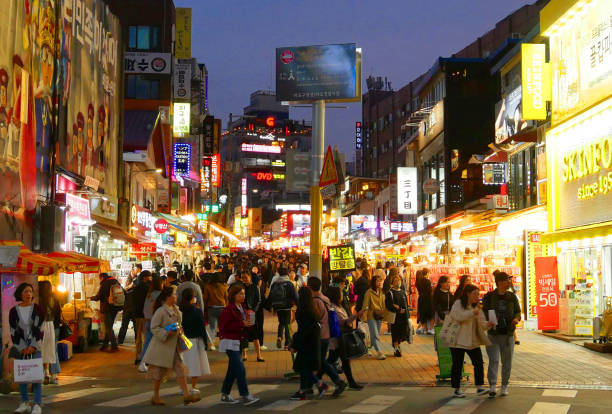
Transit options diverge significantly based on cost, speed, convenience, and time of arrival. While high-speed rail offers the most predictable journey times independent of highway traffic, road-based limousine buses provide the distinct advantage of station-to-doorstep service without requiring passengers to haul heavy luggage up and down subway stairs. Taxis offer private, direct transportation but carry variable pricing structures dictated by distance, time of day, and peak-hour surcharges.
Comprehensive Chronology and Operating Schedules
For rail passengers, timing is everything, particularly for late-night arrivals. The AREX network operates two distinct services from Incheon Airport: the Express Train and the All-Stop Train. Experienced travelers emphasize a vital distinction: the AREX Express runs a non-stop route exclusively to Seoul Station and does not service Hongik University Station. Consequently, passengers bound for Hongdae must select the All-Stop train.
The AREX All-Stop train provides direct service from both airport terminals to Hongik University Station. From Terminal 2, the first morning train departs at 05:08, while the inaugural service from Terminal 1 leaves at 05:14. Throughout the day, trains maintain a consistent cadence, bridging the airport and the city center.
However, late-night travelers must monitor strict final departure times. The last All-Stop train running the full route through Hongik University Station departs Terminal 2 at 23:32 and Terminal 1 at 23:38. A subsequent late-night service departs Terminal 2 at 23:50 and Terminal 1 at 23:56, but this train terminates early at Digital Media City Station, forcing passengers to seek alternative transport if they miss the final full-route connection.

To bridge the gap between late-night train closures and early morning schedules, the Incheon Airport transportation network deploys specialized night infrastructure. Notably, there is a scheduling window between the final 23:38 train departure from Terminal 1 and the launch of the overnight transit options. The dedicated N6002 late-night limousine bus fills this void, initiating its schedule from Terminal 1 at 00:00, with subsequent departures at 00:30, 01:00, 01:40, 04:00, and 04:40.
Supporting Data and Fare Structures
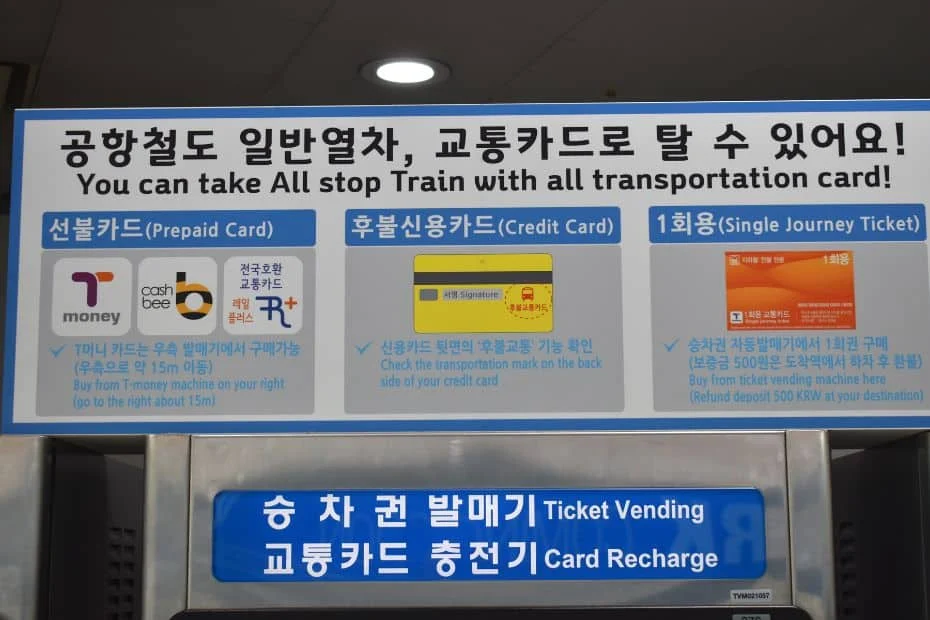
Navigating fare systems in South Korea requires familiarity with integrated transit cards, such as T-money or WOWPASS, which offer discounted transfers and streamlined boarding.
For the AREX All-Stop train, fares calculated using a transport card are pegged at 4,650 KRW from Terminal 1, with the journey taking approximately 52 minutes. From Terminal 2, the fare increases slightly to 5,250 KRW, extending the travel time to approximately 59 minutes. Passengers opting for single-use paper tickets face a 100 KRW surcharge alongside a refundable 500 KRW deposit, which must be reclaimed at automated deposit return kiosks upon arrival at Hongik University Station.
Road transit via Airport Limousine Bus Route 6002 offers an alternative for travelers carrying bulky luggage. The bus route stops directly at Hapjeong Station, Seogyo-dong Wedding Town, and Hongik University. Adult fares are standardized at 17,000 KRW, while children aged 6 to 12 travel for 12,000 KRW. Operating procedures differ slightly between terminals: at Terminal 1, passengers can board from stop 6A-1 on the first floor using transit cards, cash, or pre-purchased tickets on a first-come, first-served basis. At Terminal 2, platform 30 on Basement Level 1 requires passengers to secure physical tickets at the terminal ticket office prior to boarding.

For the late-night N6002 bus service, adult tickets are similarly priced at 17,000 KRW, while children’s fares are reduced to 10,000 KRW. The journey from the airport to Hongdae via the night bus typically takes around 45 minutes, continuing onward toward Gwanghwamun, Dongdaemun, and Cheongnyangni.
Taxi fares operate on a meter system managed by municipal regulations across Seoul, Gyeonggi, and Incheon jurisdictions. Standard metered fares initiate at a base rate of 4,800 KRW. To manage traffic congestion and compensate nighttime drivers, progressive surcharges apply during evening and early morning hours. Taxis registered in Seoul and Incheon apply a 20% surcharge between 22:00 and 23:00 and again between 02:00 and 04:00. A steeper 40% surcharge is enforced during peak late-night hours between 23:00 and 02:00. For international visitors unfamiliar with local metering, dedicated International Taxis provide foreign-language support and flat-rate pricing to various districts across Seoul, exclusively serving foreign nationals.
Official Responses and Operational Guidelines
Transportation authorities at Incheon International Airport continuously urge international passengers to complete essential administrative tasks within the terminal concourse before proceeding to transit platforms. This includes purchasing and topping up compatible transit cards, such as T-money or WOWPASS, to ensure immediate access to subway turnstiles and bus card readers.
Furthermore, telecom operators stationed within the arrival halls advise travelers to secure mobile data connectivity—via local SIM cards or eSIMs—prior to departure. Access to stable internet is critical for real-time navigation apps such as Naver Map or KakaoMap, as well as for hailing rides via local applications like Kakao T if opting for private road transport.

Broader Impact and Implications for Travelers
The array of transit options between Incheon Airport and Hongdae reflects Seoul’s broader urban planning philosophy: creating a highly integrated, accessible, and multimodal metropolitan transit network. For the individual traveler, the choice of transport carries distinct implications for the start of their journey.
Budget-conscious travelers and solo explorers with minimal luggage generally favor the AREX All-Stop train for its punctuality, immunity to highway traffic congestion, and cost-effectiveness. Conversely, families, group travelers, and individuals burdened by heavy baggage frequently find the limousine bus or taxi options worth the financial premium, bypassing the need to navigate multi-level staircases and crowded underground transfer corridors. By evaluating arrival times against the strict operating schedules of the rail network, visitors can optimize their transit strategy, ensuring a smooth and efficient arrival in one of Seoul’s most dynamic cultural districts.
