

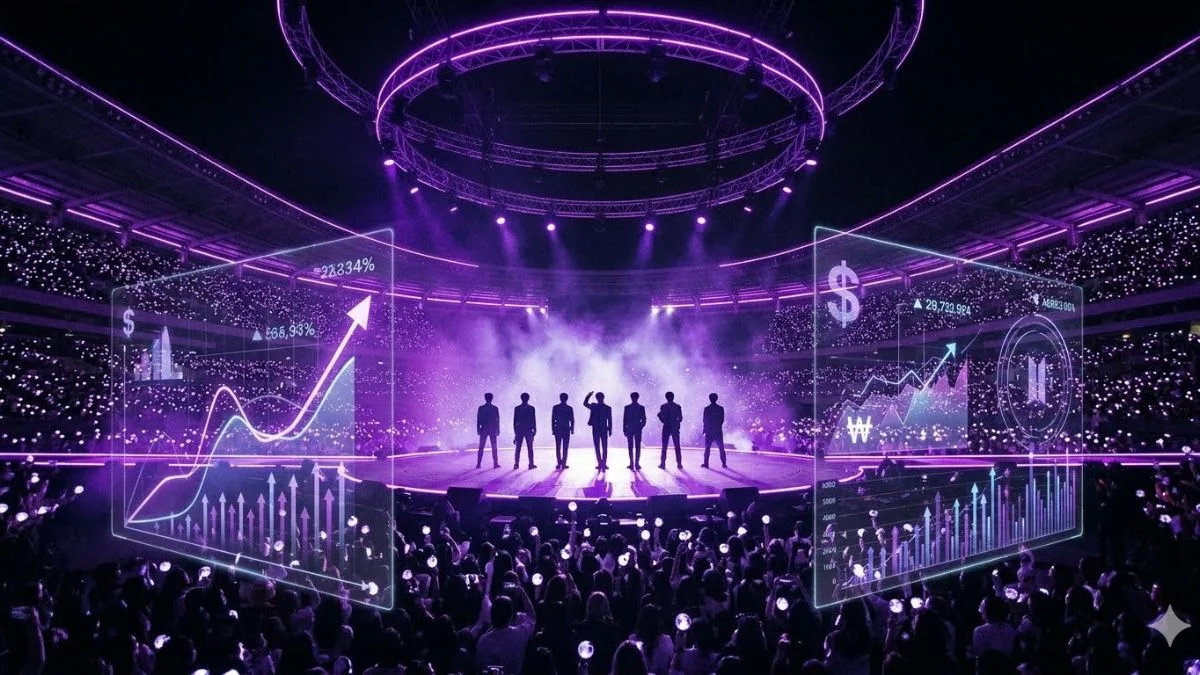
The anticipated reunion of global pop phenomenon BTS for their upcoming project, ARIRANG, has evolved far beyond a conventional musical comeback. It has transformed into a meticulously engineered macroeconomic event that is reshaping South Korea’s tourism, hospitality, and digital infrastructure sectors. Through a collaborative initiative between the Seoul Metropolitan Government and entertainment powerhouse HYBE, the capital has activated "BTS The City," a sweeping destination marketing campaign designed to turn urban centers into high-yield, revenue-generating platforms. Financial analysts and securities firms estimate that the overarching event will inject a minimum of 3 trillion won (approximately $2.1 billion) into the domestic economy, prompting economists to coin the term "BTSnomics 2.0" to describe a new paradigm of fan-driven financial stimulation.
Quantifying the Macroeconomic Impact: The Numbers Behind BTSnomics
According to an exhaustive market analysis report released in March by IBK Investment & Securities, direct revenue streams generated by the BTS comeback activities are projected to hit 2.9 trillion won ($1.9 billion). This comprehensive forecast is anchored by conservative modeling parameters, anticipating approximately 6 million album unit sales alongside 6 million tour attendees spanning 82 shows across 34 distinct international cities. The baseline calculations factor in an average ticket price of 300,000 won ($201) complemented by an average merchandise expenditure of 140,000 won ($94) per participant.
Financial analysts emphasize that these predictive metrics remain deliberately conservative. Should offline consumer demand organically bleed into digital streaming metrics and auxiliary spending platforms, total financial yields are expected to revise upward. When factoring in the broader macroeconomic spillover effects—including hotel accommodations, domestic transportation, and food and beverage consumption—the total economic stimulus eclipses the 3 trillion won threshold, drawing direct economic comparisons to the famously dubbed "Taylor-nomics" associated with major Western concert tours.
Historical precedent underscores the viability of these projections. Research previously published by the Korea Culture & Tourism Institute indicated that a single localized concert series by BTS possessed the capacity to unleash up to 1.22 trillion won ($800 million) in direct economic ripple effects. The multi-city, highly synchronized framework of the current rollout operationalizes this multiplier effect on a national scale.
Chronology of the Comeback: A Phased Urban Takeover
The rollout of the ARIRANG campaign has been structured across a precise timeline designed to maximize engagement and optimize visitor traffic distribution throughout Seoul.
Phase One: Infrastructure and Digital Teasers (Early March)
Weeks prior to the official commencement of events, telecommunications giants such as SK Telecom and KT began deploying advanced artificial intelligence-driven traffic management systems and supplemental network base stations around critical historical hubs like Gwanghwamun Square. Simultaneously, local mobility partners Kakao T and k.ride introduced integrated routing applications and branded transit interfaces to minimize commuter friction for incoming international tourists.
Phase Two: Hospitality and Retail Activation (March 20 – April 19)
The core physical engagement period spans a rigorous month-long window. Luxury resorts, including Incheon’s Paradise City, launched immersive multi-week packages on March 20. Concurrently, high-profile retail pop-ups, such as the "BTS POP-UP: ARIRANG" at Shinsegae Department Store and the heritage-inspired MU:DS collaboration with the National Museum of Korea, opened their doors to reservation-only crowds.
Phase Three: The Anchor Concert and Live Broadcast (March 21)
The focal point of the Seoul activation is scheduled for March 21, culminating in a massive live-audience concert at Gwanghwamun Square projected to draw 260,000 attendees. This landmark event coincides with Netflix’s historic pivot into live broadcasting within South Korea, as the streaming platform beams "BTS THE COMEBACK LIVE" globally to millions of concurrent viewers, marking its first major live entertainment broadcast in the region.
Phase Four: Public Installations and Sustained Dwell Time (Late March – April 19)
To prevent chronic bottlenecking and extend tourist dwell times, civic planners distributed secondary attractions across the city. The Ttukseom Hangang Park drone light show on March 20 established an open-air visual spectacle, while the "Love Quarters" light installations along the Cheonggyecheon Stream are slated to run from April 6 through April 19, intentionally funneling foot traffic toward traditional commercial districts in Jongno and Euljiro.
Hospitality Sector Transformations: Premiumization and Pricing Controversies
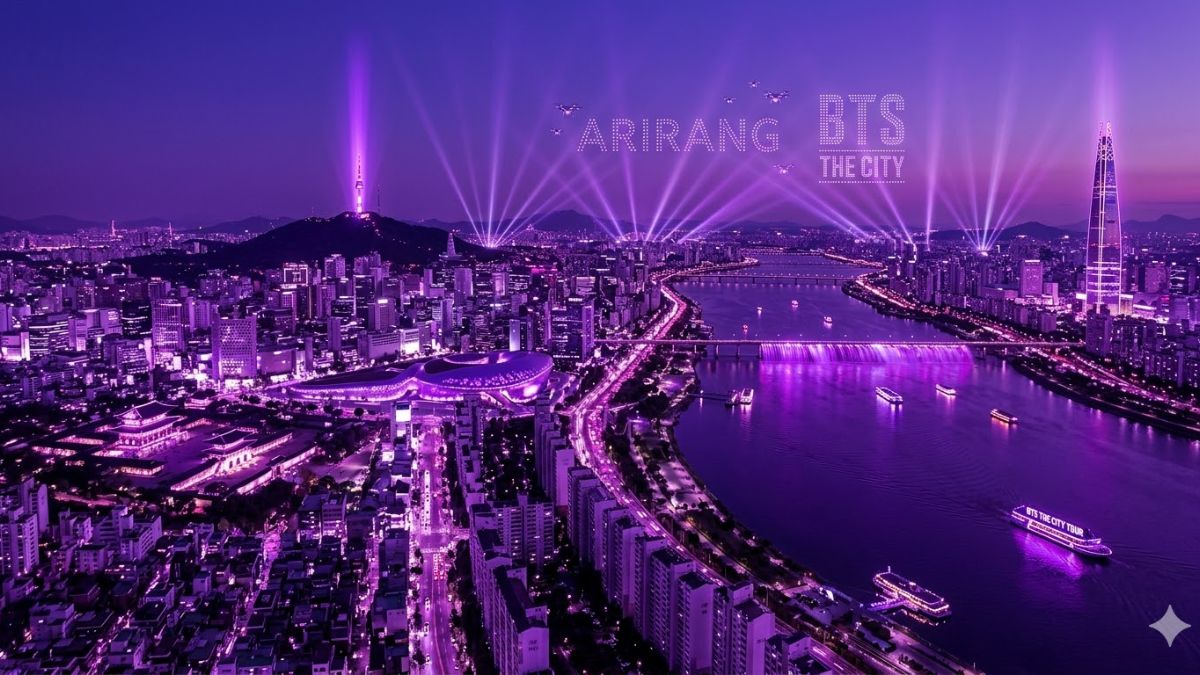
The influx of millions of domestic and international fans has fundamentally altered Seoul’s hospitality landscape, triggering both aggressive commercial innovation and regulatory scrutiny regarding price exploitation.
Major luxury and business-tier accommodations have implemented sophisticated thematic packaging. Properties such as the JW Marriott Hotel Seoul, the Westin Josun Seoul, and the multi-branded Seoul Dragon City complex introduced bespoke "Arirang" stay packages featuring customized culinary programs, themed interior environments, and limited-edition merchandise. These tailored offerings have allowed hoteliers to convert what is traditionally considered a sluggish shoulder season into a period of maximum occupancy and elevated average daily rates.
Data compiled by Hotels.com highlights an immediate 85% spike in accommodation searches for Seoul following the initial tour announcements, with over 55% of prospective visitors opting for extended stays lasting three or more nights. Consequently, localized booking metrics in the Jongno and Jung districts surged by 450% compared to the corresponding period in the previous year.
However, this unprecedented demand has exposed friction within the local hospitality market. Reports of aggressive price inflation—such as mid-tier four-star hotels in the Gwanghwamun vicinity elevating weekend room rates from a standard 200,000 won ($139) to upwards of 600,000 won ($417)—prompted direct intervention from municipal authorities. In response to consumer complaints regarding price gouging, the Seoul Metropolitan Government announced strict monitoring measures to curb exploitative pricing practices, seeking to balance free-market revenue opportunities with consumer protection safeguards.
Retail Innovation and the Museum-Meet-K-Pop Hybrid Model
Retail strategies underpinning the ARIRANG campaign have broken traditional commercial molds by merging pop culture monetization with high-art preservation. A primary example is the partnership between HYBE and MU:DS, the official merchandising arm of the National Museum of Korea. Drawing direct aesthetic inspiration from the Divine Bell of King Seongdeok (commonly known as the Emille Bell), the resulting collection reinterprets traditional Korean metallurgy and historical motifs through modern industrial design, creating high-value collectible goods distributed through pop-up stores and online platforms.
This hybrid approach extends into everyday consumer goods. Partnerships with mass-market entities, such as Compose Coffee’s branded beverage containers and the artisan bakery Artisee’s introduction of regional ingredient-infused pastries (featuring red bean, Heungkuk rice, and strawberry omija tea), transform routine consumer transactions into collectible cultural experiences. Industry analysts note that these low-barrier touchpoints successfully drive same-store sales volumes while cultivating sustained consumer brand loyalty.
Civic Infrastructure and the Mega-Event Paradox
Managing an estimated 260,000 people concentrated within historical urban zones requires a level of logistical coordination typically reserved for international geopolitical summits. The Seoul Metropolitan Police Agency and municipal transit authorities established four distinct crowd-density management sectors, reinforced by nearly thirty security perimeters and controlled pedestrian access points. To alleviate platform congestion, Seoul Metro instituted mandatory bypass protocols for trains passing through Gwanghwamun, Gyeongbokgung, and City Hall stations during peak operational windows.
Despite the economic windfall for business owners—such as neighborhood eateries anticipating multi-fold increases in daily revenue—the mega-event has surfaced notable tensions between commercial interests and civilian daily life. Local residents, commuters, and individuals with scheduled personal milestones, such as weekend wedding ceremonies in central Seoul, have voiced concerns regarding anticipated traffic paralysis, transit detours, and restricted street access. Civic planners acknowledge that navigating these friction points remains one of the primary operational challenges of executing large-scale urban entertainment events.
Broader Implications and the Future of Economic Infrastructure
The synchronized execution of the BTS ARIRANG comeback and "BTS The City" framework signals a maturation of the South Korean entertainment economy. By systematically integrating municipal governance, hospitality conglomerates, technology platforms, and cultural institutions, the initiative demonstrates that globally resonant intellectual property can function as foundational macroeconomic infrastructure.
As securities analysts continue to evaluate the long-term yields of "BTSnomics 2.0," the successful convergence of public-private resources in Seoul offers a blueprint for how metropolitan areas can leverage cultural capital to stimulate sustainable, multi-sector economic growth in the post-pandemic global tourism landscape.
