

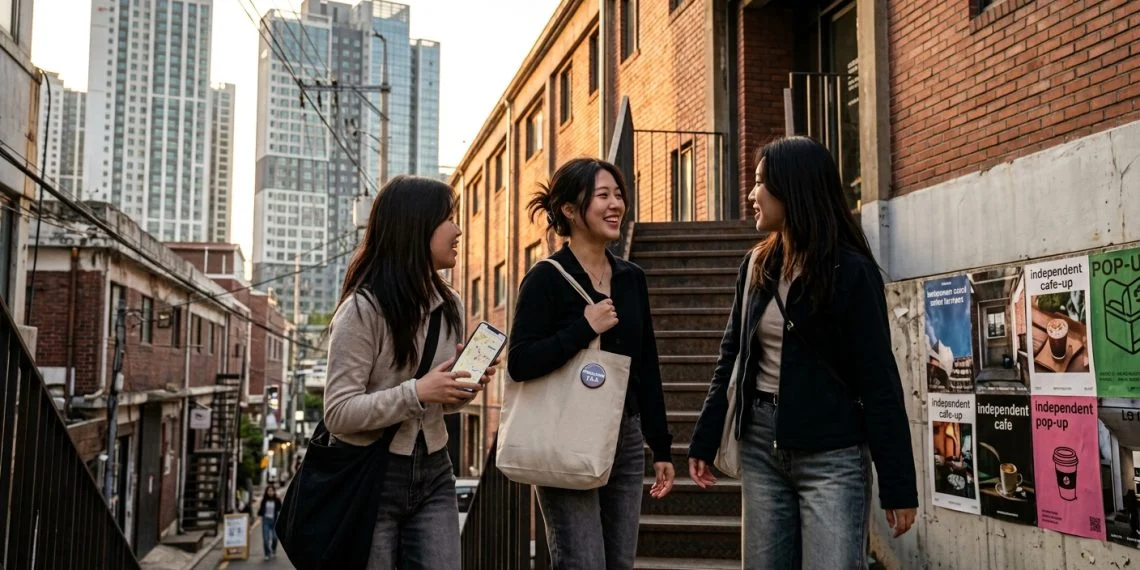
The global fascination with South Korea’s vibrant cultural output—collectively known as the Hallyu wave, or the Korean Wave—has fundamentally altered the mechanics of inbound travel across East Asia and beyond. For decades, destination marketing organizations (DMOs) relied on traditional tourism pillars: historic imperial palaces, sprawling central shopping districts, and iconic urban skylines. Live music events, television drama filming locations, and ephemeral pop-up retail activations were routinely treated as isolated promotional highlights rather than core economic drivers. Today, however, live entertainment and media touchpoints serve a much larger commercial purpose: they act as low-cost, highly effective customer acquisition tools for South Korea’s entire multi-billion-dollar tourism, hospitality, and retail sectors.
As the global appetite for K-pop, K-dramas, and Korean cinema continues to expand exponentially, the economic structure of the nation’s travel industry is undergoing a quiet revolution. Industry analysts project that South Korea’s music and entertainment tourism market will reach a staggering $12.8 billion by 2030. This growth is propelled by an inbound visitor demographic that travels with high intent and deep emotional motivation. Consequently, the core strategic challenge facing tour operators, international hotel chains, and regional tourism boards has shifted dramatically. It is no longer merely about attracting these dedicated fans for a single weekend concert; the ultimate goal is extending their customer lifetime value (LTV) by converting single-event pilgrims into repeat, multi-vertical cultural travelers who view South Korea as a perennial destination.
The Evolution of Inbound Travel Mechanics: A Chronological Shift
To understand the current economic weight of Hallyu tourism, one must examine its evolution over the past two decades. In the early 2000s, the initial phase of the Korean Wave was primarily driven by the export of television dramas such as Winter Sonata, which sparked early waves of regional tourism, particularly from Japan and China. These early travelers were largely sightseeing tourists who visited specific filming locations as secondary additions to standard holiday itineraries.
By the 2010s, the phenomenon entered its second phase, catalyzed by the explosive global rise of K-pop acts like Psy and, subsequently, BTS and BLACKPINK. This era transformed passive viewers into active global pilgrims. Fans began traveling internationally explicitly to attend live arena tours, stadium concerts, and fan-meeting events. During this period, the travel model remained transactional: fans booked flights, attended the concert, purchased merchandise, visited a few designated landmarks, and returned home. The economic impact, while substantial, was heavily compressed into tight 72-hour windows and concentrated strictly within major metropolitan hubs like Seoul.
Entering the 2020s and looking toward the 2030 horizon, the tourism sector has entered its third and most sophisticated phase: the integration of lifestyle, wellness, and decentralized regional exploration. Driven by sophisticated tour operators, digital fandom networks, and proactive regional governance, the modern Hallyu tourist is no longer content with a single concert ticket. They represent a high-intent demographic eager to sample regional gastronomy, engage in K-beauty rituals, and explore the rustic hometowns and countryside retreats of their favorite artists.
Moving Beyond One-Off Transactions and Centralized Urban Corridors
In traditional leisure travel, destination marketers rely heavily on broad, generalized appeals to capture tourist interest. Passion-driven travelers, by contrast, navigate physical space through deeply personal affinity. A visitor traveling to Seoul for a concert or a limited-edition merchandise pop-up drop often plans their entire daily schedule around hyper-specific cultural touchpoints that standard, mass-market travel packages routinely overlook.
However, industry experts caution that treating these visitors strictly as single-event consumers caps their true economic potential. When a traveler visits Korea purely for a three-day concert weekend, their economic footprint remains brief and isolated. Bridging the gap between physical retail mechanics and passion travel requires a nuanced understanding of how emotional attachment drives real-world foot traffic and long-term customer conversion.
Barbara dela Pena, who spent over three decades in retail real estate development before founding Headliner T.E.A.—a boutique travel agency specializing in high-touch K-pop and K-culture pilgrimages, including custom itineraries for BTS ARMY and SEVENTEEN CARAT communities—brings a unique perspective to this economic shift. Her extensive background in commercial real estate provides clear insights into how emotional connections translate into physical foot traffic across diverse retail and hospitality environments.
"I’ve always believed that K-pop and K-dramas are wonderful gateways to discovering Korea, but there’s so much more to experience once you’re here," dela Pena explains. "Someone might initially join one of our tours because they want to visit places connected to their favorite artists. But along the way, we introduce them to Korean food, beautiful countryside destinations, local culture, traditional experiences, and places they probably wouldn’t have discovered on their own."
By positioning cultural affinity as an introductory hook rather than the sole focus of a trip, forward-thinking operators are successfully broadening traveler exposure to high-margin sectors. These include fine dining, regional boutique lodging, wellness retreats, and traditional craft heritage experiences that typically struggle to capture the attention of conventional tourists.
The Spatial Shift: Decentralizing Tourism into Regional Districts
One of the most profound structural benefits of passion-driven tourism is its natural geographic spread. Historically, foreign tourist spending in South Korea has suffered from acute concentration within Seoul’s primary commercial districts, such as Myeongdong, Dongdaemun, and Gangnam. While these urban hubs continue to thrive, passion tourists routinely venture far outside these standard corridors in pursuit of meaningful, artist-linked experiences.
Data compiled by the Korea Tourism Organization (KTO) indicates that foreign spending across regional retail, local dining, and domestic cosmetics remains remarkably resilient, even during off-peak months that lack major stadium performances. When international fans travel to visit an artist-affiliated cafe, a countryside filming location, or a regional hometown, their secondary spending flows directly into local economies and small businesses that standard tour buses rarely visit.
"Passion tourists travel with a very specific purpose, and they’re often willing to go out of their way for something that means a lot to them," notes dela Pena. "You could be traveling to Korea for a concert, but suddenly your itinerary includes visiting an artist’s favorite restaurant, a filming location, a cafe they once visited, or even a neighborhood connected to their childhood. Because these locations are spread across different parts of Korea, fans end up exploring places they might never have considered visiting otherwise."
For regional municipalities such as Gangwon Province, Busan, Incheon, and Jeju Island, this behavioral pattern offers a highly cost-effective path to international exposure and economic revitalization. Instead of allocating massive municipal budgets toward building expensive new tourism infrastructure from scratch, regional tourism boards can partner with specialized tour operators to highlight authentic cultural narratives and local establishments already organically connected to popular media.
Designing for Repeat Retention: Travel Beyond the Itinerary
The ultimate long-term commercial goal for South Korea’s broader tourism economy lies in systematically increasing repeat visit rates. A single concert or pop-up event is, by nature, an isolated moment in time. Building a sustainable, shock-resistant travel economy requires giving international visitors clear, compelling reasons to return year after year, regardless of their primary musical or television fandom’s active touring schedule.
This strategic reality requires tour designers, hospitality providers, and destination marketers to adopt the mindset of customer relationship managers. They must engineer itineraries that satisfy the immediate emotional draw of a current pop-culture fixation while simultaneously laying the structural groundwork for future visits focused on seasonal travel, culinary exploration, wellness tourism, and heritage discovery.
"The idea isn’t just to tick off a list of fandom locations," dela Pena emphasizes. "It’s to give our guests a deeper appreciation of Korea and create experiences they’ll remember long after the trip. Hopefully, that first K-pop pilgrimage inspires them to return for an autumn K-drama tour, a K-beauty and wellness experience, or simply to explore another part of the country. It’s not necessarily about getting someone to spend more on one trip. It’s about giving them enough reasons to keep coming back."
Macroeconomic Implications and Future Outlook
The transformation of Hallyu tourism from a niche subculture into a primary pillar of South Korea’s national economic strategy carries several vital implications for policymakers, investors, and industry operators.
First, the decentralization of tourism alleviates urban congestion and property inflation in central Seoul while injecting vital capital into secondary and tertiary regional economies. As provincial governments increasingly align their marketing efforts with popular media trends, regional disparities in tourism revenue are expected to narrow.
Second, the high lifetime value (LTV) of passion-driven travelers encourages structural upgrades across the hospitality and service sectors. Hotels, transport networks, and retail establishments are investing heavily in multilingual digital infrastructure, personalized booking platforms, and immersive experiential offerings to cater to these high-intent visitors.
Finally, the resilience demonstrated by passion tourists during global economic shifts suggests that cultural affinity provides a powerful buffer against traditional travel downturns. Fans driven by deep emotional and community bonds are historically more inclined to prioritize travel budgets for cultural pilgrimages over conventional leisure holidays.
When travel companies, DMOs, and hoteliers view pop culture as an initial invitation rather than the final commercial product, they successfully convert transient digital interest into enduring, multi-visit customer loyalty. As South Korea’s entertainment tourism market marches toward its projected 2030 milestones, the fusion of fandom and localized travel will undoubtedly serve as a masterclass in modern destination economics.
