

WASHINGTON — A senior U.S. administration official delivered a pointed message to Seoul on Friday, explicitly calling for the Republic of Korea (ROK) to "uphold the standards" of the two nations’ decades-long alliance, particularly regarding sensitive intelligence and counterintelligence protocols. The statement, provided to Yonhap News Agency in response to inquiries about the current state of bilateral security cooperation, signals a deepening unease within the Washington-Seoul intelligence-sharing apparatus. This development occurs against a backdrop of mounting geopolitical anxiety regarding North Korea’s nuclear advancements and a series of diplomatic incidents that have cast a shadow over the traditionally ironclad partnership.
A Growing Rift in Intelligence Cooperation
The U.S. demand for adherence to alliance standards follows a string of incidents that have led observers to characterize the current state of intelligence sharing as "strained." The most prominent of these involves the South Korean National Intelligence Service (NIS), which recently acknowledged its exclusion from a high-level trilateral meeting in June. The meeting, which brought together U.S. and Japanese officials to coordinate strategies against North Korean cyber threats, conspicuously omitted South Korean representation. While official channels have been cautious, multiple reports indicate that the decision to exclude Seoul originated from Washington, serving as a tactical maneuver to isolate specific intelligence streams from perceived vulnerabilities within the South Korean intelligence apparatus.
This exclusion is not an isolated event but rather the latest in a series of friction points that have emerged throughout 2026. Security analysts point to the public disclosure of a North Korean uranium enrichment facility in Kusong by South Korean Unification Minister Chung Dong-young in March as a critical turning point. The disclosure, which caught many in the international intelligence community off guard, was framed by the South Korean government as a transparency measure regarding information already circulating in the public domain. However, sources within the U.S. intelligence community suggest that the act was viewed as a unilateral breach of established protocols, prompting the U.S. to restrict Seoul’s access to highly sensitive, "Class-A" intelligence related to North Korean nuclear activities as a form of diplomatic and security-focused reprisal.
Chronology of Recent Diplomatic Friction
The deterioration of the current intelligence-sharing environment can be traced through a series of specific incidents throughout the year:
- March 2026: Unification Minister Chung Dong-young publicly discloses intelligence regarding a uranium enrichment facility in Kusong. Washington expresses private frustration, viewing the disclosure as a violation of classified information management.
- June 2026: Washington organizes a trilateral cyber-security summit with Tokyo. The South Korean NIS is excluded, signaling a significant shift in U.S. trust regarding intelligence dissemination.
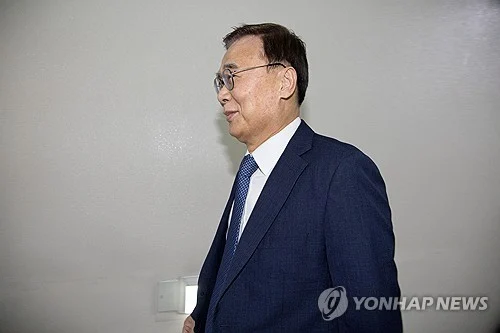
- September 30, 2026: NIS Director Lee Jong-seok attends a plenary session of the National Assembly’s intelligence committee in Seoul, facing intense scrutiny regarding the agency’s standing with international partners.
- October 2026: The visa delay involving Representative Jung Chung-rae surfaces, becoming a lightning rod for domestic and international speculation about the health of the alliance.
The Visa Controversy and Political Fallout
The tension has transcended the intelligence community, manifesting in the legislative sphere as well. Rep. Jung Chung-rae, a prominent figure and former leader of the ruling Democratic Party, faced an unexpected delay in the issuance of his U.S. visa. Jung, who was scheduled to travel to the United States to lead a parliamentary audit of South Korean diplomatic missions, found himself in a diplomatic limbo that necessitated public address.
In a statement posted to his social media, Jung confirmed his visa status was under administrative review. His response—calling on his colleagues and the public to avoid rhetoric that might exacerbate tensions—highlights the sensitivity with which South Korean politicians are now treating the U.S.-ROK relationship. Analysts suggest that such administrative hurdles are often utilized as quiet diplomatic signals, serving as a blunt instrument to express dissatisfaction without resorting to formal, public confrontations.
Structural Implications for the ROK-U.S. Alliance
The implications of this friction are significant, particularly as North Korea continues to refine its cyber-warfare capabilities and nuclear enrichment programs. The U.S.-ROK alliance has historically relied on a "common operating picture" regarding threats on the Korean Peninsula. If the flow of intelligence is curtailed, the efficacy of coordinated military and diplomatic responses to North Korean provocations could be severely diminished.
From a structural perspective, the reliance of the ROK on U.S. reconnaissance and signals intelligence (SIGINT) is absolute. Any limitation on this data stream creates a security vacuum that the South Korean military and intelligence apparatus cannot easily fill on their own. Conversely, for the United States, the ROK serves as an essential "eyes and ears" on the ground. A lack of trust between the two agencies undermines the integrity of the entire Indo-Pacific security architecture, potentially emboldening adversaries who may seek to exploit the lack of cohesion between Washington and Seoul.
Official Responses and Strategic Ambiguity
While the U.S. administration’s statement was brief, its language was deliberate. By emphasizing "intelligence and counterintelligence" as the primary area of concern, Washington is signaling that it views the current issues as matters of national security rather than mere political disagreements.
In Seoul, the response has been a mix of damage control and public reticence. The NIS, currently led by Director Lee Jong-seok, has faced pressure to reform its information-sharing protocols to regain the confidence of its American counterparts. However, there is a lingering tension between the necessity of transparency with the South Korean public and the requirements of secrecy mandated by the intelligence-sharing agreements with the United States.
Experts note that this is a classic "principal-agent" problem in international relations. The South Korean government must answer to its domestic constituency, which demands information on North Korean threats, while simultaneously honoring its obligations to the U.S. intelligence community, which demands absolute discretion. The current administration in Seoul appears to be struggling to balance these conflicting pressures.
Future Outlook: Restoring Trust
The path forward for restoring the standard of the alliance likely requires a dual approach. First, a technical review of intelligence protocols is necessary to address Washington’s concerns regarding the handling of sensitive data. This would likely involve a formal "reset" of the intelligence-sharing guidelines and an audit of how information is processed within the NIS.
Second, the political layer of the relationship must be stabilized. The visa issues and public disagreements over disclosure are symptoms of a deeper disconnect regarding the strategic goals of the two nations. As the United States pivots more of its attention toward broader Indo-Pacific security challenges, it expects its allies to act in total alignment with its intelligence management frameworks.
The coming months will be critical. Should the current friction continue, there is a risk that the alliance could shift from a collaborative, high-trust partnership to a more transactional, limited-scope relationship. For the South Korean government, the challenge will be to demonstrate that it can act as a reliable partner capable of protecting the most sensitive of shared secrets, thereby securing its place at the table in future trilateral security initiatives.
As the situation evolves, the eyes of the international community remain fixed on how both Seoul and Washington navigate this delicate period. The endurance of the ROK-U.S. alliance is not just a matter of bilateral convenience; it is a cornerstone of the regional status quo. Maintaining that status quo will require more than just rhetoric; it will require the restoration of the deep, behind-the-scenes cooperation that has defined the security of the Korean Peninsula for over seven decades. The demand from the U.S. for Seoul to "uphold the standards" is a warning, but it is also an invitation to return to a more disciplined, and ultimately more secure, model of alliance cooperation.
