

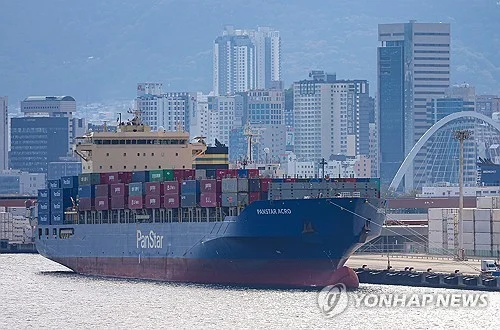
In a significant milestone for international logistics and maritime commerce, South Korea has successfully completed its first-ever pilot voyage of a container ship through the Arctic Ocean. President Lee Jae Myung, speaking at a commemorative ceremony in the southeastern port city of Busan on October 13, 2026, confirmed that the government remains committed to establishing a permanent summer-season container shipping service connecting Asia and Europe. The mission, carried out by the PanStar Acro, saw the vessel traverse the challenging northern waters, arriving back in Busan after a 50-day journey that reached Britain, the Netherlands, and Poland.
This achievement signals a potential shift in global supply chain strategies, as the Arctic route—often referred to as the Northern Sea Route (NSR)—offers a dramatically shorter transit distance compared to the traditional path through the Suez Canal. However, the path forward is fraught with geopolitical complexities, environmental sensitivities, and the necessity of strict adherence to international legal frameworks.
Chronology of the Arctic Expedition
The voyage of the PanStar Acro was the culmination of months of logistical planning and meteorological assessment. The ship departed from Busan in late August 2026, navigating northward toward the Bering Strait before entering the Arctic waters that skirt the Russian coastline.
- Late August 2026: The PanStar Acro departs Busan, carrying a payload designed to test the stability and feasibility of polar shipping lanes.
- Mid-September 2026: The vessel successfully transits the Arctic segments, navigating through regions where polar ice remains a significant navigational hazard.
- Late September/Early October 2026: The ship makes calls at ports in the United Kingdom, the Netherlands, and Poland, demonstrating the viability of the Arctic route for European-bound freight.
- October 11, 2026: The PanStar Acro returns to Busan, marking the completion of its maiden voyage.
- October 13, 2026: President Lee Jae Myung officially commemorates the success of the mission at a ceremony in Busan, signaling the start of a broader national initiative to utilize this route.
The Strategic Value of the Northern Sea Route
The allure of the Arctic route lies primarily in its efficiency. A standard voyage from Busan to Rotterdam via the Suez Canal typically covers approximately 20,000 kilometers and takes about 35 to 40 days, depending on weather and port congestion. By contrast, the Arctic passage can reduce the transit distance by nearly 40 percent.
For South Korea, a country heavily reliant on maritime trade and home to some of the world’s most advanced shipbuilding industries, the Arctic represents both a logistical opportunity and a technological frontier. Proponents argue that as polar ice caps recede due to climate change, the accessibility of the region will increase, making it a critical competitive advantage for nations that can secure safe, reliable passage.
However, the physical challenges remain immense. Unlike the temperate waters of the Indian Ocean or the Mediterranean, the Arctic requires specialized vessels capable of navigating ice-laden environments. The success of the PanStar Acro provides South Korea with critical data regarding hull integrity, communication systems in high latitudes, and the specialized crew training required to manage such voyages.

Navigating Geopolitical Waters and Sanctions
The move to normalize the Arctic route comes at a time of extreme international scrutiny regarding the involvement of Russian maritime infrastructure. Following the onset of the war in Ukraine, Western nations and their allies imposed sweeping sanctions on Russia, including restrictions on the use of Russian ports and services.
President Lee addressed these concerns directly during his address in Busan. He emphasized that South Korea’s Arctic aspirations are not a pivot away from its international commitments. "First of all, South Korea will move to open the Arctic Ocean route amid the trust of the international community," Lee stated. He further pledged that the government would "thoroughly abide by international norms and principles on sanctions while communicating sufficiently with key countries for cooperation and responsibly heeding relevant concerns."
Industry analysts suggest that South Korea is attempting to thread a narrow needle: maintaining the sovereignty and economic necessity of its trade routes while avoiding any action that could be interpreted as financial or logistical support for the Russian state. By framing the project as a multilateral initiative rather than an exclusive bilateral agreement, Seoul hopes to mitigate the risk of diplomatic backlash from the United States and the European Union.
Transforming Busan into a Maritime Hub
A core pillar of President Lee’s broader economic vision is the elevation of Busan into a global maritime logistics nexus. The government plans to integrate the city’s existing port infrastructure with the high-tech shipbuilding capabilities of the neighboring Ulsan region and South Gyeongsang Province.
The strategy involves a two-pronged investment approach:
- Infrastructure Modernization: Upgrading port facilities in Busan to handle the unique logistical requirements of Arctic-bound vessels, including cold-chain management and specialized cargo handling.
- Technological R&D: Continued investment in "ice-class" shipbuilding technology. South Korean shipbuilders, already global leaders in LNG carrier production, are looking to dominate the market for vessels specifically designed for the harsh, shifting ice conditions of the Northern Sea Route.
The president’s vision is to ensure that the new route does not lead to a "winner-take-all" scenario but instead acts as a catalyst for mutual prosperity among trading partners. By positioning Busan as a gateway, South Korea aims to capture a larger share of the value chain associated with East-West maritime trade.
Environmental and Safety Implications
While the economic potential of the Arctic is significant, the environmental impact of increased commercial traffic remains a point of contention among scientists and environmental advocacy groups. The Arctic ecosystem is fragile, and the risk of oil spills or accidents in such remote areas presents a significant challenge for emergency response teams.

The South Korean government has stated that its future Arctic operations will be guided by principles of "safety and the environment." This includes developing tracking systems for vessels, implementing stringent waste management protocols, and collaborating with international bodies to ensure that maritime traffic in the Arctic does not contribute to the further degradation of the polar environment.
Future Outlook and Analysis
The success of the PanStar Acro is merely the first chapter in a long-term strategic plan. Industry observers note that the commercial viability of the Arctic route is still subject to extreme seasonal variability. While the route is becoming more accessible in the summer months, it remains largely impassable for standard container ships during the winter.
Furthermore, the "trust of the international community," as referenced by President Lee, will be the ultimate arbiter of the project’s success. If South Korea can demonstrate that its usage of the route remains strictly commercial and transparent, it may set a standard for other nations seeking to navigate the region without violating the sanctions regime.
As South Korea looks toward the 2027 season and beyond, the focus will likely shift from pilot voyages to establishing consistent, reliable shipping schedules. The integration of artificial intelligence for route optimization and real-time weather monitoring will likely become standard practice, further cementing South Korea’s role as an innovator in the next generation of maritime trade.
In summary, the voyage of the PanStar Acro serves as both a technical triumph and a geopolitical trial. By balancing the drive for economic growth with a commitment to international law, South Korea is positioning itself to be a leading player in the transformation of global trade routes in the 21st century. The path ahead will require sustained diplomatic agility, significant technological investment, and a cautious approach to the shifting ice—both literal and metaphorical—of the Arctic region.
