

Gwangju, located in the southwestern region of South Korea, frequently remains overshadowed by the global tourism draws of Seoul, Busan, and Jeju Island. However, this dynamic metropolitan area serves as a cornerstone of modern South Korean democracy, contemporary culture, and celebrated culinary traditions. As regional governance shifts and international interest in secondary destinations grows, Gwangju offers a complex, deeply layered travel experience defined by historical resilience, an avant-garde art scene, and the rich culinary identity of the Jeolla-do provinces.

Understanding the City Through Modern Korean History

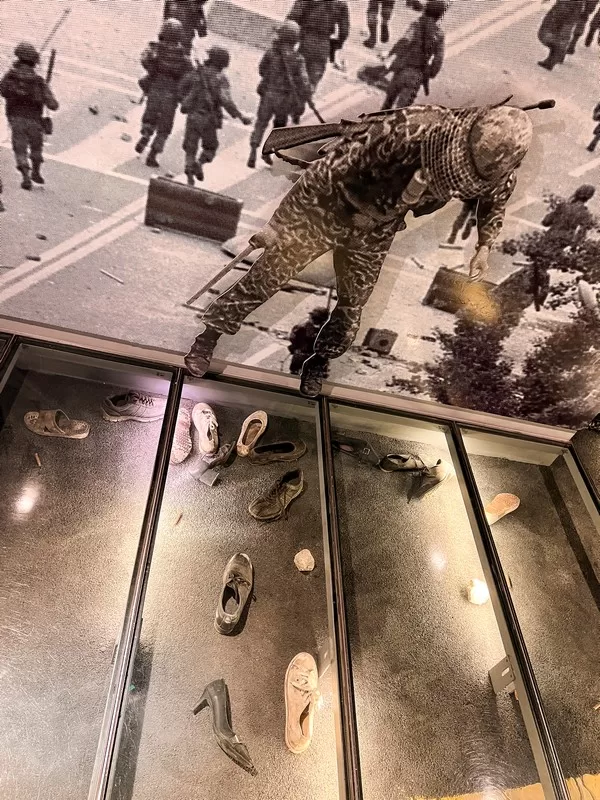
To fully grasp the cultural fabric of Gwangju, visitors must examine its pivotal role in the democratization of South Korea. The city is inextricably linked to the May 18 Democratization Movement, a critical historical turning point that occurred between May 18 and May 27, 1980. Following the expansion of martial law under military rule, university students and ordinary citizens mobilized in widespread protests to demand democratic reforms and civil liberties. The ensuing military crackdown resulted in significant casualties, and the events were subjected to strict censorship by the national government for years.

Today, the legacy of this uprising is embedded within the physical landscape of downtown Gwangju, particularly within the Dong-gu district. Historians and sociologists note that the collective memory of May 1980 fundamentally shaped the contemporary South Korean civic ethos, influencing public expectations regarding freedom of speech, peaceful assembly, and governmental accountability. The archival records of the uprising were officially inscribed on UNESCO’s Memory of the World Register in 2011, cementing their global historical significance.

Key Sites and Memorial Infrastructure

The city’s historical itinerary centers on several key municipal landmarks that preserve the memory of the 1980 uprising while functioning as contemporary public spaces:

The 5·18 Democratization Movement Archives: Housed in a historically significant building, the archives preserve an extensive collection of government records, citizen-produced publications, photographs, personal artifacts, and oral testimonies detailing the events before, during, and after the uprising.

Jeonil Building 245: Located on Geumnam-ro, this structure bears physical scars from the military suppression, most notably 245 bullet marks attributed to military helicopter gunfire. Rather than remaining solely a somber monument, the upper floors have been redeveloped into a vibrant cultural and community hub, reflecting the coexistence of historical trauma and daily civic life.

The Former South Jeolla Provincial Office and Asia Culture Center (ACC): Serving as the final stronghold of the citizen resistance in May 1980, the provincial office area has undergone extensive preservation. Adjacent to it stands the Asia Culture Center, a massive cultural complex inaugurated in November 2015. Spanning a floor space that exceeds the National Museum of Korea, the ACC incorporates five primary divisions—Culture Exchange, Creation, Archive & Research, Theater, and a dedicated children’s space—functioning simultaneously as a memorial and an international research facility.

Urban Regeneration and Architectural Heritage in Nam-gu

Beyond the political history of the downtown core, the Nam-gu district—specifically Yangnim-dong—presents a diverse architectural landscape shaped by a century of cultural exchange. In the late 19th and early 20th centuries, Western Protestant missionaries established educational and medical institutions in the area, creating an architectural juxtaposition of traditional Korean hanok structures and early Western-style buildings.

Notable sites within Nam-gu include the House of Lee Jang-woo, constructed in 1899 and designated as Gwangju Folk Material No. 1 in 1989. This well-preserved upper-class residential compound features quarters for family, staff, and storage, exemplifying late Joseon Dynasty domestic architecture.

The neighborhood also hosts unconventional urban interventions, such as Penguin Village. Following a neighborhood fire in 2013, local residents cleared the debris and began decorating the alleys using discarded household items, clocks, radios, and handcrafted artwork. This community-led initiative transformed a neglected zone into an open-air folk art installation while preserving the tangible history of everyday domestic life in past decades.

Further enriching the district is the Dwinggul Cave, a subterranean air-raid shelter constructed during the Japanese colonial period in the 1940s to shelter residents from potential Allied air raids. Although excavation was halted by the end of World War II, the site remains an unusual historical remnant. Nearby, the reconstructed Heekyungru Pavilion, originally built in 1451 and reopened in 2023 based on 16th-century visual documentation, provides panoramic views and serves as a public gathering space reflecting traditional Korean urban design.

A Global Hub for Contemporary Art and Media

Gwangju has established itself as an international destination for contemporary visual arts. In 2014, the municipality was designated a UNESCO Creative City of Media Arts, recognizing its commitment to integrating digital culture and creative industries into urban development.

The Gwangju Biennale, established in the 1990s, is one of Asia’s most prominent contemporary art events, drawing curators, critics, and artists from around the world every two years. The main Gwangju Biennale Exhibition Hall, situated in the Buk-gu district, acts as the festival’s anchor, though exhibitions frequently expand into satellite galleries, museums, and public spaces across the city. Adjacent to the Biennale grounds, the Gwangju Museum of Art curates extensive collections focusing on regional and international modern artists, reinforcing the city’s standing in the global arts community. Additionally, institutions like G.MAP (Gwangju Media Art Platform) specialize in cutting-edge digital exhibitions and artist residencies.

Culinary Distinction and Regional Identity

Gwangju, as a major urban center within the Jeolla-do provinces, shares in a culinary reputation widely regarded across South Korea for its bold seasoning, diverse side dishes (banchan), and culinary generosity. Traditional regional fare emphasizes fermented ingredients, marine products, and elaborate preparation methods.

The city’s culinary prominence is underscored by the annual Gwangju Kimchi Festival, held each autumn. The festival celebrates various regional iterations of kimchi—utilizing seafood broths, heavy seasoning, and specialized fermentation techniques unique to the Jeolla region. The event brings together master culinary practitioners, international researchers, and the public for competitions, cooking demonstrations, and tastings, highlighting kimchi not merely as a staple food item, but as a central pillar of intangible cultural heritage.

Administrative Evolution and Practical Travel Logistics

In July 2026, Gwangju and the surrounding Jeollanam-do provincial administration officially merged into a unified administrative entity designated as Gwangju Special City. While this new administrative nomenclature is gradually being implemented on official maps and government signage, travel planners note that international navigation tools and foreign visitors continue to reference the destination as Gwangju, Jeollanam-do. Furthermore, travelers must distinguish Gwangju Metropolitan City in the southwest from the separate city of Gwangju located in Gyeonggi-do near Seoul to prevent transit errors.

For visitors arriving from Seoul, the KTX (Korea Train Express) operating from Yongsan Station to Gwangju Songjeong Station provides the most efficient transit, taking approximately two hours. While the city features a municipal subway system, optimal navigation often requires combining public bus transit with localized taxi services. Travel analysts recommend a minimum stay of two full days to adequately experience the historical core of Dong-gu, the cultural avenues of Yangnim-dong, and the city’s extensive museum infrastructure.
