
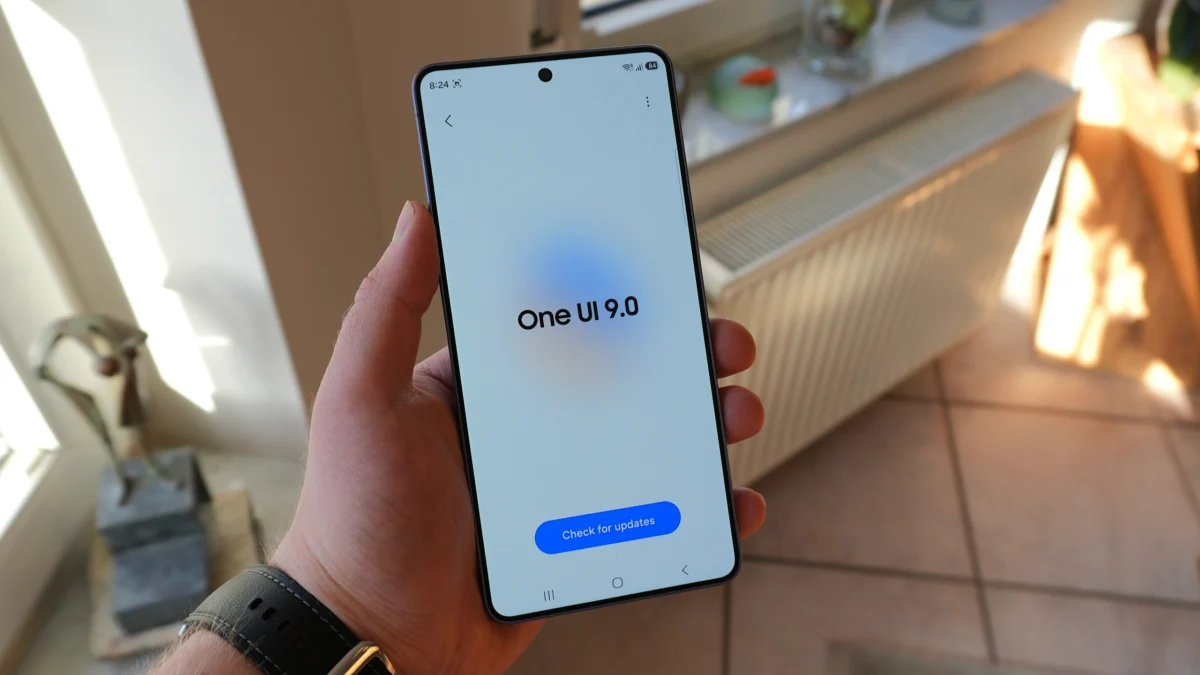
Samsung Electronics is reportedly preparing a significant security overhaul for its mobile ecosystem with the upcoming release of One UI 9. Recent investigations into the company’s internal software code suggest that the South Korean tech giant plans to implement Memory Tagging Extension (MTE) technology, a hardware-based security feature designed to thwart sophisticated memory-based cyberattacks. While the inclusion of MTE marks a pivotal step forward in Samsung’s commitment to user privacy and system integrity, early indicators suggest the feature may come with a measurable impact on device performance, forcing a delicate balance between high-speed processing and robust protection.
The discovery was first highlighted through a detailed analysis of Samsung’s Auto Blocker application, a security suite introduced in recent versions of One UI to prevent the installation of unauthorized apps and block malicious commands via USB. Within the code of the latest iterations of the app, strings were found explicitly referencing MTE functionality. This suggests that Samsung is moving beyond software-level heuristics and moving toward hardware-enforced security protocols that leverage the capabilities of modern ARM-based processors.
The Technical Foundation of Memory Tagging Extension
To understand the significance of this development, it is necessary to examine the underlying architecture of modern smartphone processors. Memory Tagging Extension is a feature embedded within the ARMv9 CPU architecture. ARM, the company responsible for the instruction set used by virtually all mobile processors including Samsung’s Exynos and Qualcomm’s Snapdragon series, introduced MTE as a mandatory or optional component of the ARMv9-A profile to address one of the most persistent threats in computing: memory safety vulnerabilities.
Memory safety bugs, such as "Use-After-Free" (UAF) and "Buffer Overflow," have long been the primary vector for hackers looking to gain unauthorized access to a device. In a UAF scenario, an application continues to use a memory address after it has been cleared or reassigned, allowing an attacker to inject malicious code into that specific memory block. According to data from Google’s security research teams, memory safety issues consistently account for approximately 70% of all high-severity security vulnerabilities in large-scale codebases like Android and Chrome.
MTE addresses this by "tagging" every memory allocation with a specific four-bit metadata tag. When a pointer attempts to access a block of memory, the hardware checks if the pointer’s tag matches the memory block’s tag. If they do not match, the system immediately identifies a violation and can terminate the process before the vulnerability is exploited. This hardware-level verification happens in real-time, providing a layer of defense that is significantly harder to bypass than traditional software-only protections.
Chronology of MTE Adoption in the Android Ecosystem
The path toward hardware-level memory protection has been a multi-year journey for the Android ecosystem. While the ARMv9 architecture was announced in 2021, the practical implementation of MTE in consumer devices has been gradual.
- 2021-2022: Hardware Readiness: The first wave of ARMv9 chips, including the Snapdragon 8 Gen 1 and the Exynos 2200, entered the market. Although the hardware supported MTE, the Android operating system and individual manufacturer skins were not yet optimized to utilize the feature at a consumer level.
- Late 2023: Google Leads the Way: With the launch of the Pixel 8 series, Google became the first major manufacturer to offer MTE support to end-users. However, Google opted to hide the feature within "Developer Options," recognizing that the technology was still in a "soak" period where its impact on system resources needed to be monitored.
- 2024-2025: Software Refinement: Throughout the One UI 6 and One UI 7 cycles, Samsung focused on expanding its Auto Blocker and Knox Matrix suites. During this period, internal testing of MTE likely began, as evidenced by the code snippets now appearing in the Auto Blocker app.
- 2026 Projection: One UI 9 Integration: Based on current development cycles and the leaked strings, One UI 9 is expected to be the platform where Samsung officially introduces MTE as a user-facing security toggle, likely coinciding with the launch of the Galaxy S26 series.
Performance Implications and the Developer Tradeoff
The most contentious aspect of MTE implementation is its impact on system performance. Samsung’s own internal code for the Auto Blocker app reportedly contains a warning for users: “This [feature] can reduce your phone’s performance.”
Because MTE requires the CPU to perform additional tag-matching checks for every memory operation, it inherently consumes computational cycles. Industry benchmarks and white papers from ARM suggest that the performance overhead can range from 1% to 10%, depending on the complexity of the applications being run. For general tasks like web browsing or social media, the impact might be negligible. However, for resource-intensive tasks such as high-end mobile gaming, 4K video editing, or multitasking with heavy background processes, a 10% hit to performance could result in noticeable frame drops or increased latency.
Furthermore, MTE can increase memory pressure. By adding metadata tags to memory blocks, the system uses a small portion of the available RAM to manage security overhead. While modern flagship devices now ship with 12GB or 16GB of RAM, making this overhead manageable, mid-range devices with 6GB or 8GB of RAM may struggle to maintain the same level of fluidity with MTE enabled.
Official Responses and Industry Context
While Samsung has not yet issued a formal press release regarding One UI 9’s specific features, the company’s security philosophy has historically favored a "defense-in-depth" approach. Samsung Knox, the company’s proprietary security platform, already utilizes a combination of hardware-backed storage and real-time kernel protection. The addition of MTE would represent the next logical step in this hierarchy.
Industry analysts suggest that Samsung’s move is likely a response to the increasing sophistication of "Zero-Click" exploits—malware that can infect a device without any user interaction, often by exploiting memory bugs in messaging apps or web browsers. By implementing MTE, Samsung provides a robust deterrent against these high-level threats, which are frequently used by state-sponsored actors and professional hacking groups.
Google has been a vocal proponent of this transition. In recent developer summits, Google engineers have urged the Android community to move toward memory-safe languages like Rust and to utilize hardware features like MTE. Samsung’s adoption of MTE would signal a unification of security standards between the two largest entities in the Android world, potentially forcing other manufacturers like Xiaomi, OnePlus, and Motorola to follow suit.
Broader Impact on the Galaxy User Experience
For the average Galaxy smartphone user, the introduction of MTE in One UI 9 will likely manifest as a new setting within the "Security and Privacy" menu. Much like the current "Maximum Restrictions" mode in Auto Blocker, MTE will probably be an optional feature.
Security-conscious users, such as corporate employees handling sensitive data or journalists working in high-risk environments, will likely find the performance tradeoff well worth the peace of mind. Conversely, the "power user" community and mobile gamers may choose to keep the feature disabled to squeeze every possible bit of performance out of their hardware.
The implementation also has significant implications for app developers. If MTE becomes a standard feature on millions of Galaxy devices, developers will be under increased pressure to eliminate memory leaks and bugs in their code. An app that might have "silently" crashed or behaved erratically due to a memory bug will now be caught by the hardware, potentially leading to more frequent app terminations if the code is not optimized. In the long run, this "forced" stability could lead to a higher quality of applications across the Google Play Store.
Conclusion and Future Outlook
As Samsung approaches the mid-way point of its development cycle for the next generation of its mobile experience, the focus on hardware-level security reflects a broader trend in the technology industry. The era of relying solely on software patches to fix vulnerabilities is coming to an end; the future lies in "Secure by Design" hardware.
One UI 9, expected to debut in the summer of 2026 alongside the next generation of Galaxy foldables or the S26 series, will serve as a litmus test for the viability of MTE in the mass market. If Samsung can optimize the feature to keep performance degradation under the 5% threshold, it may set a new gold standard for mobile security. However, if the performance hit remains substantial, MTE may remain a niche tool for the security-conscious rather than a universal shield for all.
As mobile devices continue to store increasingly sensitive personal, financial, and professional data, the move toward Memory Tagging Extension is not just a technical upgrade—it is a necessary evolution. Samsung’s decision to integrate this ARMv9 feature underscores the reality that in the modern digital landscape, the most effective security is that which is baked into the very silicon of the device. Following the official rollout, the industry will be watching closely to see if Galaxy users prioritize the speed of their devices or the safety of their data.
