
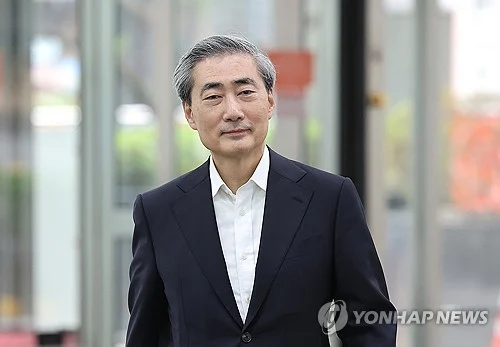
SEOUL, South Korea – Shin Hyun-song, the nominee for the governorship of the Bank of Korea (BOK), is slated to face a critical parliamentary confirmation hearing next week, a pivotal event that will likely shape the nation’s monetary policy trajectory amidst a complex global and domestic economic landscape. Officials confirmed on Monday, April 6, that the National Assembly’s influential Finance, Economy, Planning and Budget Committee will convene Shin’s hearing on April 15, as the incumbent Governor Rhee Chang-yong’s four-year term draws to a close later this month. This process, while requiring a rigorous parliamentary review, does not necessitate an explicit endorsement from the National Assembly, underscoring the semi-autonomous nature of the central bank governor’s appointment in South Korea.
The Mandate of the Bank of Korea: Navigating Complex Economic Realities
The Bank of Korea stands as the bedrock of South Korea’s financial stability and economic health. Its primary mandate encompasses maintaining price stability, ensuring the soundness of the financial system, and fostering sustainable economic growth. The governor’s role is arguably one of the most consequential in the nation, wielding significant influence over interest rates, currency valuation, and the overall macroeconomic environment. The incoming governor will inherit an economy grappling with persistent inflationary pressures, elevated household debt, and external uncertainties stemming from global supply chain disruptions, fluctuating energy prices, and geopolitical tensions. These challenges demand a leader with a profound understanding of both domestic nuances and the interconnectedness of the global financial system.
The BOK’s independence, while constitutionally enshrined, is often a subject of public and political discourse. The current appointment process, where a parliamentary hearing is mandatory but legislative approval is not, is designed to strike a balance between democratic accountability and the operational autonomy crucial for effective central banking. This framework aims to shield monetary policy decisions from short-term political expediency, allowing the BOK to make decisions based on long-term economic stability.
A Legacy of Challenge: Outgoing Governor Rhee Chang-yong’s Tenure
The outgoing Governor, Rhee Chang-yong, assumed office in April 2022, inheriting an economy still navigating the aftershocks of the COVID-19 pandemic and facing an unprecedented surge in global inflation. During his tenure, Governor Rhee spearheaded a series of aggressive interest rate hikes, elevating the BOK’s benchmark policy rate from a low of 1.25% to its current level in an effort to tame runaway inflation. This period was characterized by delicate balancing acts: combating inflation without stifling economic growth, managing the appreciating US dollar’s impact on the Korean Won, and addressing concerns over rising household debt exacerbated by higher borrowing costs. His leadership was critical in steering the economy through a period of significant volatility, marked by global monetary tightening cycles and commodity price shocks. The legacy he leaves behind is one of resolute action in the face of daunting challenges, setting a precedent for robust and independent central bank operations.
Shin Hyun-song: A Profile in Global Finance
Shin Hyun-song brings a distinguished international background to the fore, having served as the head of the Monetary and Economic Department at the Bank for International Settlements (BIS). This appointment by President Lee Jae Myung last month signals a clear intent to leverage global expertise in navigating Korea’s economic future. Shin’s tenure at the BIS, often referred to as the "central bank of central banks," provides him with a unique vantage point on global financial dynamics and monetary policy coordination among major economies.
His role at the BIS involved overseeing extensive research and analysis on global monetary policy, financial markets, and economic stability issues. This experience is particularly relevant given the increasingly intertwined nature of national economies and the imperative for central banks to collaborate on global financial stability initiatives. Shin’s deep understanding of international finance, cross-border capital flows, and the policy challenges faced by diverse central banks worldwide is expected to be a significant asset for the Bank of Korea as it formulates policies in a volatile global environment.
The Bank for International Settlements: A Global Nexus for Central Banks
The Bank for International Settlements (BIS), headquartered in Basel, Switzerland, is a venerable international financial institution owned by 63 central banks from around the world. Its primary mission is to foster international monetary and financial cooperation and act as a bank for central banks. It serves as a forum for dialogue and collaboration among central bankers, provides crucial economic and monetary research, and offers banking services to its members. Through its various committees, such as the Basel Committee on Banking Supervision, the BIS plays a vital role in setting global standards for banking regulation and financial stability. Shin Hyun-song’s leadership role within such an institution underscores his high standing in the global financial community and his profound grasp of macro-financial policy challenges on an international scale. This background is seen as a strong indicator of his capability to represent South Korea effectively on the global stage and integrate international best practices into domestic policy formulation.
The Road to Confirmation: A Detailed Chronology
The process leading to the confirmation hearing has unfolded swiftly following President Lee Jae Myung’s nomination of Shin Hyun-song last month. Speculation regarding Governor Rhee Chang-yong’s successor had been mounting as his four-year term neared its conclusion. The presidential office formally announced Shin’s nomination in late March, initiating the parliamentary review process. On Monday, April 6, the National Assembly’s Finance, Economy, Planning and Budget Committee officially scheduled the confirmation hearing for April 15.
This timeline is crucial: with Governor Rhee’s term expiring at the end of April, a prompt and efficient confirmation process is essential to ensure a seamless transition of leadership at the BOK, thereby maintaining institutional stability and market confidence. The unique aspect of the South Korean system, where the nominee undergoes a parliamentary hearing but does not require legislative endorsement for appointment, reflects a deliberate design to ensure the BOK’s operational independence. While the National Assembly cannot block the appointment outright, the hearing serves as a vital public accountability mechanism, allowing lawmakers to scrutinize the nominee’s qualifications, policy stance, and ethical integrity. The questions posed and the nominee’s responses during this hearing are closely watched by financial markets, economists, and the public, as they offer the first clear glimpse into the potential direction of future monetary policy.
Presidential Vision and the Nomination Rationale
President Lee Jae Myung’s decision to nominate Shin Hyun-song reflects a strategic emphasis on international expertise and a steady hand for the nation’s central bank. While the presidential office did not release an exhaustive public statement on the specific rationale, the choice of a candidate with extensive experience at the BIS implicitly conveys a desire for a governor who can adeptly navigate global economic complexities. It suggests a focus on ensuring South Korea’s financial stability and economic resilience in an era characterized by increasing global interdependence and volatility.
The nomination can be seen as aligning with President Lee’s broader economic agenda, which typically prioritizes stable growth, managing inflationary pressures, and fostering an environment conducive to investment and innovation. A governor with a strong international profile could enhance South Korea’s standing in global financial forums, allowing the BOK to contribute more effectively to international policy coordination and risk management. This strategic selection underscores the administration’s recognition of the critical role the central bank plays not just domestically, but also in representing Korea’s economic interests on the world stage.
Anticipated Scrutiny: Key Questions for the Finance Committee
The National Assembly’s Finance, Economy, Planning and Budget Committee is expected to conduct a thorough and probing confirmation hearing. Lawmakers will likely focus on several key areas to ascertain Shin Hyun-song’s suitability for the demanding role. Among the anticipated lines of questioning are:
- Monetary Policy Philosophy: Shin’s views on inflation targeting, the appropriate stance on interest rates in the current economic climate, and his approach to balancing price stability with economic growth. Will he lean more hawkish or dovish?
- Bank of Korea Independence: How he plans to uphold and strengthen the BOK’s independence from political influence, particularly in an environment where fiscal and monetary policies often interact.
- Financial Stability Measures: His strategies for addressing South Korea’s high household debt, potential risks in the real estate market, and broader financial system vulnerabilities.
- Communication Strategy: How he intends to communicate the BOK’s policy decisions and outlook transparently and effectively to markets and the public.
- Global Economic Outlook: His assessment of international economic risks and opportunities, and how these factors will inform the BOK’s policy responses.
- Specific Policy Tools: His stance on unconventional monetary policy tools, if required, and the role of macroprudential policies.
These questions are not merely procedural; they are crucial for stakeholders to understand the incoming governor’s policy leanings and to gauge the stability and predictability of future monetary policy.
Economic Landscape: Data Underpinning the BOK’s Role
The backdrop against which Shin Hyun-song’s confirmation hearing takes place is defined by a dynamic set of economic indicators. As of recent reports, South Korea’s Consumer Price Index (CPI) has shown signs of moderation from its peaks, yet remains above the BOK’s medium-term target of 2%. This persistent inflationary pressure, though easing, continues to be a central concern. The BOK’s base rate, currently at a multi-year high, reflects the aggressive tightening cycle undertaken to combat inflation. Future rate decisions will hinge on incoming data, including inflation trends, employment figures, and global economic developments.
GDP growth forecasts for South Korea, while generally positive, indicate a slowdown compared to post-pandemic rebound years, reflecting global economic headwinds and tighter monetary conditions. Exports, a key pillar of the Korean economy, face challenges from weakened global demand and intense competition. Critically, South Korea continues to grapple with one of the highest household debt-to-GDP ratios among advanced economies. This structural vulnerability necessitates careful monetary and macroprudential policy management to prevent potential financial instability. Global factors such as volatile energy prices, lingering supply chain fragilities, and geopolitical tensions (e.g., in Eastern Europe and the Middle East) further complicate the economic outlook, requiring the BOK to remain agile and forward-looking in its policy formulation.
Market Reactions and Analyst Expectations
The nomination of Shin Hyun-song has been met with generally positive, albeit cautious, reactions from financial markets and economic analysts. His extensive background at the BIS is widely perceived as a strong credential, lending credibility and an international perspective to the BOK’s leadership. Initial market reactions suggested that investors view him as a figure capable of maintaining policy stability and upholding the central bank’s independence.
Analysts are now keenly scrutinizing his past statements and research papers for clues regarding his potential monetary policy leanings. The key question revolves around whether he will maintain a hawkish stance to further bring down inflation or pivot towards a more dovish approach to support economic growth, especially if inflation shows sustained signs of cooling. Any perceived shift in policy direction could significantly impact the Korean Won, bond yields, and the KOSPI stock index. A smooth transition and clear communication from the new governor will be essential to prevent market volatility and ensure investor confidence.
Broader Implications for South Korea’s Economy and Global Standing
The appointment of Shin Hyun-song carries significant broader implications for South Korea’s economy and its standing in the global financial community. Domestically, his leadership will be crucial in steering the nation through the delicate balance of achieving price stability, fostering sustainable growth, and managing financial risks. His decisions on interest rates and regulatory policies will directly affect businesses, households, and the overall economic trajectory.
Internationally, Shin’s background at the BIS positions him to enhance South Korea’s voice and influence in global financial governance. His network and expertise could facilitate stronger international cooperation on issues ranging from cross-border financial stability to climate-related financial risks. This could elevate the BOK’s role in shaping global economic policy discussions and further solidify South Korea’s reputation as a responsible and engaged player in the international financial system. The symbolic importance of maintaining BOK independence under his leadership will also be closely watched, as it underpins the credibility of South Korea’s economic management framework.
The confirmation hearing for Shin Hyun-song is therefore far more than a procedural formality. It is a critical juncture that will introduce a new leader to one of the nation’s most vital institutions, at a time when astute and globally informed economic stewardship is paramount. The questions raised, the answers provided, and the eventual policy direction will have profound and lasting impacts on South Korea’s economic future.
