

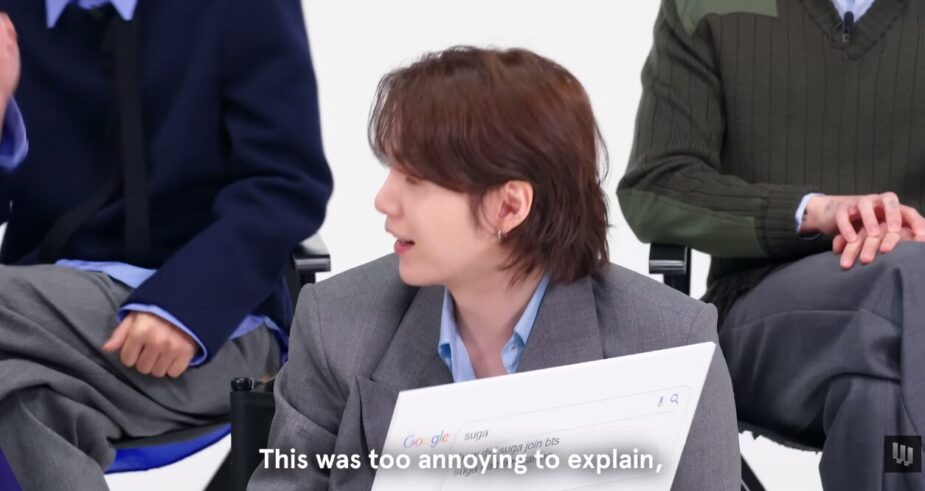
Seoul, South Korea – In a revelation that has sent shockwaves through the global ARMY fandom and reshaped a decade-long narrative, Min Yoongi, globally known as Suga of the monumental K-pop group BTS, has finally unveiled the authentic origin of his stage name. For thirteen years, fans had accepted the explanation that “Suga” was an abbreviation of “shooting guard,” a nod to his affinity for basketball. However, during a recent appearance on Wired’s popular "Autocomplete Interview," Suga candidly admitted that this long-held story was a fabrication, humorously stating that the actual reason was simply "too annoying" to explain at the time. The true inspiration, he confessed, comes from none other than the legendary American boxing icon, Sugar Ray Leonard. This disclosure, made on April 6, 2026, has prompted a whirlwind of reactions, from playful disbelief among his bandmates to a deeper analysis of the evolving relationship between artists and their dedicated fanbase.
The Long-Standing Narrative: Suga, The Shooting Guard
Since his pre-debut days and throughout BTS’s meteoric rise to global superstardom, the narrative surrounding Suga’s stage name was a consistent, albeit seemingly minor, detail in the group’s extensive lore. Fans, known collectively as ARMY, were led to believe that "Suga" was derived from "shooting guard," a position in basketball, reflecting the rapper’s passion for the sport. This explanation was widely accepted, fitting neatly into the persona of the multifaceted artist known for his sharp wit, agile stage presence, and impactful lyrics. It was often cited by fans as an endearing detail, connecting his artistic identity to a personal hobby. The story resonated with many, adding a layer of relatability to the intense and charismatic performer. The consistency with which this story was repeated over the years solidified it as an undisputed fact within the fandom, making its sudden debunking all the more startling.
The practice of adopting stage names is a deeply ingrained tradition within the K-pop industry, often serving to craft an artist’s public image, convey a specific concept, or simply offer a memorable moniker. For BTS members, their stage names — RM, Jin, J-Hope, Jimin, V, Jungkook, and Suga — have become synonymous with their global identities. The perceived origin of these names often contributes to the overall narrative and mystique surrounding the idols. For Suga, whose real name is Min Yoongi, the "shooting guard" story was a simple, easily digestible explanation that bypassed a potentially more complex or personal anecdote. It allowed him to establish a clear, concise identity early in his career without delving into intricate details that might have seemed extraneous at the time. This simple narrative persisted for over a decade, becoming a foundational piece of trivia for millions of fans worldwide.

The "Autocomplete Interview": A Platform for Unfiltered Truths
The catalyst for this long-awaited confession was BTS’s participation in Wired’s renowned "Autocomplete Interview." This popular segment involves celebrities answering the most frequently searched questions about themselves on Google, often leading to unexpected and unscripted moments. As one of the most Googled groups globally, BTS’s appearance on the show was highly anticipated, promising insights into the members’ lives and careers. When the question about Suga’s name surfaced, the stage was set for a revelation that would rewrite a significant chapter of their history.
In a moment captured on camera, Suga, with his characteristic understated demeanor, finally put an end to the "shooting guard" legend. He admitted that he had propagated this story because the true origin was "annoying" to elaborate on, especially during early interviews where brevity and simplicity were often preferred. The candor of his admission was met with immediate, playful skepticism from his bandmates. J-Hope, Jin, and V, who had presumably lived with this "truth" for as long as the fans, reacted with a mixture of surprise and amusement. V, known for his mischievous humor, leaned in with a wry grin, questioning, "But didn’t you make that up recently?" This exchange highlighted the close-knit, familial dynamic within the group, where even long-held personal anecdotes can be subjects of lighthearted interrogation. Suga, however, steadfastly maintained that this latest disclosure was indeed the unvarnished truth, insisting that the basketball story was merely a convenient placeholder. The interview clip quickly circulated across social media platforms, igniting widespread discussion and a fresh wave of appreciation for Suga’s unique brand of honesty and humor.
Unveiling the True Muse: The Legacy of Sugar Ray Leonard
The genuine inspiration behind the stage name "Suga," as revealed by Min Yoongi, stems from the illustrious career of Sugar Ray Leonard. Leonard, an American professional boxer, is widely regarded as one of the greatest fighters of all time. His career, spanning from 1977 to 1997, saw him achieve unprecedented success, becoming a five-time world champion in five different weight divisions. Beyond his impressive record of 36 wins (25 by knockout), 3 losses, and 1 draw, Leonard was celebrated for his exceptional technical skill, blistering hand speed, remarkable precision, and charismatic presence both inside and outside the ring. He possessed a unique blend of power and finesse, capable of both overwhelming opponents with barrages and outmaneuvering them with strategic footwork and defensive mastery.

The connection between the legendary boxer and the K-pop idol, while initially surprising, offers compelling parallels. Suga, as a rapper, songwriter, and producer, is renowned for his sharp, incisive lyricism and impactful delivery. His stage presence, though often perceived as more reserved than some of his bandmates, carries an undeniable intensity and precision. Like Leonard’s calculated strikes, Suga’s rap verses are often described as potent and meticulously crafted, hitting with significant emotional and intellectual force. His work as a producer, under the moniker Agust D and for various other artists, showcases a strategic and technical approach to music, much like a boxer strategizing their movements in the ring. The "sweet science" of boxing, with its demands for discipline, resilience, and strategic thinking, mirrors the arduous journey and continuous self-improvement inherent in the highly competitive music industry. The "Sugar" in Sugar Ray Leonard’s name, signifying his smooth style and sweet personality, could also be subtly reflected in Suga’s own dual nature – a fiercely passionate artist who also possesses a quiet charm and thoughtful demeanor. This deeper, more nuanced origin story offers fans a richer understanding of the artist’s foundational inspirations.
Fan Reactions and the Digital Echo Chamber
The confession immediately ignited a flurry of activity across social media platforms, particularly X (formerly Twitter), where ARMYs congregate to share news, theories, and reactions. The hashtag #SugaTruth trended globally within hours, filled with a mix of humorous disbelief, affectionate exasperation, and genuine surprise. Many fans expressed amusement at Suga’s audacity in maintaining the "shooting guard" facade for so long, while others playfully questioned his current veracity.
Tweets like "@sugadooll" stating, "Yoongi telling us the real meaning behind the name SUGA after 13 years and saying that shooting guard was what he just used caused it was annoying to explain… MIN YOONGI HOW LONG DID YOU PLAN TO GATEKEEP THIS INFO," perfectly encapsulated the collective sentiment of astonishment and lighthearted indignation. Another user, "@minyoonmonmari," humorously pondered, "the real question is was he bullshitting us for 13 years or is he bullshitting us right now," reflecting the ongoing, playful skepticism that now surrounds the "true" origin story. This sentiment was echoed by "@buckleycomet" who observed, "the members don’t even believe his ass. what has he been doing bruh," highlighting the band’s internal dynamic. The question of trustworthiness, though entirely in jest, became a running gag, with "@93SHAD0WS" adding, "how do we know hes also not bullshiting here," accompanied by a link to the original video.
The concept of "gatekeeping" information, especially something as personal as a stage name’s origin, became a central theme in fan discussions. While some might view it as a breach of trust, the overwhelming reaction was one of affectionate amusement, underscoring the unique, intimate bond BTS shares with its fandom. It was seen as a classic "Suga move" – a display of his characteristic bluntness and dry humor that only endeared him further to his supporters. The incident became another inside joke, another shared memory in the rich tapestry of BTS and ARMY history. This collective experience of discovery and shared laughter reinforces the strong community ties within the fandom, proving once again that even minor revelations can create significant waves in the digital realm.

Implications for BTS’s Public Persona and Fandom Engagement
Suga’s confession, while seemingly trivial, carries several implications for BTS’s public persona and the dynamics of their engagement with ARMY. Firstly, it subtly recontextualizes Suga’s artistic image. The shift from a basketball-inspired name to one rooted in the discipline and power of boxing offers a more profound and fitting metaphor for his artistry. It aligns more closely with his reputation as a formidable lyricist, a precise producer, and a performer who commands attention with strategic intensity rather than overt flashiness. This updated narrative provides a deeper layer of understanding for fans analyzing his creative output and stage presence.
Secondly, the incident highlights the evolving nature of celebrity and fandom in the digital age. In an era where authenticity is highly prized, Suga’s candid admission, even if delayed, is perceived as a form of honesty that strengthens the bond with his audience. It demonstrates a willingness to share a more personal truth, even if it means playfully admitting to a long-standing "deception." This kind of transparency, albeit with a humorous twist, fosters a sense of intimacy and trust, making fans feel even more connected to the artists. It’s a testament to the strong foundation of trust and affection built over thirteen years that such a revelation can be met with humor and endearment rather than genuine anger.
From a broader industry perspective, this event underscores the challenges and nuances of narrative management for global superstars. Agencies like Big Hit Entertainment (now HYBE) meticulously craft and control narratives around their artists. While the "shooting guard" story was a simple, harmless detail, its longevity and eventual debunking demonstrate that even seemingly minor facts can become deeply embedded in public perception. The spontaneous nature of the "Autocomplete Interview" format allowed for an unfiltered moment, proving that even the most carefully constructed public images can be playfully deconstructed by the artists themselves. This keeps the public narrative dynamic and engaging, ensuring that fans always have something new to discover about their beloved idols.
Conclusion: A Testament to Enduring Charisma
Suga’s long-overdue confession about the true origin of his stage name is more than just a piece of trivia; it is a fascinating glimpse into the evolution of an artist’s public identity and the enduring, multifaceted relationship between a global music group and its dedicated fanbase. From the playful skepticism of his bandmates to the widespread, good-natured shock across social media, the revelation has added another rich, humorous chapter to the BTS saga.
By finally linking his stage name to the legendary boxing prowess of Sugar Ray Leonard, Suga has not only offered a more fitting metaphor for his powerful and precise artistry but has also reinforced his unique charm and candid personality. This incident, occurring thirteen years into his journey, serves as a testament to the dynamic nature of BTS’s narrative, perpetually offering new insights and shared experiences that keep their global audience captivated. In an industry often characterized by carefully curated images, Suga’s "bullsh*tting" confession, delivered with his signature dry wit, is a reminder that even the most iconic figures can harbor playful secrets, further cementing their relatable and endearing appeal. The truth, finally out, has only deepened the affection and intrigue surrounding one of K-pop’s most influential artists.
