

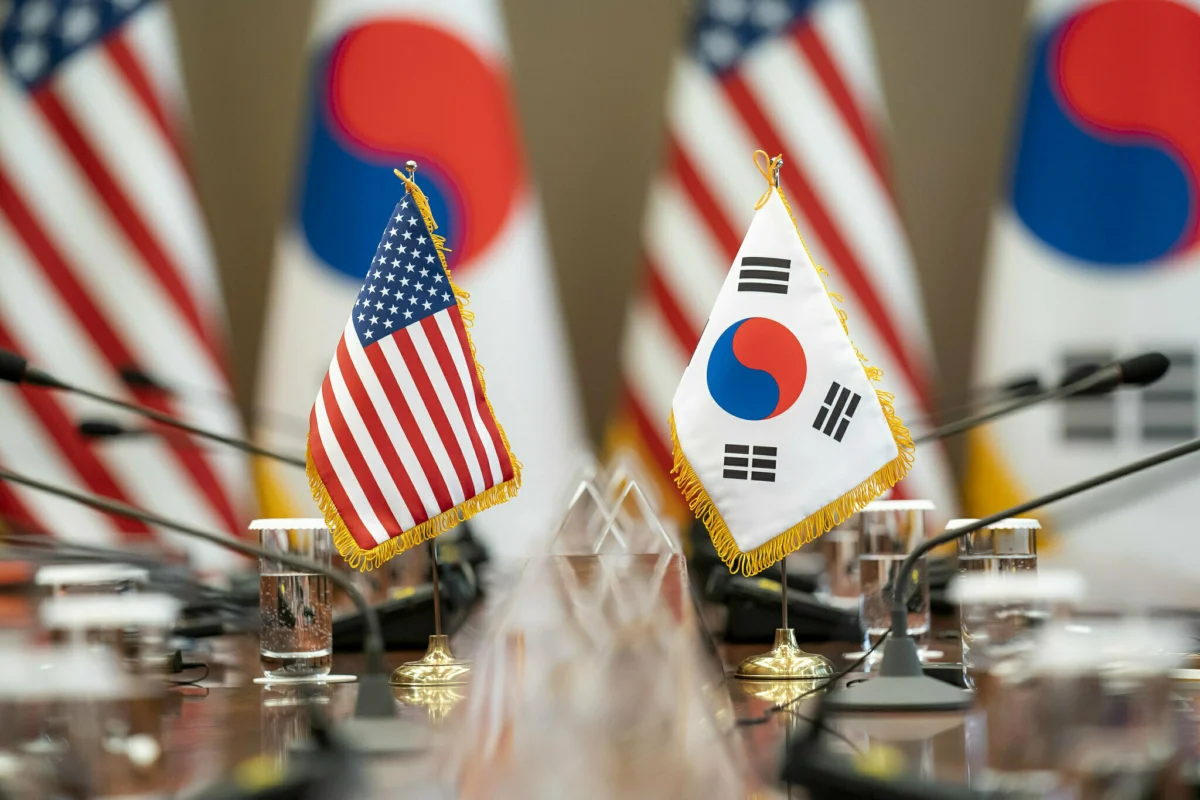
The enduring architecture of the United States-South Korea alliance continues to command robust bipartisan backing from the American public, despite shifting geopolitical landscapes and evolving threats on the Korean Peninsula. According to an annual public opinion survey published on Thursday by the Washington-based Korea Economic Institute of America (KEI) in partnership with YouGov, more than 70% of Americans firmly support the U.S. military coming to the defense of South Korea in the event of renewed hostilities initiated by North Korea.
The comprehensive poll, which surveyed 1,207 American adults between August 21 and September 1 with a margin of error of 3.6 percentage points, highlights a rare point of deep political consensus in an otherwise polarized domestic landscape. An overwhelming 77% of self-identified Republicans and 73% of Democrats voiced their approval for military intervention to protect the long-standing Asian ally. Furthermore, the survey data revealed that approximately 64% of all respondents view the bilateral alliance as mutually beneficial and vital to regional stability.
Beyond mutual defense commitments, the study also cast light on public perceptions regarding high-level diplomacy with Pyongyang. Notably, only 17% of respondents asserted that former U.S. President Donald Trump and North Korean leader Kim Jong Un should refrain from meeting under any circumstances, suggesting an openness among the American populace toward diplomatic engagement, however controversial such summits have historically been among foreign policy purists.
Historical Context and Evolution of the Alliance
The bedrock of the U.S.-South Korea alliance was forged in the crucible of the Korean War, which raged from 1950 to 1953. Following the signing of the Mutual Defense Treaty in October 1953, the United States maintained a permanent military presence on the Korean Peninsula to deter aggression from the Democratic People’s Republic of Korea (DPRK). Over the subsequent seven decades, this partnership evolved from a traditional patron-client security arrangement into a multifaceted economic, technological, and global security partnership.
However, the alliance has periodically faced strains, particularly regarding cost-sharing agreements for the maintenance of United States Forces Korea (USFK), which currently numbers approximately 28,500 personnel. During various administrations, questions regarding burden-sharing and the strategic scope of American troops in South Korea have sparked intense domestic debates in both Washington and Seoul. Despite these intermittent frictions, public opinion polling consistently demonstrates that the American public recognizes the strategic imperative of maintaining a forward-deployed deterrent in Northeast Asia.
The KEI-YouGov survey arrives at a critical juncture marked by deepening alignment between Pyongyang and Moscow, an accelerated buildup of North Korea’s nuclear and missile arsenals, and intensified trilateral cooperation between the U.S., South Korea, and Japan. Against this backdrop, the enduring public support documented in the poll serves as a vital indicator of political resilience for policymakers navigating an increasingly volatile security environment.
Chronology of Recent Diplomatic and Security Developments
To fully understand the current climate surrounding U.S.-Korea relations, it is essential to examine the sequence of key events that have shaped public perception and policy over recent years:
- June 2018: President Donald Trump and North Korean leader Kim Jong Un hold an unprecedented historic summit in Singapore, signing a vague joint statement regarding the denuclearization of the Korean Peninsula.
- February 2019: The second U.S.-North Korea summit in Hanoi, Vietnam, collapses prematurely after the two leaders fail to reach an agreement on sanctions relief and the scope of North Korea’s nuclear dismantlement.
- June 2019: President Trump makes a historic impromptu visit to the Demilitarized Zone (DMZ), briefly stepping across the demarcation line into North Korean territory to shake hands with Kim Jong Un, an event symbolized in the White House photographs referenced in contemporary policy discussions.
- 2020–2022: Amid the global COVID-19 pandemic, North Korea seals its borders entirely, halting virtually all external engagement while aggressively advancing its intercontinental ballistic missile (ICBM) testing programs.
- August 2023: Leaders from the United States, South Korea, and Japan convene at Camp David for a historic trilateral summit, institutionalizing regular joint military exercises, economic security dialogues, and intelligence-sharing mechanisms.
- Late 2023 to Present: Pyongyang formally abandons its decades-long policy of peaceful reunification, codifying South Korea as its primary adversary in its constitution while deepening conventional arms transfers to Russia in exchange for satellite and missile technology assistance.
Detailed Data Breakdown and Demographics
The KEI-YouGov findings offer granular insights into how different segments of the American population view the alliance. While the overarching 70% threshold for defending South Korea is impressive, a deeper dive into the demographic cross-tabulations reveals nuanced trends in public awareness and internationalist sentiment.
Age demographics historically play a role in foreign policy attitudes. Older Americans, many of whom retain living memory of the Cold War and the geopolitical imperatives of containment, consistently register high levels of support for forward-defense postures. Conversely, younger demographics—while still demonstrating majority support—tend to exhibit lower baseline awareness of foreign policy commitments, making educational outreach by think tanks and academic institutions critical for sustaining long-term alliance health.

Geographic distribution also yields fascinating insights. Respondents residing in states with significant defense manufacturing footprints or major military installations often display a heightened appreciation for the strategic value of global alliances. Nevertheless, the broad-based convergence between Republican and Democratic respondents indicates that support for the alliance transcends traditional partisan flashpoints, functioning as a pillar of mainstream American grand strategy.
Regarding the diplomacy question—where only 17% of respondents rejected the notion of Trump-Kim meetings under any conditions—analysts note a persistent public appetite for leader-level engagement, even when institutional diplomats remain skeptical of summitry without preconditions. This tension reflects a broader public desire for risk reduction and peaceful conflict resolution on the peninsula, contrasting with the more rigid deterrence-focused frameworks favored by defense planners.
Official Responses and Expert Analysis
In the wake of the survey’s publication, foreign policy analysts and think tank scholars have weighed in on its implications for future U.S. administrations. Experts emphasize that the high degree of public backing provides a secure domestic political foundation for any U.S. president to honor defense commitments to Seoul, regardless of shifting electoral outcomes in Washington.
"The consistency of American public support for the defense of South Korea is one of the most reliable constants in U.S. foreign policy," noted a senior defense analyst based in Washington. "Even during periods of intense domestic political polarization, the recognition that stability in Northeast Asia is fundamentally tied to American security interests remains deeply embedded in the public consciousness."
Simultaneously, policymakers in Seoul have closely monitored these sentiment metrics. South Korean officials frequently emphasize that the ironclad nature of the U.S. nuclear umbrella and conventional defense commitment is non-negotiable for regional deterrence. As North Korea continues to refine its tactical nuclear capabilities and diversifies its delivery systems, knowing that the American electorate overwhelmingly supports mutual defense offers substantial reassurance to the South Korean public, which lives under the direct shadow of the northern threat.
However, experts also caution against complacency. While the American public supports defending South Korea, expectations regarding burden-sharing remain prominent. Future administrations will likely need to balance strong security guarantees with clear expectations that Seoul continues to invest heavily in its own indigenous defense capabilities—a dynamic that has successfully driven South Korea to become one of the world’s premier military spenders and defense exporters.
Broader Impact and Implications for Future Strategy
The implications of the KEI-YouGov survey extend far beyond domestic polling numbers, directly influencing strategic planning in both Washington and Seoul as they face a complex and multipolar security environment.
First, the data confirms that isolationist tendencies, while vocal in certain political circles, have not eroded the foundational public consensus favoring traditional security alliances in the Indo-Pacific. For allies and adversaries alike, this sends a clear signal that the United States remains structurally committed to its treaty obligations in East Asia.
Second, the nuanced findings on leadership diplomacy remind political leaders that the American electorate favors a dual-track approach: maintaining robust, unyielding deterrence alongside an openness to pragmatic, results-oriented diplomacy. As North Korea’s alliance with Russia deepens and its nuclear posture hardens, maintaining this balance will be critical for managing escalation risks on the peninsula.
Ultimately, the findings underscore that the U.S.-South Korea alliance is anchored not merely by geopolitical calculation or executive decree, but by a durable, bipartisan understanding among the American people that shared democratic values, economic interdependence, and collective security remain indispensable for maintaining peace and stability in the 21st century.
