

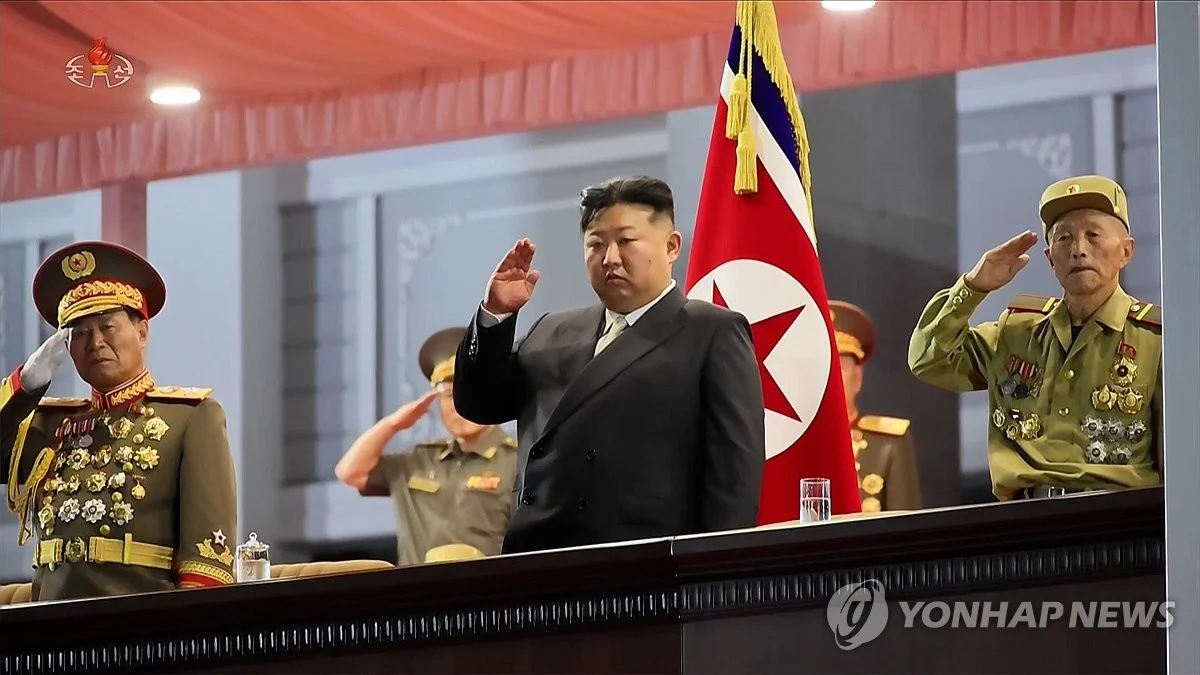
In a significant display of bilateral solidarity, North Korean leader Kim Jong-un conducted a strategic visit to the Chinese border city of Dandong on Saturday, utilizing the newly inaugurated New Amnok River Bridge. The visit, which underscores the deepening ties between Pyongyang and Beijing, saw the North Korean leader engage in high-level discussions with Wang Huning, a pivotal figure in the Chinese Communist Party’s hierarchy. This diplomatic outreach coincides with the eve of the anniversary commemorating the intervention of Chinese forces in the 1950-53 Korean War, a milestone that serves as a cornerstone of the two nations’ shared historical narrative.
The visit, which marks Kim’s sixth trip to China since assuming power, was characterized by symbolic gestures and substantive discussions on economic cooperation. According to reports from China’s Xinhua News Agency, the two leaders toured local industrial facilities, including an automobile plant, before paying their respects at a regional memorial dedicated to the Chinese People’s Volunteers who fought alongside North Korean forces during the Korean War.
A Strategic Infrastructure Milestone
The crossing of the New Amnok River Bridge carries profound geopolitical and economic implications. The bridge, a four-lane, 3,026-meter engineering feat, represents a $310 million investment by Beijing. Although construction concluded in 2014, the structure remained a dormant symbol of logistical stagnation for over a decade, largely due to North Korea’s inability—or strategic hesitation—to finalize the necessary customs infrastructure and connecting roadway networks on the Sinuiju side.
The inauguration of this transit artery last week serves as a tangible signal that Pyongyang is prepared to facilitate a more robust flow of goods and personnel across the border. For North Korea, which has grappled with the long-term economic repercussions of international sanctions and the lingering effects of pandemic-era border closures, the bridge offers a vital lifeline for economic revitalization and resource acquisition.

Historical Context and Diplomatic Symbolism
The timing of the visit is no coincidence. October 25 marks the date in 1950 when Chinese troops officially entered the Korean War, a pivotal intervention that altered the trajectory of the conflict and solidified the "blood-forged" alliance between the two communist neighbors. By timing his visit to coincide with this anniversary, Kim Jong-un is reinforcing the ideological alignment that remains the bedrock of Pyongyang’s foreign policy.
In his discussions with Wang Huning, who chairs the National Committee of the Chinese People’s Political Consultative Conference, Kim emphasized his gratitude for China’s unwavering support of North Korea’s socialist framework. Observers note that such rhetoric is designed to project a united front at a time when the broader Asia-Pacific region is experiencing significant security realignments. The emphasis on "practical cooperation" suggests that both parties are eager to move beyond mere diplomatic posturing toward tangible economic exchange, provided that such cooperation does not run afoul of stringent international oversight.
Chronology of Kim Jong-un’s Diplomatic Engagements with China
The relationship between Kim Jong-un and the Chinese leadership has been defined by periods of intense diplomatic activity followed by strategic silences.
- March 2018: Kim Jong-un makes his first visit to Beijing since taking office, meeting with President Xi Jinping to reset bilateral relations ahead of historic summits with South Korea and the United States.
- May 2018: A second meeting in Dalian occurs, focusing on regional stability.
- June 2018: A third visit takes place in Beijing, aimed at coordinating strategies following the Singapore Summit between Kim and then-President Donald Trump.
- January 2019: Kim visits Beijing to discuss denuclearization strategy prior to the Hanoi Summit.
- June 2019: President Xi Jinping makes a reciprocal visit to Pyongyang, the first by a Chinese leader in 14 years.
- September 2025: Kim conducts his fifth visit to China, focusing on post-pandemic economic recovery.
- October 2026: The current visit, marking the sixth trip and the operational inauguration of the New Amnok River Bridge.
Geopolitical Implications: The Shadow of the APEC Summit
This diplomatic overture occurs in the shadow of the upcoming Asia-Pacific Economic Cooperation (APEC) summit scheduled for next month in Shenzhen. With U.S. President Donald Trump expected to attend, the regional security landscape is particularly volatile. President Trump has publicly signaled an interest in renewed dialogue with Pyongyang; however, the North Korean leadership has maintained a posture of calculated indifference toward Washington’s overtures.
Analysts suggest that Kim’s visit to Dandong serves as a preemptive diplomatic move, signaling to the international community that Pyongyang’s primary strategic orientation remains tethered to Beijing. By demonstrating a functional economic partnership with China, North Korea is signaling that it possesses alternatives to the U.S.-led global financial system, thereby reducing the perceived efficacy of "maximum pressure" campaigns.

Economic and Security Analysis
From an economic perspective, the opening of the bridge is expected to streamline the movement of essential goods, including fuel, food, and industrial components, which have historically been subject to the bottlenecks of aging transit infrastructure. However, the success of this corridor depends heavily on the extent to which Beijing is willing to balance its commitment to the UN Security Council’s sanctions regime against its strategic desire to prevent the economic collapse of its neighbor.
From a security standpoint, the proximity of the visit to the Chinese military memorial serves as a reminder of the historical security guarantees that define the Sino-North Korean relationship. For China, maintaining a stable, albeit isolated, North Korea serves as a critical buffer against the presence of U.S. forces on the Korean Peninsula. For Kim, the visit is a reminder to both domestic and international audiences that his regime remains an essential player in the regional balance of power.
Conclusion and Future Outlook
As the dust settles on the visit to Dandong, the international community will be closely watching for shifts in the frequency of cross-border traffic. The bridge is not merely a physical structure; it is a barometer for the future of the North Korean economy and the durability of its alliance with China.
While Pyongyang remains largely unresponsive to overtures from Washington, its active engagement with Beijing suggests that the North Korean leadership is prioritizing the strengthening of its regional support base. Whether this focus on the "historic friendship" will lead to a new era of economic integration or simply serve as a diplomatic buffer against external pressure remains to be seen. For now, the bridge stands as a testament to the enduring, complex, and highly consequential relationship between two nations that continue to define the geopolitical architecture of East Asia.
