
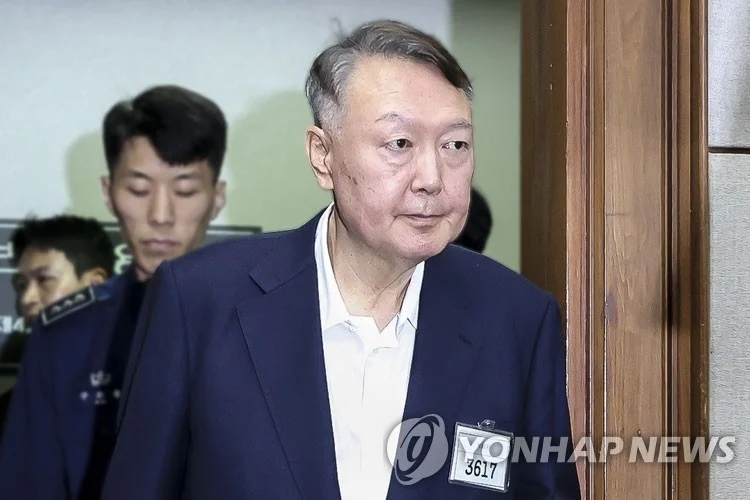
Seoul, South Korea is currently navigating a complex landscape of domestic political upheaval, heightened geopolitical tensions, and strategic international partnerships, as evidenced by a series of significant developments reported on Monday. A special counsel has escalated legal pressure on former President Yoon Suk Yeol, seeking a decade-long prison term in his obstruction of justice appeals trial, a case deeply rooted in a controversial 2024 martial law declaration. Concurrently, his wife, former First Lady Kim Keon Hee, faces fresh allegations of accepting additional luxury items. Amidst these internal challenges, the nation’s intelligence agency has made a definitive assessment regarding North Korea’s leadership, indicating Kim Jong-un’s daughter, Ju-ae, as his apparent successor, a development with profound regional implications. Economically, South Korean markets experienced a mixed day, with the KOSPI index rising on optimistic Samsung earnings forecasts, while the won depreciated following renewed threats from former U.S. President Donald Trump against Iran, underscoring the interconnectedness of global politics and financial stability. In a move aimed at future prosperity and security, South Korea also solidified its commitment to advanced technological cooperation with France in critical sectors like artificial intelligence and quantum computing.
Legal Challenges for Former President Yoon Suk Yeol Intensify
Special Counsel Seeks Harsher Sentence in Obstruction Case
The legal saga surrounding former South Korean President Yoon Suk Yeol took a dramatic turn on Monday, as a special counsel team demanded a 10-year prison sentence for him during the appeals trial of his obstruction of justice case. This request, made at the Seoul High Court, represents a doubling of the five-year term initially handed down by a lower court in January. The charges stem from Yoon’s controversial imposition of martial law in 2024, an event that sent shockwaves through the nation and precipitated his political downfall.
Background on the 2024 Martial Law Declaration:
The imposition of martial law in 2024 by then-President Yoon Suk Yeol was an unprecedented and highly contentious act in modern South Korean history. It was reportedly declared under the pretext of national security and maintaining social order amidst severe political polarization and escalating economic anxieties. Critics, however, swiftly condemned the move as an overreach of presidential power and a grave threat to democratic institutions, drawing parallels to authoritarian periods in the nation’s past. The declaration sparked widespread protests and a swift impeachment process, ultimately leading to his removal from office. The subsequent investigation into the circumstances surrounding the martial law declaration revealed allegations of obstruction of justice, suggesting that Yoon and his associates attempted to impede investigations or manipulate legal processes related to the declaration’s legitimacy and implementation.
Detailed Legal Timeline:
The legal journey for former President Yoon began shortly after his impeachment.
- Mid-2024: Following the martial law declaration and subsequent public outcry, investigations are launched by parliamentary bodies and judicial authorities into the legality and intent behind the decision.
- Late 2024: Yoon Suk Yeol is formally indicted on charges of obstruction of justice, among others, related to the martial law imposition.
- Early 2025: The initial trial commences in a lower court. The prosecution presents evidence suggesting deliberate attempts to hinder justice.
- January 2026: The lower court delivers its verdict, finding Yoon guilty of obstruction of justice and sentencing him to a five-year prison term. This judgment immediately triggers an appeal from both the defense, seeking acquittal, and the prosecution, arguing for a harsher sentence.
- April 6, 2026 (Monday): At the final hearing of the appeals trial at the Seoul High Court, special counsel Cho Eun-suk’s team presents its closing arguments, requesting a 10-year prison term, emphasizing the gravity of the offense committed by a former head of state.
Special Counsel’s Rationale and Defense’s Likely Stance:
Special counsel Cho Eun-suk’s team likely argued that the initial five-year sentence failed to adequately reflect the severity of a former president’s actions in obstructing justice, especially in a case involving the undermining of democratic principles through martial law. The request for a doubled sentence implies a belief that the lower court’s penalty was too lenient given the potential damage to national institutions and public trust. They would likely have emphasized the need for a strong deterrent against future abuses of power. The defense, conversely, is expected to maintain Yoon’s innocence, arguing that his actions were within his presidential authority or that there was no intent to obstruct justice. They might also challenge the evidence presented by the special counsel or cite procedural irregularities.
Analysis of Political and Judicial Implications:
The ongoing legal battle against a former president carries immense weight for South Korea’s political landscape and its judicial system. A potential 10-year sentence would be one of the harshest penalties ever imposed on a former head of state in the country, setting a significant precedent for accountability at the highest levels of government. It underscores the nation’s commitment to upholding the rule of law, even for its most powerful figures. Politically, the outcome will undoubtedly influence public perception of past and future administrations, potentially shaping voter behavior and intensifying calls for stricter oversight of presidential powers. The case also highlights the robust independence of South Korea’s special counsel system, designed to investigate high-profile corruption and abuse of power without political interference.
North Korean Succession Speculation Intensifies with Ju-ae Assessment
NIS Confirms Kim Jong-un’s Daughter as Apparent Heir
In a development that has captured international attention, South Korea’s National Intelligence Service (NIS) has offered its most definitive assessment yet regarding the succession plan in North Korea. NIS Director Lee Jong-seok informed lawmakers on Monday that Kim Jong-un’s daughter, Ju-ae, appears to be next in line to succeed her father as the leader of the reclusive state. This statement, delivered during a closed-door briefing to the parliamentary intelligence committee, marks a significant shift in how external intelligence agencies view North Korea’s future leadership.
Historical Context of North Korean Succession:
North Korea has been ruled by the Kim family since its founding in 1948, establishing a unique dynastic succession that has seen power pass from Kim Il-sung to Kim Jong-il, and then to the current leader, Kim Jong-un. Historically, this succession has always been male-line, with the eldest son typically favored. Kim Jong-un himself was groomed for years before officially taking power after his father’s death in 2011. The possibility of Ju-ae, a female and seemingly still a teenager, being designated as the successor represents a radical departure from this established tradition, signaling potentially profound internal dynamics within the Pyongyang regime.
Ju-ae’s Public Appearances and the Significance of the NIS Statement:
Ju-ae first gained significant public exposure in late 2022, appearing alongside her father at missile launches and military parades. Since then, she has been a prominent figure at several high-profile state events, often positioned directly beside Kim Jong-un, indicating a symbolic elevation of her status. State media has frequently shown her in lavish attire, receiving deference from senior military officials, and being referred to with honorifics previously reserved for Kim Jong-un himself. These appearances have fueled speculation, but the NIS’s statement moves beyond mere observation to a formal assessment, suggesting a consolidation of intelligence pointing towards her as the designated heir. The NIS, renowned for its deep intelligence gathering on North Korean affairs, possesses unique insights, and their "most definitive assessment yet" carries considerable weight in the intelligence community. Reps. Park Sun-won of the Democratic Party and Lee Seong-kweun of the People Power Party confirmed Director Lee Jong-seok’s remarks, lending further credibility to the intelligence.
Analysis of Potential Internal and External Reactions:
The formal acknowledgment of Ju-ae as the apparent successor will likely prompt a range of reactions. Internally, within North Korea, it could signify Kim Jong-un’s efforts to solidify his family’s rule for future generations and manage any potential challenges from other family members or the military elite. However, it also raises questions about her capacity to command loyalty from the entrenched, male-dominated military and political establishment, particularly given her youth and gender in a deeply patriarchal society. Externally, regional powers like South Korea, the United States, Japan, and China will be closely analyzing the implications for stability on the Korean Peninsula. Her potential succession could lead to a period of uncertainty as the world gauges her leadership style and policy directions. Some analysts might infer that Kim Jong-un is preparing for a longer reign and wants to present a clear line of succession to prevent internal instability, while others might view it as a sign of his potential health issues or a way to ensure continuity of the Kim dynasty.
Broader Implications for Regional Stability:
The prospect of Ju-ae’s succession has significant implications for regional stability. A young, inexperienced leader could either lead to a more volatile North Korea, keen to assert its authority through provocations, or conversely, a period of internal focus and less external engagement. Her leadership could also influence the trajectory of North Korea’s nuclear program and its relations with the international community. The shift from a male-dominated succession also introduces an unpredictable element into the already complex geopolitical dynamics of Northeast Asia. South Korea, in particular, will need to adapt its long-term strategic planning to account for this potential future leadership, including engagement strategies and security postures.
South Korean Economy Reacts to Global and Domestic Factors
KOSPI Rises on Samsung Outlook, Won Weakens Amid Geopolitical Tensions
The South Korean economy experienced a day of contrasting fortunes on Monday, with its benchmark stock index showing robust gains while its currency faced depreciation against the U.S. dollar. These movements underscored the delicate balance between domestic corporate performance and volatile international geopolitical developments.
Details on KOSPI Performance and Samsung’s Role:
The benchmark Korea Composite Stock Price Index (KOSPI) demonstrated significant upward momentum, adding 73.03 points, or 1.36 percent, to close at 5,450.33. This surge was primarily driven by investor optimism surrounding the anticipated first-quarter earnings guidance from Samsung Electronics, a corporate titan whose performance often dictates the broader market’s direction. Samsung, a global leader in semiconductors, smartphones, and displays, holds a colossal weighting on the KOSPI, meaning its projected financial health can single-handedly sway market sentiment. Expectations of strong earnings from Samsung suggest a positive outlook for the technology sector and, by extension, the export-driven South Korean economy. The positive sentiment was further bolstered by a general bullish trend across Asian markets, albeit with underlying caution regarding global uncertainties.
Analysis of US-Iran Tensions and Their Impact on Currency and Markets:
Conversely, the South Korean won experienced a weakening against the U.S. dollar, closing at 1,506.3 per dollar, down 1.1 won from the previous session. This depreciation was largely attributed to renewed geopolitical tensions in the Middle East, specifically threats from former U.S. President Donald Trump. Trump reportedly renewed threats to strike Iranian energy facilities and bridges if the Strait of Hormuz is not reopened, setting a new deadline for action. The Strait of Hormuz is a critical chokepoint for global oil shipments, and any disruption there can trigger significant spikes in crude oil prices, impacting energy-dependent economies like South Korea. Investors tend to flock to safer assets, such as the U.S. dollar, during periods of heightened global instability, leading to capital outflows from emerging markets and weakening local currencies. The fear of a potential escalation in the Middle East, combined with the uncertainty of a looming U.S. presidential election, created a risk-off environment that disproportionately affected currencies perceived as higher-risk.
Broader Economic Outlook for South Korea:
The mixed economic signals on Monday reflect South Korea’s inherent vulnerability to both global trade dynamics and geopolitical flashpoints. While robust domestic corporate performance, particularly from tech giants like Samsung, provides a strong foundation for growth, the nation remains susceptible to external shocks. Geopolitical tensions, especially those affecting global energy supplies, directly impact import costs and inflation. A weaker won also makes imports more expensive, potentially fueling domestic inflationary pressures, but can make South Korean exports more competitive. The government and the Bank of Korea will need to carefully monitor these intertwined factors, potentially adjusting monetary policy or implementing fiscal measures to mitigate adverse effects and maintain economic stability amidst an unpredictable global environment.
Former First Lady Kim Keon Hee Faces New Allegations
Special Counsel Uncovers Additional Luxury Item Claims Against Kim Keon Hee
The legal scrutiny on South Korea’s political elite extended to the former First Lady, Kim Keon Hee, as a comprehensive special counsel team announced on Monday that it has discovered circumstantial evidence indicating she accepted additional luxury items. These new findings are reportedly linked to the controversial 2022 relocation of the presidential residence, further entangling her in a web of allegations that have plagued her public image.
Recap of Previous Controversies and the Role of Special Counsel Teams:
Kim Keon Hee has been at the center of several controversies during her husband’s presidency and even before. Previous allegations included suspicions of stock price manipulation, academic plagiarism, and improper dealings with a shaman. These controversies prompted the establishment of multiple special counsel teams, independent bodies tasked with investigating high-profile cases that often involve political figures and require impartiality beyond standard prosecutorial oversight. The current team, led by special counsel Kwon Chang-young, was launched in February with a mandate to investigate allegations that remained unresolved by three preceding special counsel teams, highlighting the persistence and complexity of the accusations against her.
Details of the New Allegations Related to the Presidential Residence:
The latest claims revolve around the 2022 relocation of the presidential residence. This move itself was a subject of significant public debate due to its cost, perceived haste, and the disruption it caused. The special counsel team is now investigating circumstantial evidence suggesting that Kim Keon Hee accepted additional luxury items in connection with this relocation. While the precise nature and value of these items have not been publicly detailed, the implication is that they were received improperly, potentially as gifts linked to the relocation process or from individuals seeking favor. One of the central unresolved allegations being investigated by Kwon Chang-young’s team is the suspicion that the former first lady used her influence to award the presidential residence renovation contract to "21 Gram," an interior design company reportedly operating without the proper license. This specific accusation suggests potential influence-peddling and a disregard for proper procurement procedures, raising questions about transparency and ethical conduct in public office.
Legal and Public Perception Consequences:
The accumulation of allegations, particularly those involving luxury items and influence-peddling, has significantly damaged the public perception of Kim Keon Hee and, by extension, the former administration. For a nation highly sensitive to issues of corruption and ethical leadership, such accusations can severely erode public trust in political institutions. Legally, if the circumstantial evidence proves robust enough, it could lead to formal charges under anti-graft laws or other relevant statutes. The special counsel’s ongoing investigation, being a fresh inquiry into previously unresolved matters, signifies a continued commitment by the judicial system to thoroughly probe these allegations. The outcome of this investigation will not only determine the former first lady’s legal fate but also send a powerful message about accountability for those in positions of power in South Korea.
South Korea and France Forge Deeper Tech Alliance
Seoul and Paris Strengthen Cooperation in AI and Quantum Computing
In a forward-looking initiative aimed at bolstering their respective technological prowess and global competitiveness, South Korea and France formally vowed to expand cooperation in strategic science sectors, including artificial intelligence (AI) and quantum computing. This commitment, announced on Friday, reaffirms their status as key partners in cutting-edge technology research and development.
Context of Bilateral Relations and Macron’s Visit:
The agreement was a significant outcome of discussions held during a joint committee meeting on science and technology in Seoul. The meeting was attended by South Korean Science Minister Bae Kyung-hoon and his French counterpart, Philippe Baptiste, and notably coincided with the visit of French President Emmanuel Macron to South Korea. President Macron’s visit itself underscored the deepening strategic partnership between the two nations, spanning economic, cultural, and security dimensions. Beyond this specific tech agreement, the broader agenda of Macron’s visit likely included discussions on global geopolitical challenges, trade relations, and cultural exchange, positioning the science and technology cooperation as a cornerstone of their future bilateral relationship. Both nations, as advanced economies with strong research traditions, recognize the mutual benefits of pooling resources and expertise in rapidly evolving fields.
Strategic Importance of AI and Quantum Computing:
Artificial intelligence and quantum computing are widely regarded as the next frontiers of technological innovation, holding transformative potential across numerous industries, from healthcare and finance to defense and manufacturing.
- Artificial Intelligence (AI): AI is revolutionizing data analysis, automation, and decision-making, offering solutions to complex societal challenges. South Korea has emerged as a global leader in AI applications, particularly in areas like semiconductors and robotics, while France boasts strong foundational research in AI and a growing startup ecosystem.
- Quantum Computing: Quantum computing promises to solve problems currently intractable for even the most powerful supercomputers, with applications in cryptography, drug discovery, and materials science. It is a nascent but highly strategic field, with nations vying for leadership due to its immense long-term implications for national security and economic dominance.
Specifics of the Cooperation Agreement:
While specific details of the cooperation were not fully elaborated in the initial announcement, the commitment to "expand cooperation" typically entails several key areas:
- Joint Research Initiatives: Funding and facilitating collaborative projects between research institutions, universities, and private companies in both countries.
- Talent Exchange Programs: Promoting the exchange of scientists, engineers, and students to foster cross-cultural learning and skill development.
- Shared Infrastructure and Resources: Potentially allowing access to specialized labs, supercomputing facilities, or quantum computing testbeds.
- Standardization and Regulatory Alignment: Working together to establish international standards and ethical guidelines for the development and deployment of these powerful technologies.
- Investment and Commercialization: Encouraging cross-border investments in startups and R&D projects, and facilitating the commercialization of jointly developed technologies.
Future Outlook for This Technological Partnership:
The enhanced cooperation between South Korea and France in AI and quantum computing is poised to yield significant benefits for both nations. By combining their respective strengths – South Korea’s rapid industrial application and manufacturing capabilities, and France’s strong theoretical research and innovation culture – they can accelerate breakthroughs and maintain a competitive edge in these critical fields. This partnership also strengthens their positions in the global race for technological supremacy, potentially leading to groundbreaking discoveries, new economic opportunities, and enhanced national security capabilities. Furthermore, it reinforces the broader diplomatic ties between Seoul and Paris, positioning them as key allies in shaping the future of global technology governance and innovation.