
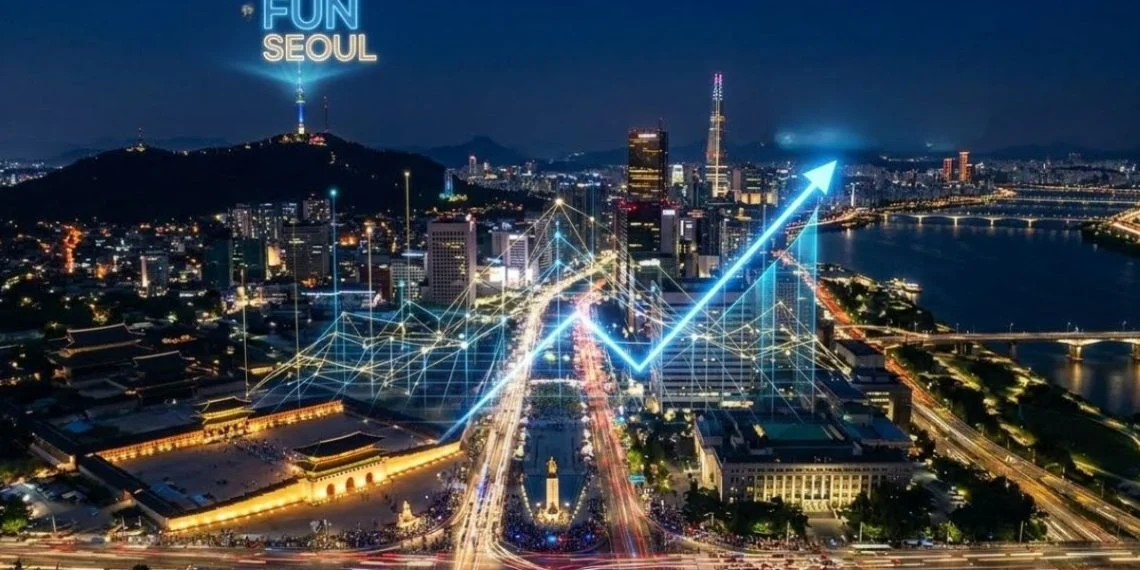
Seoul is embarking on an ambitious, multi-billion-won strategy to transform itself into a year-round cultural powerhouse and a top global tourism destination. The city has officially retired the "Seoul Festa" moniker, a branding effort that faced criticism for its perceived linguistic confusion, and has launched the comprehensive "Fun Seoul" initiative. This rebranding underpins a significant strategic pivot aimed at creating a seamless, four-season "Festival Belt" designed to attract 30 million foreign visitors annually, generate 30 trillion KRW ($22.5 billion USD) in tourism revenue, and secure a spot among the top five global cities by 2026.
For years, Seoul’s festival landscape has been characterized by distinct, albeit popular, seasonal events. The "Seoul Festa" in the spring and the "Seoul Lantern Festival" in the winter were highlights, but the periods between these major attractions often saw a noticeable lull in large-scale city-wide festivities. This fragmentation meant missed opportunities for sustained economic impact and a less cohesive visitor experience. The new "Fun Seoul" brand aims to rectify this by integrating over 200 performing arts programs and four major "Signature" events into a cohesive, year-round offering. The overarching goal extends beyond mere entertainment; it is about cultivating a robust "global fandom" for the city itself, leveraging its rich cultural heritage and burgeoning creative industries.
The Seoul Metropolitan Government (SMG) has allocated a substantial budget to realize this vision, signaling a profound shift in how the city invests in its cultural infrastructure. A dedicated "Festival Accelerator" fund of 9.7 billion KRW ($7.2 million USD) has been earmarked for the 2026 seasonal cycle, designed to stimulate innovation and support new festival development. However, the true financial leverage lies in the projected return on investment. The SMG anticipates that the 2026 festival calendar will generate an economic ripple effect of an impressive 500 billion KRW ($334 million USD). This ambitious target is supported by a record national culture budget of 7.86 trillion KRW, with a significant portion, 1.62 trillion KRW, specifically dedicated to bolstering K-content initiatives. The city’s strategy views these festivals as a tangible "physical storefront" for the globally consumed digital K-content that captivates audiences on platforms like Netflix and YouTube.
The Fiscal Engine: Data-Driven Cultural Infrastructure
The financial underpinnings of the "Fun Seoul" initiative highlight a deliberate and data-driven approach to cultural investment. The allocation of 9.7 billion KRW to the "Festival Accelerator" fund is a direct investment in the future pipeline of Seoul’s cultural offerings. This fund is not merely for existing events but is intended to foster the creation of new, innovative festivals that can contribute to the year-round calendar. By supporting emerging artists, experimental performances, and novel festival concepts, Seoul aims to ensure a constant stream of fresh attractions that appeal to a diverse range of international visitors.
The projected economic ripple effect of 500 billion KRW from the 2026 festival calendar is a testament to the anticipated multiplier effect of sustained tourism. This figure accounts for direct spending by tourists on accommodation, dining, shopping, and entertainment, as well as indirect spending through supply chains and induced spending by those employed in the tourism sector. The substantial national investment in K-content, amounting to 1.62 trillion KRW, is strategically leveraged through these festivals. Seoul is positioning itself as the premier physical venue for experiencing the vibrant culture that is increasingly defining South Korea’s global image. This strategy acknowledges the symbiotic relationship between digital content and physical experiences, aiming to convert online engagement into real-world tourism revenue.
The "Han River Axis" Shift: Reimagining Urban Flow
A significant logistical and strategic update accompanying the "Fun Seoul" launch is the pivot away from traditional, often congested, downtown squares towards the expansive and versatile Han River. This "Han River Axis" shift is designed to enhance scalability, improve visitor flow, and create a more immersive and spread-out festival experience.
The "Seoul Spring Festival," scheduled to launch on April 10th, will serve as a blueprint for this new approach. Its duration has been significantly expanded, quadrupling from a week in 2025 to a substantial 26 days in 2026. By relocating the core activities to Yeouido, Ttukseom, and Banpo Hangang Parks, the city addresses two critical challenges simultaneously. Firstly, the vast open spaces along the Han River offer unparalleled scalability, capable of accommodating the projected 60 million total attendees anticipated across the 2026 festival season. This contrasts sharply with the limitations of downtown squares, which can easily lead to gridlock and negatively impact local businesses. Secondly, the riverbanks provide a more natural and scenic backdrop, enhancing the overall visitor experience.
To further capitalize on this shift, Seoul is introducing the "7 Spots, 7 Emotions" experience along the river. This initiative is integrated with a new Han River Bus One-Day Pass, encouraging tourists to dedicate an entire day to exploring multiple festival hubs and attractions along the waterway. This encourages a deeper engagement with the city, moving beyond single-landmark visits to a more comprehensive exploration of Seoul’s waterfront offerings. The aim is to foster longer stays and increased per-capita spending by providing a rich, interconnected network of cultural experiences.
The Challenges: The "BTS Stress Test" and Regulatory Hurdles
While the long-term vision is ambitious, the immediate operational challenge lies in managing large-scale events that test the city’s infrastructure and crowd control capabilities. The upcoming BTS Comeback Concert at Gwanghwamun Square on March 21st is being closely watched as a critical "stress test" for the entire 365-day festival plan. This event, expected to draw approximately 260,000 attendees, demands meticulous planning and execution.
In preparation, the city has elevated its crisis alert level to "Caution" and mobilized over 6,000 officers to ensure public safety and order. The complexity of managing such a large gathering is compounded by evolving regulatory landscapes and increased operational costs. The cost of crowd management in Seoul has reportedly risen by 25%, driven by the mandatory integration of AI-based crowd-sensing technologies and subsidies for "empty train" transit services, designed to facilitate efficient passenger movement during peak times. This week has thus become a crucial exercise in urban risk management for policymakers, as they work to demonstrate Seoul’s capacity to host major international K-pop events safely and effectively within its central administrative district. The success of this concert is seen as a vital precursor to confidently implementing the broader festival strategy.
The Impact: A Macro-Economic Transformation of the Urban Value Chain
The transition to a "365 Day Festival City" represents more than a mere rebranding; it signifies a fundamental restructuring of Seoul’s urban economy and its approach to tourism. By moving away from a model reliant on distinct, seasonal events toward a continuous cultural calendar, the city is actively combating the inherent volatility that has historically characterized tourism revenue. Seoul’s economic fortunes have often been tied to sharp peaks during periods like cherry blossom season or major K-Pop award ceremonies, followed by significant dips during less favorable weather conditions, such as the humid monsoon weeks or the frigid late-winter months.
By institutionalizing a year-round "vibe" and consistent stream of cultural programming, the Seoul Metropolitan Government (SMG) aims to stabilize the velocity of money circulation across its 25 administrative districts. This strategic pivot is expected to yield significant economic benefits across three critical pillars:
1. High-Yield "Slow Tourism" vs. Mass Transit Tourism
The strategic integration of the "7 Spots, 7 Emotions" Han River transit loop is meticulously designed to increase the average length of tourist stays, a key performance indicator for global tier-1 cities. By extending the duration of flagship festivals like the Seoul Spring Festival to 26 days, the city effectively spreads out visitor numbers, mitigating overcrowding while simultaneously extending the window for commercial engagement. This approach encourages what is often termed "slow tourism," where visitors have more time to immerse themselves in the local culture and spend more money.
When tourists choose to extend their stays by an additional 48 hours to experience a "Signature Show" or a drone light display at the Dongdaemun Design Plaza (DDP), their per-capita expenditure expands beyond basic transportation and street food. This shift directs spending into higher-margin sectors, including luxury retail, high-end gastronomy, and the rapidly expanding medical wellness sector. The recent appointment of 1,000 medical interpreting coordinators stationed at these festival hubs further facilitates this transition. These professionals act as a direct "funnel," connecting cultural entertainment seekers with high-value medical tourism services, such as cosmetic surgery, advanced health check-ups, and specialized treatments, thereby diversifying the economic benefits of tourism.
2. The "K-Content" Physicalization Strategy
The impact of this initiative on South Korea’s domestic "K-Content" industry, which has a national target valuation of 300 trillion KRW, is profound. These year-round festivals are poised to become massive, living laboratories for Intellectual Property (IP) owners and content creators. The BTS concert at Gwanghwamun, for instance, transcends being just a musical performance; it serves as a critical assessment of how digital fandom translates into physical urban mobility and consumer behavior.
Seoul is actively transforming into a physical storefront for digital IPs. This environment provides an ideal testing ground for startups in emerging sectors such as Virtual Reality (VR), Augmented Reality (AR), Agri-Tech (AgTech), and Financial Technology (FinTech) to deploy "pop-up" solutions and pilot new technologies in a high-traffic, real-world setting. The 2026 fiscal year marks a significant milestone, as "Culture" is being recognized and funded as a hard infrastructure asset. This classification signals to investors that Seoul is no longer just a market for K-Culture but a crucial product-market fit testing ground for the global creator economy, fostering innovation and investment in the cultural technology sector.
3. Real Estate and Local District Appreciation
The strategic relocation of the festival axis to the Han River is poised to trigger a significant "spatial revaluation" across the city. Areas such as Ttukseom and Banpo, previously perceived primarily as local recreational spaces, are being actively rebranded and developed as international commercial hubs. This strategic shift is expected to drive substantial appreciation in commercial real estate values along the riverbanks. Furthermore, it is anticipated to incentivize substantial private investment in innovative "floating" infrastructure, including restaurants, galleries, and performance stages situated on or near the river. This diversification of the city’s economic base extends beyond the traditional business districts of Gangnam and Jongno, creating new centers of economic activity and broadening Seoul’s tax revenue streams.
Seoul as a Living Cultural Utility
The "365 Day Festival City" initiative represents the culminating phase in Seoul’s ongoing pursuit of recognition as a top-five global destination. By rebranding under the engaging "Fun Seoul" banner and embracing a "Culture-as-a-Utility" model, the city is making a clear statement: its cultural output is no longer a discretionary luxury but a permanent, reliable, and integral engine for economic growth and global influence.
Seoul is strategically betting that by 2026, the global audience will desire more than just passive consumption of K-Culture on screens. They will seek to actively "live inside" this vibrant cultural phenomenon, year-round. The underlying fiscal data strongly suggests that if the city can successfully navigate the inherent safety and logistical challenges, the economic rewards will be substantial. These rewards will be measured not only in trillions of Korean won but also in a significant and lasting elevation of Seoul’s global soft power and cultural standing on the world stage.