
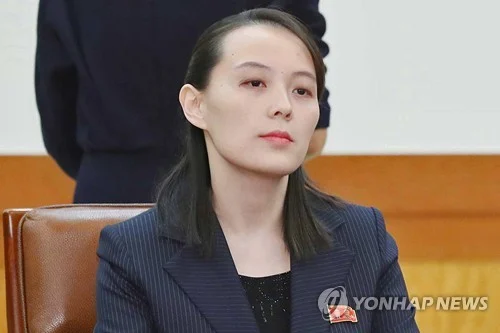
SEOUL – In a significant development reflecting the intricate and often volatile nature of inter-Korean relations, Kim Yo-jong, the influential sister of North Korean leader Kim Jong-un and a senior official within the Workers’ Party, publicly acknowledged and conveyed her brother’s positive assessment of South Korean President Lee Jae-myung’s expression of regret over recent unauthorized drone flights into North Korean airspace. The statement, issued on Monday, April 6, 2026, through Pyongyang’s state media, characterized President Lee’s remarks as "frank and broad-minded," a rare nod of approval from the reclusive state amidst persistent geopolitical friction. However, this apparent softening was juxtaposed with a stern warning against further provocations, underscoring the precarious balance of power and communication on the Korean Peninsula.
The incident unfolded earlier the same day when President Lee Jae-myung, during a Cabinet meeting in Seoul, addressed the unauthorized drone incursions. "Although this was not an act by our government," President Lee stated, "I express regret to the North Korean side over the unnecessary military tension caused by such reckless behavior." This public apology marked a deliberate diplomatic gesture aimed at de-escalating burgeoning tensions that had flared following reports of unmanned aerial vehicles penetrating North Korean territory, an act Pyongyang views as a severe breach of sovereignty and a direct threat to its security. The South Korean government’s swift disavowal of official involvement and subsequent expression of regret was a calculated move to prevent an escalation of military responses from the North, which has historically reacted robustly to perceived infringements of its borders.
Background Context: A History of Aerial Incursions and Strained Relations
Unauthorized drone flights, particularly those originating from South Korea, have long been a flashpoint in inter-Korean relations. While the current incident specifically involved non-governmental actors, previous years have seen various instances of both military and civilian drones crossing the heavily fortified Demilitarized Zone (DMZ). These flights often carry propaganda leaflets, USB drives containing South Korean media, or sometimes, intelligence-gathering equipment. North Korea consistently labels such activities as acts of hostile provocation, often responding with threats of military action or even direct fire, as seen in past incidents involving anti-aircraft fire or attempts to jam GPS signals. The DMZ, a 250-kilometer-long, 4-kilometer-wide strip of land, remains one of the most heavily militarized borders in the world, making any unauthorized crossing a highly sensitive matter.
The broader context of inter-Korean relations leading up to April 2026 has been marked by a cycle of intermittent dialogue attempts, often followed by periods of intense diplomatic frost and military posturing. Following the initial optimism of summit meetings in the late 2010s, progress on denuclearization and peace-building largely stalled. Subsequent years witnessed North Korea accelerating its ballistic missile and nuclear weapons programs, conducting numerous tests in defiance of United Nations Security Council resolutions. Concurrently, South Korea, under various administrations, has navigated a complex path of deterrence, dialogue, and sanctions enforcement, often aligning its strategy closely with that of the United States. President Lee Jae-myung’s administration, while committed to national security, has also expressed a desire for a stable and peaceful peninsula, seeking pragmatic approaches to manage the persistent North Korean threat. His apology, therefore, can be interpreted as a strategic attempt to prevent a minor incident from spiraling into a larger confrontation, reflecting a policy stance that prioritizes de-escalation when non-state actors are involved.
The Rising Prominence of Kim Yo-jong
Kim Yo-jong’s role in delivering Pyongyang’s official response further highlights her evolving and increasingly central position within the North Korean power structure. Since her initial public appearances alongside her brother, Kim Yo-jong has steadily accumulated influence, particularly in matters of inter-Korean affairs and foreign policy. She has frequently served as the primary conduit for North Korea’s official pronouncements directed at Seoul and Washington, often delivering messages that range from sharp condemnations to occasional, carefully worded olive branches. Her statements are widely regarded by international observers as reflecting the direct views and intentions of Kim Jong-un, effectively making her the authoritative voice of the regime on such critical matters. Her designation as a department director of the Central Committee of the Workers’ Party further solidifies her formal authority, elevating her beyond a mere personal aide to a key decision-maker and communicator. Her choice to relay Kim Jong-un’s personal assessment of President Lee underscores the significance Pyongyang placed on Seoul’s apology and simultaneously projects the North Korean leader’s authority and judgment on the international stage.
A Detailed Chronology of the Exchange
The sequence of events on April 6, 2026, unfolded rapidly, demonstrating the swift diplomatic reflexes required to manage inter-Korean sensitivities:
- Early Morning: Reports emerge of multiple small, unauthorized drones crossing into North Korean airspace, likely originating from civilian activist groups in South Korea. The exact number and type of drones remain unconfirmed by official sources, but their presence quickly becomes a point of concern in military circles.
- Morning (Cabinet Meeting): South Korean President Lee Jae-myung convenes a Cabinet meeting. During this session, he issues a formal statement expressing regret to North Korea over the "unnecessary military tension" caused by the drone flights, explicitly stating that these were not actions sanctioned by the South Korean government. His remarks are broadcast through official channels and picked up by South Korean media.
- Midday (Pyongyang’s Internal Review): North Korean leadership, having monitored President Lee’s statement, convenes to formulate a response. Given the rapid turnaround, it is highly probable that internal consultations involving Kim Jong-un and other senior officials took place to determine the strategic messaging.
- Afternoon (Kim Yo-jong’s Statement): Kim Yo-jong’s statement is released through the Korean Central News Agency (KCNA), North Korea’s official state media outlet. The statement, under her name, details Pyongyang’s appreciation for President Lee’s "very fortunate and wise behavior" and quotes Kim Jong-un’s personal description of Lee as "a frank and broad-minded man." Crucially, it also includes a stark warning for Seoul to "stop any reckless provocation" and "refrain from any attempt at contact, instead of paying lip-service to the utmost importance of peace and security."
- Late Monday Evening (Cheong Wa Dae’s Response): In response to Kim Yo-jong’s statement, South Korea’s presidential office, Cheong Wa Dae, issues its own concise statement. It expressed hope that "the swift inter-Korean exchange of views will contribute to peace on the Korean Peninsula," reaffirming the government’s commitment to "continue to work toward peaceful coexistence." This measured response aimed to acknowledge Pyongyang’s communication without either escalating rhetoric or conceding too much ground.
Statements and Reactions from Related Parties
Beyond the direct exchange, the incident and its aftermath elicited various reactions:
- North Korean State Media Amplification: Following Kim Yo-jong’s initial statement, other North Korean state media outlets, such as Rodong Sinmun and Korean Central Television, likely echoed and elaborated on the message. The narrative would predictably frame Kim Jong-un’s assessment as a testament to his discerning leadership, while simultaneously portraying South Korea’s apology as a necessary concession born out of Pyongyang’s unwavering strength. The warning against "reckless provocation" would also be emphasized, reinforcing the regime’s resolve.
- South Korean Political Spectrum: Domestically, President Lee’s apology likely generated a mixed reaction. While his supporters would laud it as a pragmatic step towards de-escalation and responsible crisis management, opposition factions might criticize it as a sign of weakness or an unnecessary appeasement of Pyongyang. Debates would likely emerge regarding the efficacy of such apologies in influencing North Korean behavior and the need for stronger deterrence against future provocations, both from North Korea and non-state actors originating from the South.
- International Observers: Regional powers and international organizations closely monitoring the Korean Peninsula would likely view this exchange with cautious optimism. The United States, South Korea’s principal ally, would likely commend Seoul’s efforts to manage tensions, while reiterating its commitment to a denuclearized Korean Peninsula and diplomatic solutions. China, North Korea’s traditional ally, might welcome any sign of de-escalation, as stability on its border remains a key strategic interest. Japan would also be keenly observing, given its direct security concerns regarding North Korea’s missile program. Analysts would interpret the exchange as a transient de-escalation, a moment of reduced immediate threat, rather than a fundamental shift in the deeply entrenched dynamics of inter-Korean relations.
Analysis of Implications: A Fragile Detente
This specific exchange, while seemingly a minor diplomatic event, carries significant implications for the future trajectory of inter-Korean relations.
- De-escalation and Crisis Management: The immediate effect is a temporary de-escalation of tensions. President Lee’s prompt apology successfully averted a potentially disproportionate military response from Pyongyang, demonstrating the utility of direct communication and clear signaling in preventing miscalculation. This highlights a critical, albeit fragile, channel for crisis management, even in the absence of broader diplomatic breakthroughs.
- Kim Yo-jong’s Enduring Influence: Kim Yo-jong’s role as the authoritative voice on inter-Korean affairs is further cemented. Her ability to convey her brother’s personal views, coupled with official warnings, underscores her unique position. Any future attempts at dialogue or de-escalation will almost certainly involve her direct engagement or approval. This also suggests that Pyongyang is increasingly consolidating its messaging through a select few high-ranking officials.
- South Korean Diplomatic Strategy: President Lee’s decision to apologize reflects a pragmatic and risk-averse diplomatic strategy. While maintaining a strong defense posture, his administration appears willing to make tactical concessions when the provocations are not state-sponsored, thereby aiming to isolate and manage genuine state-level threats from North Korea. This approach seeks to avoid providing Pyongyang with pretexts for escalation, a common tactic employed by the North to justify its military advancements.
- The Double-Edged Sword of Pyongyang’s Response: North Korea’s response, while containing an element of appreciation, was also a potent blend of magnanimity and menace. The "frank and broad-minded" comment from Kim Jong-un projects an image of a reasonable leader capable of recognizing genuine regret, potentially aiming to drive a wedge between the South Korean government and its activist groups. However, the accompanying warning about "reckless provocation" and the admonition to "refrain from any attempt at contact" simultaneously reaffirms Pyongyang’s uncompromising stance and its demand for unilateral cessation of perceived hostile acts. This "carrot and stick" approach is characteristic of North Korean diplomacy, designed to test the resolve of its adversaries while maintaining the upper hand.
- Future Prospects for Dialogue: The warning to "refrain from any attempt at contact" is particularly telling. While acknowledging the apology, North Korea is signaling that its willingness to engage in dialogue is not necessarily improved by this incident. Instead, it seems to reiterate its long-standing demand for Seoul to cease all "hostile acts" – a broad category that can encompass joint military drills with the US, sanctions enforcement, and even public criticism of the regime. This suggests that despite the temporary de-escalation, the fundamental obstacles to sustained inter-Korean dialogue remain firmly in place. Any future engagement would likely require significant concessions from Seoul, as defined by Pyongyang, rather than reciprocal gestures.
In conclusion, the exchange between Seoul and Pyongyang on April 6, 2026, serves as a microcosm of the complex and often paradoxical nature of inter-Korean relations. While President Lee Jae-myung’s apology facilitated a crucial, albeit temporary, de-escalation of military tensions, North Korea’s response, delivered through the powerful voice of Kim Yo-jong, underscored both its capacity for strategic communication and its unwavering insistence on its security prerogatives. The incident highlights the ever-present need for careful diplomacy and clear messaging to navigate the treacherous geopolitical landscape of the Korean Peninsula, where a seemingly minor incident can swiftly escalate into a regional crisis. The path toward lasting peace remains fraught with challenges, requiring consistent vigilance and adaptable strategies from all parties involved.