
LE SSERAFIM member Yunjin recently found herself at the center of a burgeoning controversy following a Weverse livestream on April 6, 2026, during which she was observed plucking flowers and weeds in a public area near the Han River in Seoul. Her actions, coupled with her reaction upon learning of their illegality, have ignited a fervent debate across various online platforms, highlighting the intense scrutiny faced by public figures in South Korea.
The Incident: A Spontaneous Bouquet and an Unforeseen Consequence
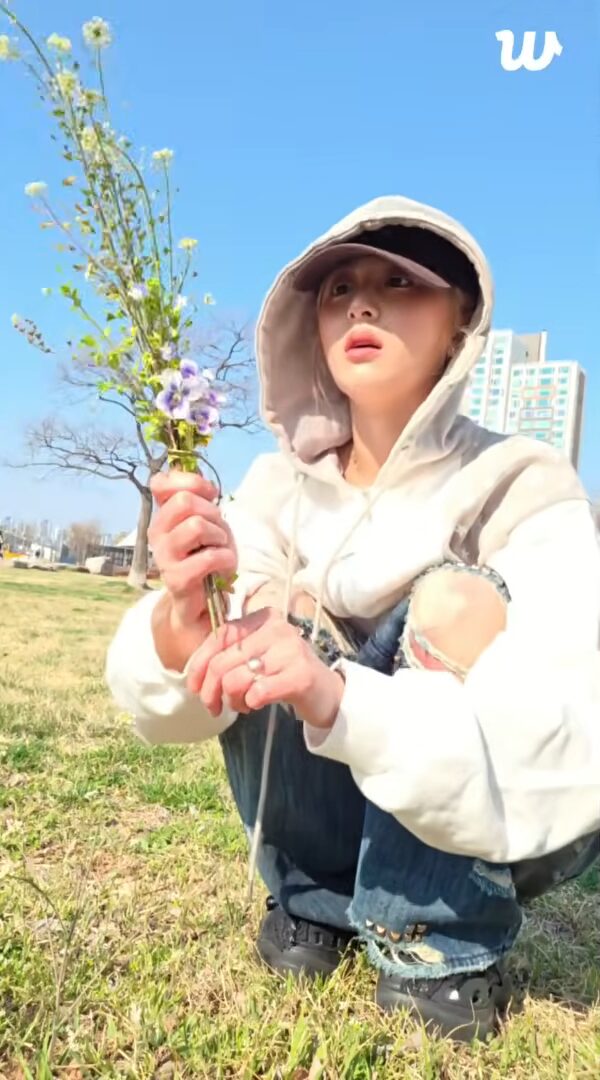
The incident unfolded during a seemingly innocuous Weverse live broadcast, a popular platform for K-Pop idols to connect directly with their fanbase. Yunjin, known for her vibrant personality and creative endeavors, appeared on screen expressing a desire to craft a spontaneous bouquet. To achieve this, she proceeded to gather various plants, including flowers and weeds, from the surrounding environment of the Han River park. The livestream clearly showed her equipped with scissors, actively cutting and collecting botanical samples. Her initial demeanor suggested an innocent, artistic pursuit, perhaps unaware of the specific regulations governing the collection of flora in designated public spaces.
As Yunjin continued her activity, assembling her impromptu floral arrangement, observant fans watching the live stream began to relay crucial information in the comments section. They swiftly informed her that picking flowers or disturbing plant life in public parks, particularly along the Han River, is an illegal act under South Korean law. This real-time feedback from her audience marked a pivotal turn in the broadcast.
Yunjin’s immediate reaction to this revelation was one of visible shock and surprise. A clip of her response quickly circulated online, capturing her exclaiming, "Huh, wait a minute, it’s illegal to pick flowers at the Han River? Seriously? I am really so sorry. Ah, if that’s true, I’m really, really sorry. Shhhh let’s keep it a secret." While her initial apologies conveyed a sense of regret, the concluding phrase, "Shhhh let’s keep it a secret," was interpreted by some as flippant or dismissive, further fueling the subsequent wave of criticism. This moment encapsulates the delicate balance K-Pop idols must maintain between authenticity and adherence to public expectations and legal norms.
Chronology of Events
The sequence of events unfolded rapidly, transforming a casual fan interaction into a widely discussed controversy:
- April 6, 2026 (Day of Livestream): Yunjin initiates a Weverse live stream from the Han River area.
- During Livestream: She begins plucking and cutting flowers and weeds to make a bouquet, openly displaying her actions to her viewers.
- Fan Intervention: Viewers in the live chat inform Yunjin that her actions are illegal.
- Yunjin’s Reaction: She expresses surprise and offers an apology, followed by the controversial "let’s keep it a secret" remark.
- Post-Livestream: Short clips and screenshots of the incident, particularly Yunjin’s reaction, are uploaded and begin to go viral on platforms like YouTube (e.g., the "dolahaemon" channel) and Korean online communities like Pann.
- Immediate Backlash: The viral clips quickly garner significant criticism, with netizens debating the severity of the act, Yunjin’s awareness, and her perceived sincerity.
- Divided Public Opinion: The online discourse intensifies, showcasing a clear division between those criticizing Yunjin for violating public park regulations and those defending her, arguing for an overreaction from the public.
Legal and Environmental Context of Han River Parks
The Han River, a vital artery flowing through Seoul, is not merely a natural landmark but also a cherished public recreational space. Its banks are meticulously maintained as a series of parks, offering residents and visitors alike green spaces for relaxation, exercise, and leisure. To preserve these natural and cultivated environments for public enjoyment, the Seoul Metropolitan Government, in conjunction with national laws, has implemented specific ordinances governing conduct within these areas.

Under the Seoul Metropolitan Government Ordinance on the Management of Parks (or similar municipal regulations), actions such as damaging, altering, or collecting natural resources—including flowers, plants, and even soil—are strictly prohibited without official permission. These regulations are in place for several crucial reasons:
- Ecological Preservation: To protect the biodiversity and natural ecosystem of the riverbanks and park areas. Even seemingly minor acts of picking flowers can, when aggregated, impact local flora and fauna.
- Aesthetic Maintenance: To ensure the parks remain beautiful and enjoyable for all visitors. Unauthorized harvesting detracts from the cultivated landscape.
- Public Order and Safety: To prevent unregulated activities that could lead to broader environmental damage or disruptions to public use.
- Precedent Setting: Allowing one individual to collect plants without consequence could set a precedent for others, leading to widespread environmental degradation.
Violations of these ordinances typically fall under administrative offenses and can incur fines. While the exact penalty can vary based on the specific regulation and the discretion of authorities, minor infractions like picking flowers in a public park often result in a fine, potentially ranging from tens of thousands to over a hundred thousand Korean Won (e.g., KRW 50,000 to KRW 100,000, approximately USD 35-75). These fines serve as a deterrent and a mechanism for maintaining the integrity of public spaces. The fact that Yunjin brought scissors suggests a premeditated act of collection, which, while perhaps innocent in intent, nonetheless falls squarely within the purview of these prohibited activities.
Public Reaction: A Spectrum of Opinion
The online response to Yunjin’s livestream was swift and multifaceted, dividing netizens into distinct camps. The incident quickly became a trending topic on South Korean online forums and social media, sparking heated discussions about celebrity responsibility, civic awareness, and the nature of public scrutiny.
Criticism and Concerns:
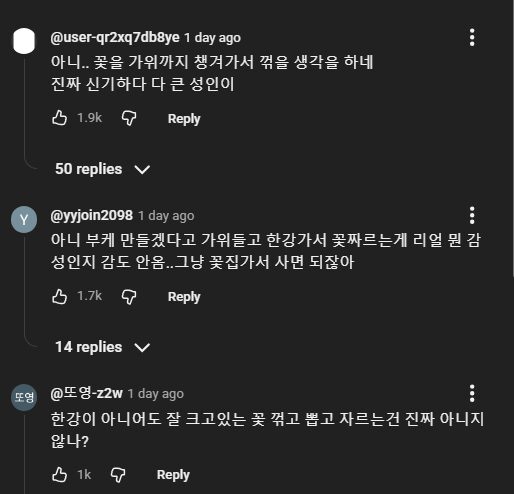
Many netizens expressed strong disapproval, primarily citing Yunjin’s perceived lack of awareness regarding basic civic regulations. Common arguments included:
- Lack of Civic Responsibility: Critics argued that as a public figure, Yunjin should possess a fundamental understanding of local laws, especially those pertaining to public spaces frequently visited by citizens. This was seen as a basic expectation for anyone, let alone an idol who serves as a role model.
- Setting a Bad Example: A significant concern was the potential influence on younger fans. Idols are often seen as trendsetters, and critics worried that Yunjin’s actions, if not properly addressed, could encourage impressionable fans to mimic similar behavior, leading to broader environmental damage.
- Environmental Disregard: Beyond the legal aspect, some focused on the principle of respecting nature and public property. They emphasized that even small acts of damaging or collecting natural elements contribute to a culture of disrespect for environmental conservation efforts.
- Flippant Response: Yunjin’s "Shhhh let’s keep it a secret" comment drew particular ire. Many interpreted it as a casual dismissal of the illegality, suggesting she did not genuinely understand the gravity of her actions or was attempting to evade accountability rather than offering a sincere apology. This perception exacerbated the negative sentiment.
Defense and Support:
Conversely, a vocal segment of netizens came to Yunjin’s defense, arguing that the backlash was disproportionate to the offense:
- Unintentional Mistake: Supporters largely contended that Yunjin’s actions stemmed from genuine ignorance rather than malicious intent. Her visible shock upon learning the law was cited as evidence that she was truly unaware, making her mistake forgivable.
- Minor Offense: Many argued that picking a few flowers, while technically illegal, is a minor infraction compared to more serious legal transgressions. They accused critics of "overreacting" and engaging in a "witch hunt" against an idol for a relatively trivial matter.
- Excessive Scrutiny: Some pointed to the intense pressure K-Pop idols face, living under constant public surveillance where every action, no matter how small, can be magnified and criticized. They suggested that the public was being overly harsh on someone who likely meant no harm.
- "Lack of malicious intent should be considered": This argument emphasizes that Yunjin’s primary goal was not to harm the environment but to engage in a creative activity, albeit misguidedly.
The debate underscored the significant polarization within online communities, where minor celebrity missteps can quickly escalate into major public controversies, fueled by differing interpretations of intent, responsibility, and the appropriate level of public scrutiny.
Broader Implications for K-Pop Idols and Agencies
The incident involving Yunjin serves as a potent reminder of the unique pressures and responsibilities that accompany life as a K-Pop idol. In an industry built on meticulously crafted images and deep fan engagement, even seemingly minor missteps can have substantial consequences.
- The "Fishbowl" Effect of Live Streaming: Platforms like Weverse offer unprecedented direct access to idols, fostering a sense of intimacy and authenticity with fans. However, this unfiltered access also comes with inherent risks. Every word, gesture, and action is broadcast live, leaving little room for error or misinterpretation. Unlike pre-recorded content, live streams lack the benefit of editing, meaning any spontaneous action, like Yunjin’s flower picking, is immediately exposed to public judgment. This necessitates an elevated level of awareness and caution from idols during such broadcasts.
- Role Model Expectations: K-Pop idols are often held to extremely high standards as role models, particularly for their young and impressionable fanbases. Expectations extend beyond musical talent to encompass exemplary conduct, moral integrity, and adherence to societal norms and laws. When an idol is perceived to violate these standards, even unintentionally, it can lead to disappointment among fans and criticism from the general public.
- Agency Responsibility and Training: The incident also highlights the critical role of entertainment agencies, such as Source Music (under HYBE Corporation), in preparing their artists for public life. This includes not only artistic training but also comprehensive education on public relations, social media conduct, and, crucially, legal and civic responsibilities. Agencies are increasingly expected to provide detailed guidance on local laws, cultural sensitivities, and how to navigate live broadcasts to prevent unintended controversies. This might involve pre-stream briefings, ongoing education, and even monitoring during live events.
- Impact on Image and Group Reputation: While Yunjin’s actions were likely unintentional, the ensuing controversy can, even temporarily, tarnish her individual image and, by extension, that of her group, LE SSERAFIM. Such incidents can distract from the group’s musical achievements and artistic endeavors, forcing the agency and members to address non-performance-related issues.
- The Power of Online Discourse: The rapid virality of the clip and the intensity of the debate underscore the immense power of online communities in shaping public perception. Social media and online forums can amplify incidents, leading to rapid judgment and often, a rush to condemnation, even for relatively minor transgressions. This environment necessitates quick and often carefully worded responses from agencies to manage narratives.
Potential Agency Response
As of the immediate aftermath of the incident, there has been no official statement released by Source Music or HYBE Corporation regarding Yunjin’s actions. However, based on industry practices and typical crisis management protocols in the K-Pop sphere, several potential responses or internal actions could be inferred:
- Internal Review and Guidance: The agency would likely conduct an internal review of the incident to understand the full context. This would almost certainly be followed by providing Yunjin, and potentially other artists, with reinforced guidance on appropriate conduct in public spaces and during live streams, specifically addressing local ordinances and environmental protection laws.
- Reinforced Training: It is probable that the agency will implement or reinforce existing training programs for its artists concerning public etiquette, civic duties, and the potential impact of their actions as public figures. This could include workshops on environmental awareness and legal compliance.
- Monitoring of Online Sentiment: Agencies typically closely monitor online reactions to such incidents to gauge the public’s mood and determine if further action, such as a formal apology, is warranted. If the controversy continues to escalate, a more direct statement might be considered.
- Private Apology/Acknowledgement: While not public, it is possible that Yunjin, under agency guidance, might offer a more formal apology internally or through private channels to relevant authorities if any official inquiry were to arise, or simply to ensure she understands the gravity of the situation.
The absence of an immediate public statement suggests that the agency may be assessing the situation, potentially determining if the incident warrants an official response beyond internal measures, or if it will subside naturally over time.
Conclusion
The controversy surrounding LE SSERAFIM’s Yunjin and her flower-picking incident at the Han River park encapsulates the multifaceted challenges faced by K-Pop idols in the modern digital age. It underscores the delicate balance between authentic fan interaction, the unwavering expectations of public figures as role models, and the stringent scrutiny of online communities. While the act itself was minor in legal terms, its public performance on a live stream, coupled with her subsequent reaction, transformed it into a significant topic of debate.
The incident serves as a stark reminder for all public figures of the constant vigilance required when operating in the public eye, particularly in an era where every moment can be captured, amplified, and debated globally. For the K-Pop industry, it reiterates the imperative for comprehensive training and ongoing education for idols, ensuring they are not only artistically prepared but also acutely aware of their civic responsibilities and the profound impact their actions can have on their image, their group, and their dedicated fanbase. As the online discourse continues to unfold, the incident will likely serve as another case study in the ongoing conversation about celebrity accountability and the dynamics of public judgment in the digital era.