
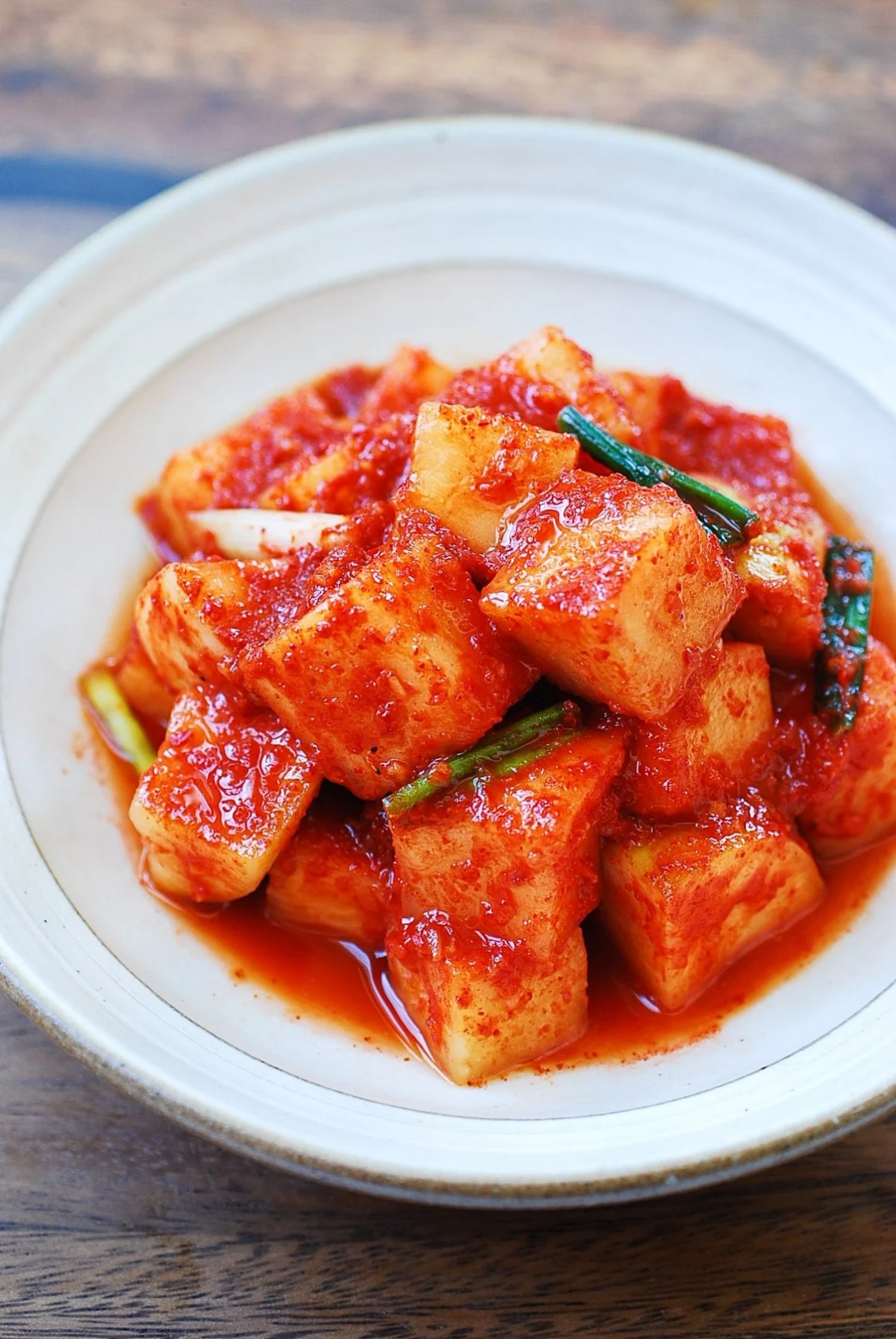
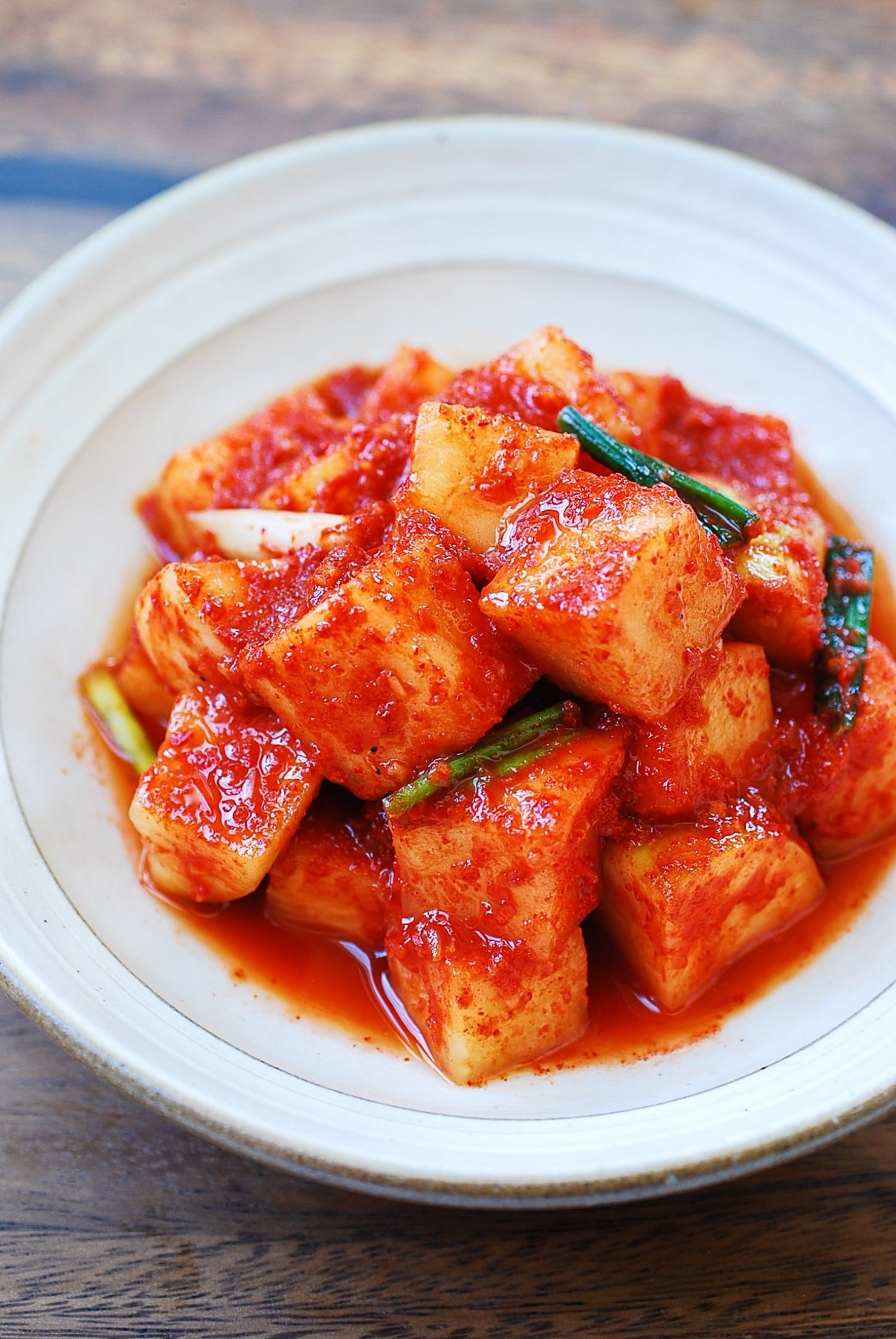
Kkakdugi, a popular Korean cubed radish kimchi, offers a tantalizing symphony of crunchy texture, spicy zest, and profound savory depth. This ubiquitous banchan, or side dish, is not only a staple in Korean households but also surprisingly accessible for home cooks to prepare, embodying the rich culinary heritage of Korea. Its distinctive name derives from the method of preparing the radish – cut into uniform cubes, or "kkakdugi."
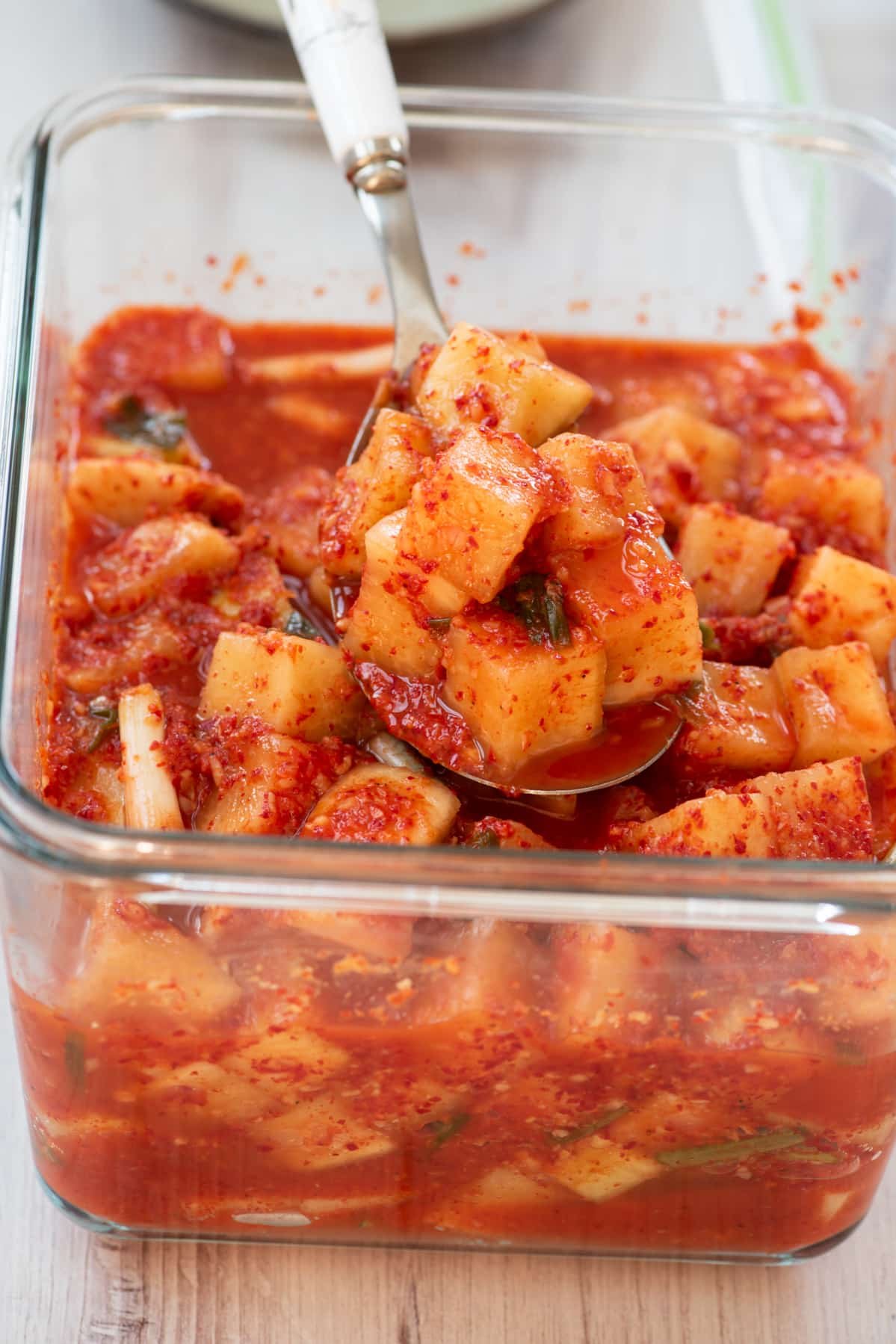
At its core, kkakdugi is crafted from Korean radish, scientifically known as Raphanus sativus var. longipinnatus, often referred to as mu or moo. This particular variety of white radish is distinguished by its firm, exceptionally crisp flesh and a subtle sweetness often accompanied by a peppery bite. Thriving in cooler climates, Korean radish reaches its peak flavor during the autumn and winter months. Radishes harvested in warmer seasons can sometimes exhibit a pronounced bitterness. To counteract this, chefs and home cooks may incorporate additional sweeteners, such as sugar or the traditional Korean plum syrup, known as maesilcheong, to achieve a more balanced flavor profile.
The preparation of kkakdugi, while requiring specific techniques, is fundamentally straightforward, making it an approachable entry point into the world of kimchi making. The process begins with the careful preparation of the radish.
The Art of Cubing the Radish
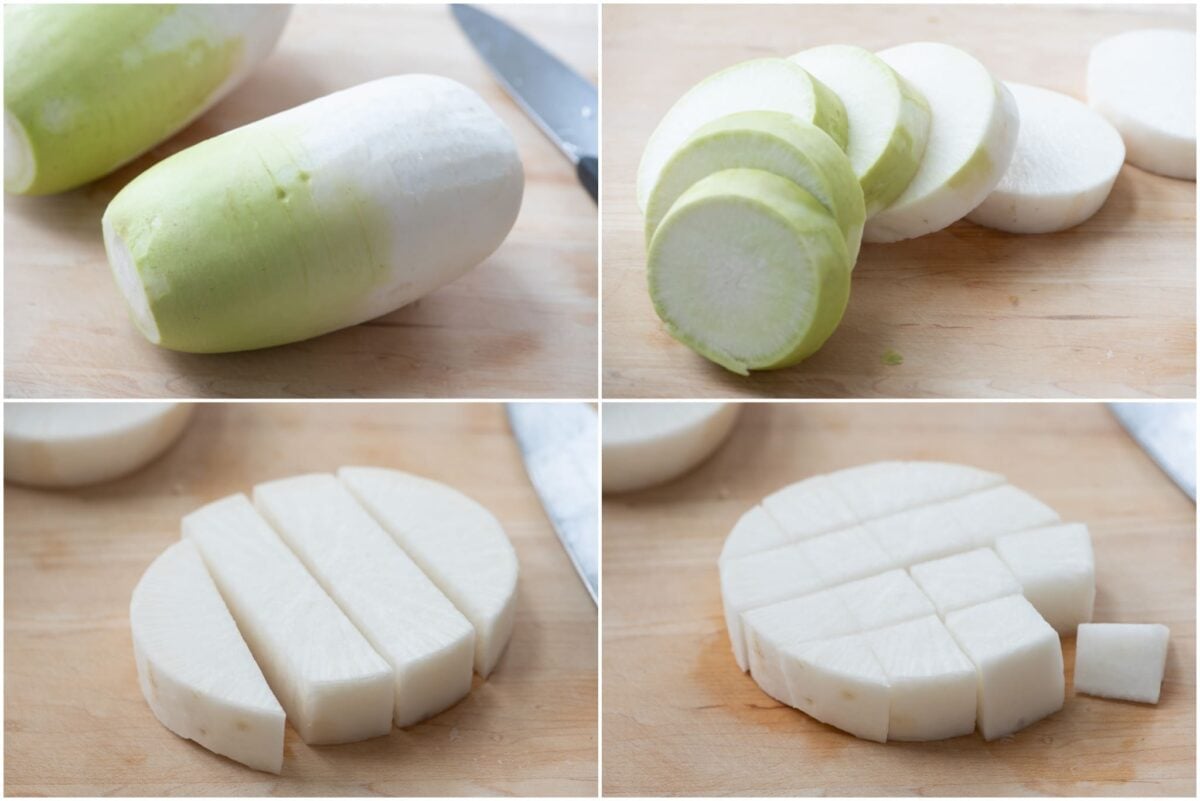
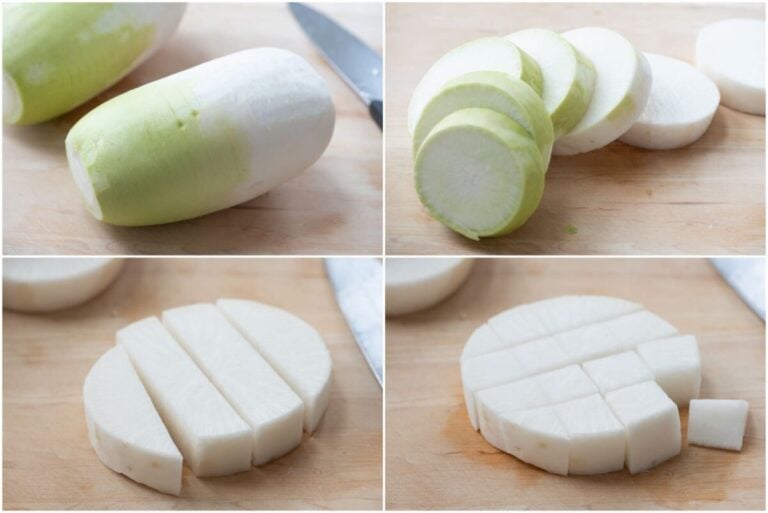
The signature cut of kkakdugi dictates its name and its textural appeal. The process involves a precise method of cubing the radish to ensure consistent cooking and optimal flavor absorption. Initially, the radish is sliced into thick discs, typically ranging from three-quarters of an inch to one inch in thickness. Each disc is then further cut into several equal sticks, the number depending on the diameter of the original disc. The final step involves a 90-degree rotation and a subsequent cut, transforming the sticks into bite-sized cubes of approximately three-quarters to one inch. This meticulous cubing ensures that each piece of radish is uniformly seasoned and fermented, contributing to the dish’s characteristic crunch and even distribution of flavor.
The Crucial Role of Salting
Salting is a pivotal step in the kkakdugi preparation, crucial for achieving its signature crispness. Radishes are composed of over 90% water, and the salting process effectively draws out a significant portion of this moisture. This dehydration not only concentrates the radish’s flavor but also enhances its texture, rendering it firm and resistant to sogginess during fermentation.
Korean culinary tradition often favors coarse sea salt for kimchi preparation. However, in the absence of this specific type, other coarse salts can be substituted. It is important to note that the grain size of the salt will influence the quantity required. For instance, this recipe utilizes three tablespoons of Korean coarse sea salt, which is roughly equivalent to two and a half tablespoons of coarse Kosher salt or two tablespoons of finely granulated Morton’s canning and pickling salt. The salt is generously sprinkled over the cubed radishes and thoroughly mixed to ensure even distribution. The natural moisture released by the radishes quickly dissolves the salt. This mixture is then left to rest for approximately one hour, with the radishes being tossed and rotated every 20 minutes to ensure uniform salting. Increased salting time or a larger quantity of salt will result in a greater reduction of water content.
Draining and Seasoning: Building the Flavor Profile
Following the salting process, the radishes will have visibly released a substantial amount of liquid. It is essential to drain this liquid thoroughly. Crucially, the radishes should not be rinsed, as this would wash away the salt adhering to their surfaces. The discarded brine is too concentrated with salt to be reused in this particular recipe, especially given the inclusion of other salty ingredients.
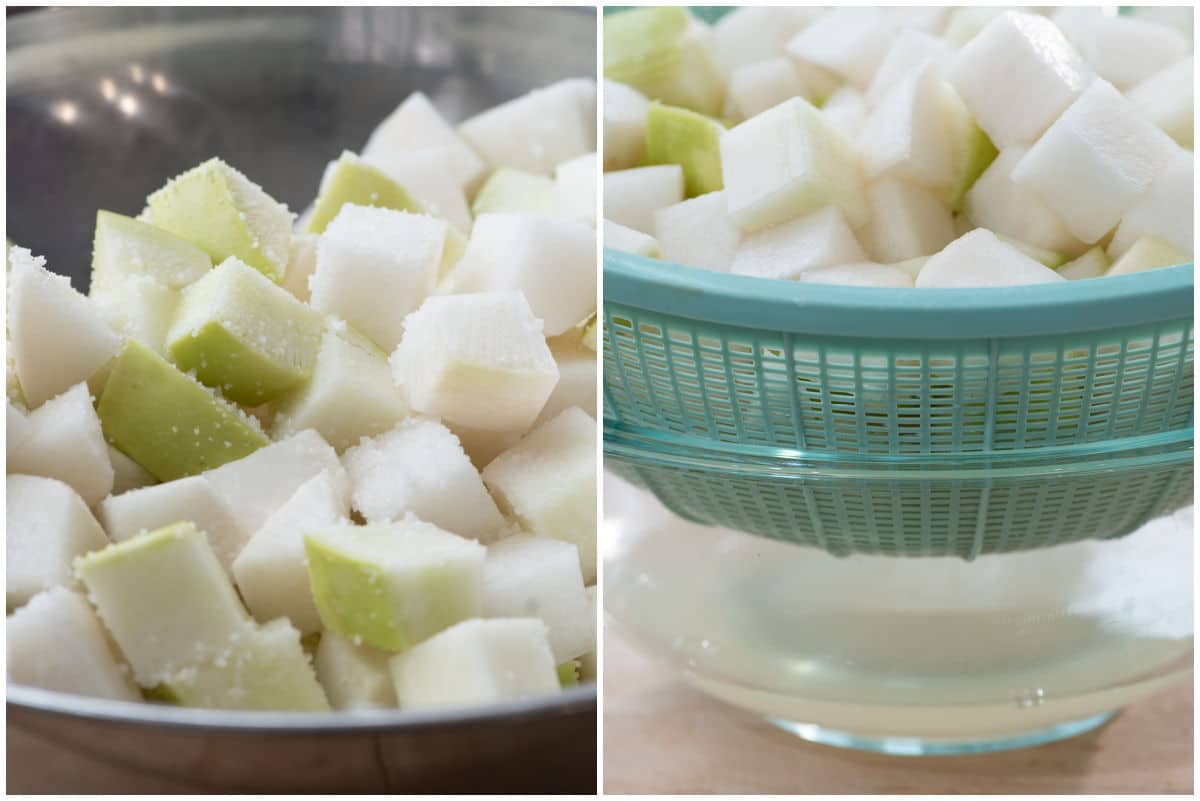
However, a notable exception exists for those who may not have access to or choose not to use salted shrimp and fish sauce. In such cases, it is advisable to reserve some of the salted brine and incorporate it into the seasoning mixture to impart the necessary saltiness.
The next stage involves the meticulous blending of seasonings. The process begins with the addition of gochugaru, Korean chili flakes, which impart the kimchi’s characteristic fiery hue and a significant portion of its spicy flavor. The radish cubes are thoroughly coated and rubbed with the gochugaru, ensuring an even, vibrant red color. Subsequently, the remaining seasoning ingredients are introduced. These typically include fermented salted shrimp (saeujeot) and anchovy fish sauce (myulchiaekjeot), which are indispensable for providing the complex, umami-rich foundation of traditional kimchi. Saeujeot, a paste made from salted and fermented shrimp, and myulchiaekjeot, a potent fish sauce derived from anchovies, are the cornerstones of authentic kimchi flavor, offering a profound depth that cannot be replicated by simpler seasonings.
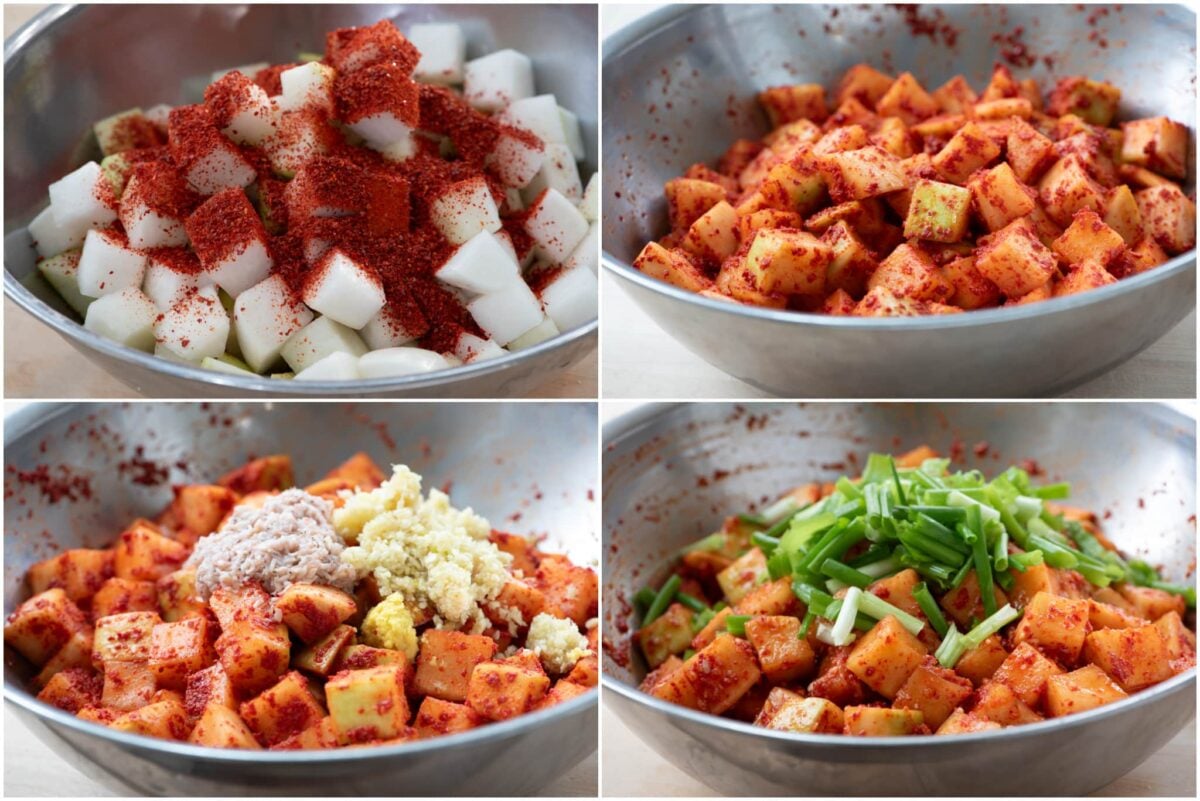
Should salted shrimp be unavailable, an increased amount of fish sauce can be used as a substitute. If neither of these traditional ingredients is an option, salt can be employed as the primary seasoning agent, or a combination of salt and Korean soup soy sauce (gukganjang) can be utilized to achieve a more nuanced flavor profile.
Optional additions, such as fruit and/or cooked rice, can further enhance the kkakdugi. If employed, these ingredients are typically blended with garlic and ginger to create a smoother paste. A small amount of water, approximately half a cup, may be added to facilitate the blending process, ensuring a cohesive seasoning mixture.
The Fermentation Journey: Patience and Flavor Development
Kkakdugi requires a longer fermentation period compared to kimchi made with napa cabbage. During colder months, it is recommended to leave the kkakdugi at room temperature for two to three days. This initial period allows the fermentation process to commence, developing the characteristic tangy flavors. The exact duration will depend on the ambient room temperature and the desired level of fermentation. Once this initial period is complete, the kkakdugi is transferred to the refrigerator, where it will continue to ferment slowly, its flavors maturing over time.
Culinary Pairings and Cultural Significance
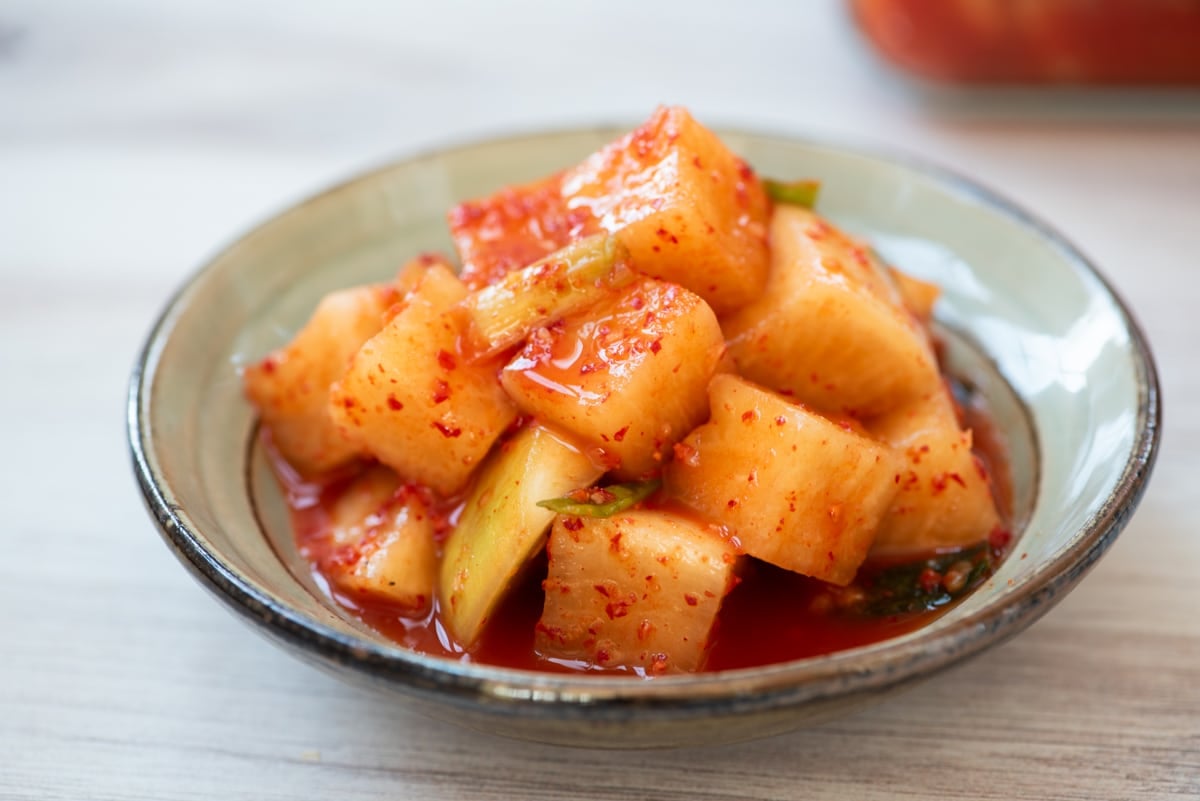
Kkakdugi is a versatile side dish that complements a wide array of Korean meals. It is particularly delightful when served alongside mild soups, such as the creamy beef bone soup, seolleongtang; the nourishing chicken soup, samgyetang; the hearty beef short rib soup, galbitang; and the robust chicken soup, dak gomtang. The crisp, spicy, and savory notes of kkakdugi provide a dynamic counterpoint to the subtle flavors of these soups, adding a welcome textural contrast and a zesty kick that elevates the entire dining experience.
The enduring popularity of kkakdugi is a testament to its integral role in Korean cuisine. It represents more than just a condiment; it is a cultural emblem, embodying the Korean tradition of fermentation and the artful balance of flavors that defines the nation’s culinary identity. Its preparation, rooted in ancient practices, continues to be a cherished ritual, passed down through generations, ensuring that the vibrant taste of kkakdugi remains a cherished part of Korean culinary heritage.
A Glimpse into the Recipe: Key Components
While specific ingredient quantities are detailed in the full recipe, the core components of kkakdugi typically include:
- Korean Radish (Mu): The star ingredient, providing the characteristic crunch and mild sweetness.
- Gochugaru (Korean Chili Flakes): Essential for the fiery heat and vibrant red color.
- Salt: Used for drawing out moisture and preserving the radish. Coarse sea salt is preferred for its mineral content and texture.
- Fermented Seafood: Saeujeot (salted shrimp) and/or Myulchiaekjeot (anchovy fish sauce) are crucial for deep umami flavor.
- Aromatics: Garlic and ginger are fundamental for adding pungency and complexity.
- Sweeteners (Optional): Sugar or maesilcheong (plum syrup) can be used to balance bitterness, especially with summer radishes.
- Other Vegetables: Scallions (green onions) are often added for a fresh, pungent contrast.
The Science of Kimchi Fermentation
The transformation of kkakdugi from fresh radish to fermented kimchi is a fascinating biochemical process. Lactic acid bacteria, naturally present on the surface of the radishes, begin to consume the sugars present in the vegetables. This fermentation process produces lactic acid, which lowers the pH of the kimchi, creating an acidic environment that inhibits the growth of spoilage-causing microorganisms and contributes to the characteristic tangy flavor. The salt plays a dual role: it not only draws out water but also helps to select for the beneficial lactic acid bacteria while suppressing undesirable ones. As fermentation progresses, the enzymes within the radish and the bacteria break down complex carbohydrates and proteins, further developing the intricate flavor profile and aroma of the kkakdugi. The resulting kimchi is not only a delicious accompaniment to meals but also a source of probiotics, beneficial bacteria that contribute to gut health.
A Culinary Tradition Rooted in Preservation
The practice of making kimchi, including kkakdugi, is deeply intertwined with the Korean history of food preservation. Historically, before the advent of modern refrigeration, fermentation was the primary method for preserving seasonal produce, particularly vegetables, to ensure a stable food supply throughout the year. The winter months, in particular, posed a challenge for obtaining fresh vegetables. The creation of kimchi provided a way to store vegetables in a palatable and nutritious form, allowing communities to sustain themselves during periods of scarcity. This tradition of kimchi making is not merely about food preparation; it is a cultural practice that reflects resourcefulness, community, and a profound connection to the agricultural cycles of the land. The continued popularity and diverse variations of kimchi across Korea underscore its enduring significance as a cornerstone of the national cuisine.